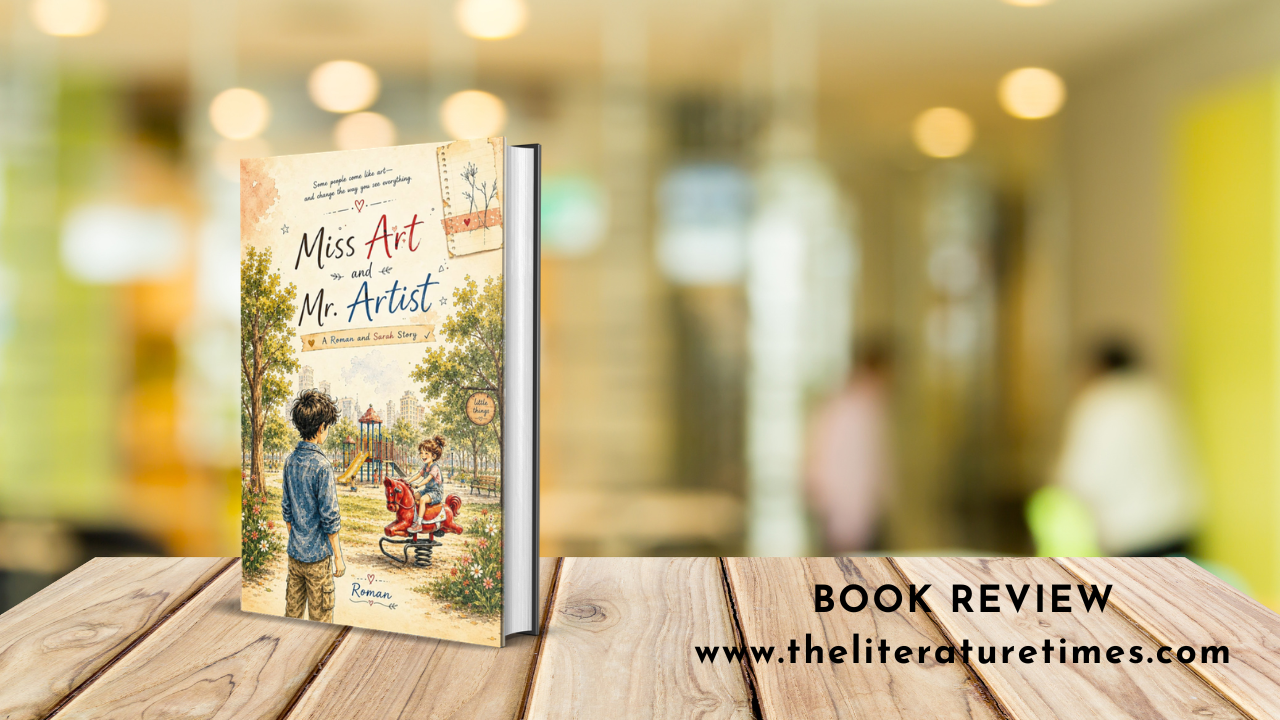
Some novels entertain readers with fast-paced plots, while others leave a lasting impression by exploring the emotional and philosophical questions that shape human existence. Miss Art and Mr. Artist by Roman belongs to the latter category. It is a deeply reflective work of fiction that blends romance, philosophy, trauma, healing, and self-discovery into a narrative that feels both intimate and expansive. Rather than presenting love as a simple emotional experience, the novel explores how human connection can become a source of transformation for two individuals searching for meaning in an uncertain world.
The book serves as the opening installment of a planned series, introducing readers to the emotional universe of Roman and Sarah. Their relationship forms the heart of the story, yet the novel extends far beyond conventional romance. It asks profound questions about identity, pain, purpose, and the invisible forces that shape our lives. The result is a story that feels less like a traditional love story and more like an emotional and philosophical journey.
At the center of the novel stands Roman, a young man haunted by a traumatic childhood. His past has left him questioning the nature of reality itself. He wanders through life carrying emotional scars while constantly searching for answers that seem impossible to find. His thoughts often drift toward existential questions, reflecting a mind that refuses to accept superficial explanations for life’s complexities. Roman is not simply looking for happiness. He is searching for meaning, purpose, and a reason to continue believing that life holds something beyond suffering.
The arrival of Sarah changes everything.
Sarah enters the narrative not merely as a romantic interest but as a powerful emotional presence who reshapes Roman’s understanding of both himself and the world around him. Like Roman, she carries her own emotional burdens and past traumas. Rather than presenting one character as the healer and the other as the wounded soul, the novel portrays two imperfect individuals who gradually become sources of strength for one another.
One of the book’s most beautiful ideas is captured in its portrayal of Sarah as “art.” She becomes an inspiration that awakens Roman’s creativity and helps him express emotions that words alone had long failed to capture. At the same time, Roman provides Sarah with the courage to embrace possibilities she had once believed impossible. Their relationship is built not on perfection but on mutual understanding, vulnerability, and emotional growth.
The symbolism throughout the novel is particularly noteworthy. Sarah represents hope, beauty, and emotional freedom, while Roman represents curiosity, imagination, and resilience. Together they create a relationship that feels balanced rather than idealized. The novel reminds readers that genuine companionship is not about completing another person but about helping each other become stronger versions of themselves.
Roman’s writing style reflects the themes he explores. His prose is thoughtful, introspective, and poetic without becoming overly complicated. Many passages encourage readers to pause and reflect rather than rush through the story. The narrative often moves between emotional storytelling and philosophical observation, creating a reading experience that feels immersive and contemplative.
Another strength of the novel lies in its treatment of trauma. Rather than using painful experiences merely as dramatic devices, Roman explores how childhood wounds continue influencing adulthood, relationships, and personal identity. The emotional struggles faced by both protagonists feel authentic because they are presented with honesty and sensitivity. Healing is shown as a gradual process requiring patience, trust, and acceptance rather than sudden transformation.
The title Miss Art and Mr. Artist itself captures the emotional essence of the story. Sarah is portrayed as the inspiration, while Roman becomes the artist who learns to translate emotion into expression. Yet the symbolism extends further. Every meaningful relationship contains both roles. At different moments we inspire others, and at different moments we become the ones transformed through another person’s presence.
The novel also explores the contrast between dreamers and realists. Roman encourages Sarah to dream beyond her fears, while Sarah gently reminds Roman to remain grounded. Their dynamic creates an emotional equilibrium that gives the relationship authenticity. Neither character dominates the other. Instead, they evolve together through shared experiences and emotional honesty.
Beyond romance, the novel reflects on loneliness and the universal desire to be understood. Modern life often leaves people emotionally isolated despite being constantly surrounded by others. Roman captures this loneliness with remarkable insight. His characters long not simply for companionship but for someone capable of understanding the silent parts of their personalities. This emotional authenticity allows readers to connect deeply with the narrative.
The philosophical undertones further distinguish the novel from typical romantic fiction. Roman’s fascination with reality, existence, and consciousness adds intellectual depth without overwhelming the emotional story. Readers interested in reflective fiction will appreciate how these ideas emerge naturally through character development rather than lengthy philosophical discussions.
As this is the first book in a larger series, the narrative wisely focuses on establishing its characters and emotional foundation instead of attempting to resolve every question immediately. Readers finish the novel with the sense that Roman and Sarah’s journey has only just begun. Their emotional evolution promises greater complexity and deeper exploration in future installments.
The author’s own fascination with the mysteries of the universe is subtly woven into the narrative. Although the novel remains grounded in human relationships, it consistently hints at larger questions about destiny, connection, and existence. These elements give the story a quiet sense of wonder that complements its emotional depth.
One of the book’s greatest achievements is its ability to speak differently to different readers. Some may experience it primarily as a love story. Others may view it as an exploration of trauma and healing. Still others may connect most strongly with its philosophical reflections on meaning and identity. This layered storytelling gives the novel remarkable emotional richness.
The pacing remains intentionally reflective rather than action driven. Readers seeking rapid plot twists may find the story slower than conventional romance novels. However, those willing to immerse themselves in the emotional and philosophical atmosphere will discover a rewarding reading experience that encourages introspection long after the final chapter ends.
Ultimately, Miss Art and Mr. Artist is about much more than two people falling in love. It is about discovering hope after pain, finding beauty within brokenness, and learning that meaningful human connections have the power to reshape our understanding of ourselves. Roman presents love not as an escape from suffering but as a journey toward healing, growth, and self-awareness.
By combining emotional storytelling with philosophical reflection, Roman has created a memorable debut that promises an ambitious literary series ahead. The novel invites readers to believe that even in a world filled with uncertainty and chaos, genuine connection can still become the art that gives life its deepest meaning.
Rating: 4.8/5
Miss Art and Mr. Artist is a beautifully written, emotionally intelligent novel that blends romance, philosophy, and personal transformation into an unforgettable reading experience. It is a thoughtful beginning to a series that promises to explore not only love but also the profound mysteries of the human heart.
Buy Book : https://amzn.in/d/04gCCOMa