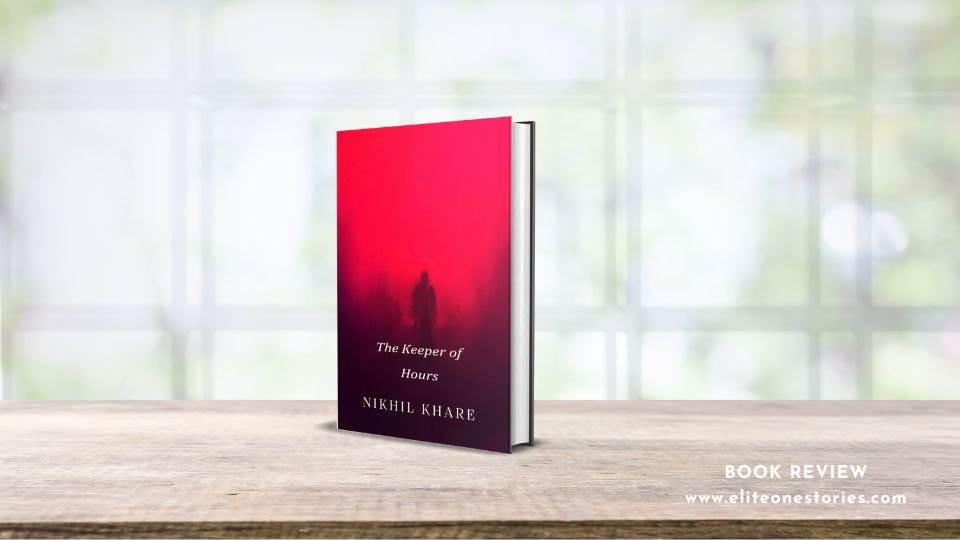
Some novels entertain, while others leave readers thinking long after they have turned the last page. The Keeper of Hours: Berlin After the War by Nikhil Khare belongs to the latter category. Set in the aftermath of World War II, the novel is not simply about a city rebuilding itself; it is about people trying to find meaning in a world where everything they once believed has fallen apart.
The story follows Friedrich Adler, a man who returns to a Berlin reduced to rubble. However, the physical destruction of the city is only one part of the narrative. The real focus is the emotional and psychological transformation of a man who has lost not only his home but also the certainty that once guided his life. As Friedrich navigates a changing society, he is drawn into circumstances that force him to question identity, purpose, and the cost of survival.
One of the strongest aspects of the novel is its atmosphere. Nikhil Khare paints post-war Berlin with remarkable subtlety. Instead of relying on dramatic descriptions, he allows silence, empty streets, damaged buildings, and everyday routines to tell the story. Readers can almost feel the weight of a city trying to move forward while carrying the burden of its past. The setting becomes much more than a backdrop—it becomes a character in its own right.
The author’s writing style is thoughtful and literary. Every chapter encourages readers to slow down and absorb the emotions beneath the surface. Rather than rushing from one event to another, the narrative focuses on observation and reflection. This gives the story an unusual depth that is rare in historical fiction. The philosophical discussions on time, memory, and power make the novel intellectually engaging without ever feeling forced.
Friedrich is a fascinating protagonist because he is neither entirely sympathetic nor completely detached. His actions often leave readers questioning what they themselves might have done in similar circumstances. Instead of offering easy judgments, the novel presents a realistic picture of how trauma, loneliness, and shifting political systems can shape an ordinary individual. His gradual transformation feels believable, making the story all the more powerful.
Another quality that makes this novel stand out is its moral complexity. There are no simple heroes or villains. Every decision carries consequences, and every character exists in shades of grey. The novel explores how people adapt to changing realities and how easily survival can blur the line between right and wrong. These questions remain relevant even today, making the book feel timeless despite its historical setting.
The pacing is slow, but intentionally so. Readers expecting a fast-moving war novel filled with action may need patience. This is a book that rewards careful reading. Each conversation, pause, and moment of silence contributes to the larger emotional and philosophical journey. By the end, the reader realizes that the story is less about external events and more about the invisible battles fought within the human mind.