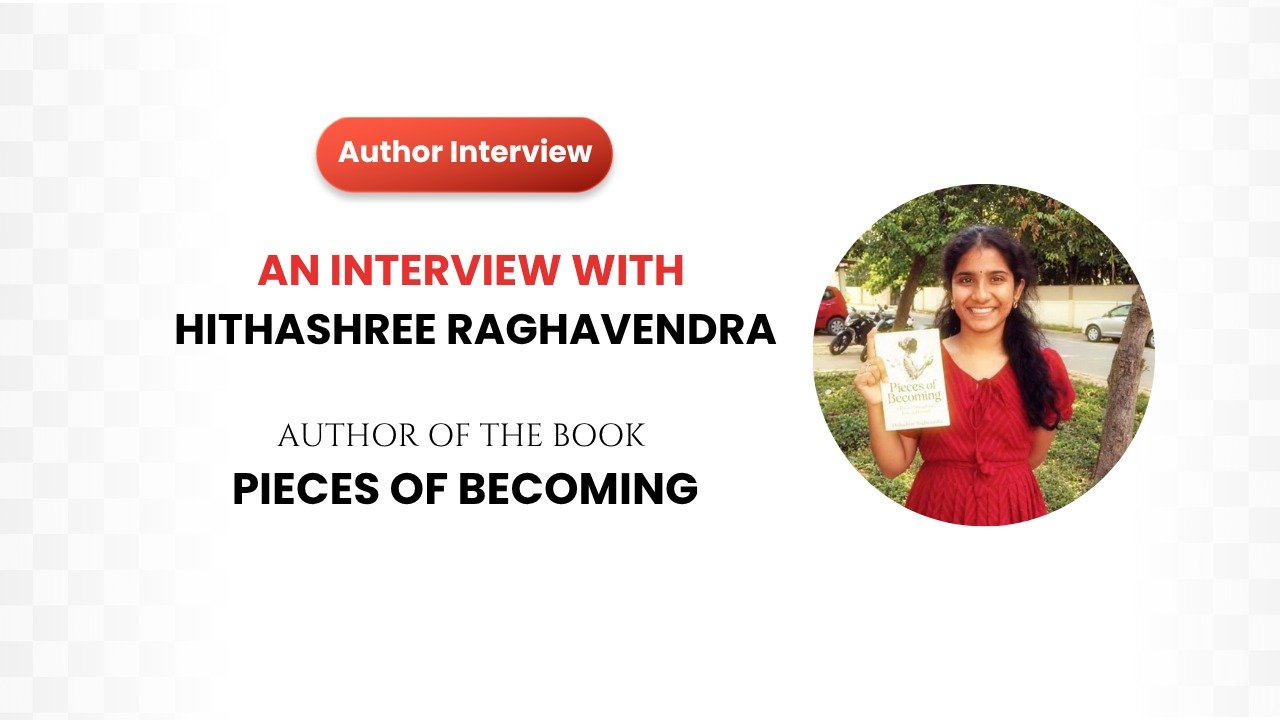
Book: Pieces of Becoming
Author: Hithashree Raghavendra
Publisher: Evincepub Publishing
About The Author
Hithashree Raghavendra is a young writer and poet who finds inspiration in everyday experiences, emotions, and the quiet thoughts of life. She enjoys putting feelings into words and exploring the little things that often go unnoticed. Pieces of Becoming is her debut book, born from her reflections on life, growth, connections, and the journey of becoming.
Neel Preet: What was the first thought or experience that made you realize Pieces of Becoming needed to become a book?
Hithashree Raghavendra: Honestly, there wasn’t one particular moment. I had so many thoughts written down in different places—things I noticed, things I felt, things I learnt from people and situations. At some point I realised that these weren’t just random thoughts anymore. They were all connected in some way. And I felt like maybe these thoughts could become something that someone else could read and relate to too. That’s when the idea of turning them into a book came to me
Neel Preet: Why did the word “becoming” feel more appropriate than words such as growth, change, or transformation?
Hithashree Raghavendra: Because I don’t think we ever really finish becoming. Growth and change can sometimes sound like there is a particular destination you reach, but becoming feels more continuous. We keep changing with every experience, every person we meet and every version of ourselves we leave behind. I felt that becoming described that process much better.
Neel Preet: Did you begin writing with a clear structure, or did the structure emerge as your reflections accumulated?
Hithashree Raghavendra: The structure definitely came later. In the beginning, I was just writing whatever came to my mind. I wasn’t thinking, “This will be a chapter” or “This should come here.” As I collected more thoughts, I started noticing that some of them naturally belonged together. Slowly, the chapters and the order started forming.
Neel Preet: How much of the book came from personal observation, and how much came from watching the lives of people around you?
Hithashree Raghavendra: I think it’s difficult to separate the two completely. A lot of my thoughts came from observing people, their relationships, the way they react to things and the choices they make. Some came from my own experiences too.
But even when something was personal, I tried to look at it beyond just myself and understand the larger feeling behind it. So I’d say the book is a mixture of living, observing, and thinking.
Neel Preet: Was there a particular chapter that helped you understand the larger purpose of the book?
Hithashree Raghavendra: I think Purpose of Life helped me see the bigger picture. It made me realise that the book wasn’t really about giving answers to people. It was more about putting certain thoughts into words and giving the reader a space to pause and think about their own life. That became the purpose of the book for me.
Neel Preet: Did writing these reflections change your own understanding of certain experiences?
Hithashree Raghavendra: Yes, definitely. Sometimes we think we understand something until we actually try to put it into words. Writing made me look at certain experiences from a little distance instead of only through the emotions I had felt at that moment. Some things became clearer, and some things I simply learnt to accept without needing an answer for everything.
Neel Preet: What did you deliberately choose not to include in the book?
Hithashree Raghavendra: I think I consciously avoided making the book too specific. There are certain things that inspired the thoughts in the book, but I didn’t want to explain exactly where every thought came from or who it was about. I wanted to leave some space for the reader to interpret it through their own experiences. Because sometimes, saying less actually lets the reader connect more.
Neel Preet: How did you decide when a personal thought was universal enough to share with readers?
Hithashree Raghavendra: I didn’t really try to make every thought universal. I just wrote what felt genuine to me. If, after writing it, I felt that someone else could read it and see a little bit of themselves in it, then I felt it was worth sharing. I think that’s what makes a personal thought relatable—not that everyone has lived the same thing, but that they can understand the feeling behind it.
Neel Preet: What emotional state would you ideally like a reader to be in after finishing the book?
Hithashree Raghavendra: I don’t think I want them to finish it with one particular emotion. I’d just like them to feel a little lighter, a little more understood, or maybe even a little more accepting of themselves and their journey. And if they close the book and sit quietly for a while thinking about something from their own life, I think that would be enough for me.
Neel Preet: If Pieces of Becoming had to be described as a conversation rather than a book, what kind of conversation would it be?
Hithashree Raghavendra: It would probably be one of those quiet conversations you have with someone when neither of you is trying to teach the other anything. Just two people sitting together and talking about life—about people, expectations, losing things, letting go, moving on, hoping again. I think I’d want Pieces of Becoming to feel like that: not a book telling you how to live, but a conversation that makes you look at your own life a little differently.