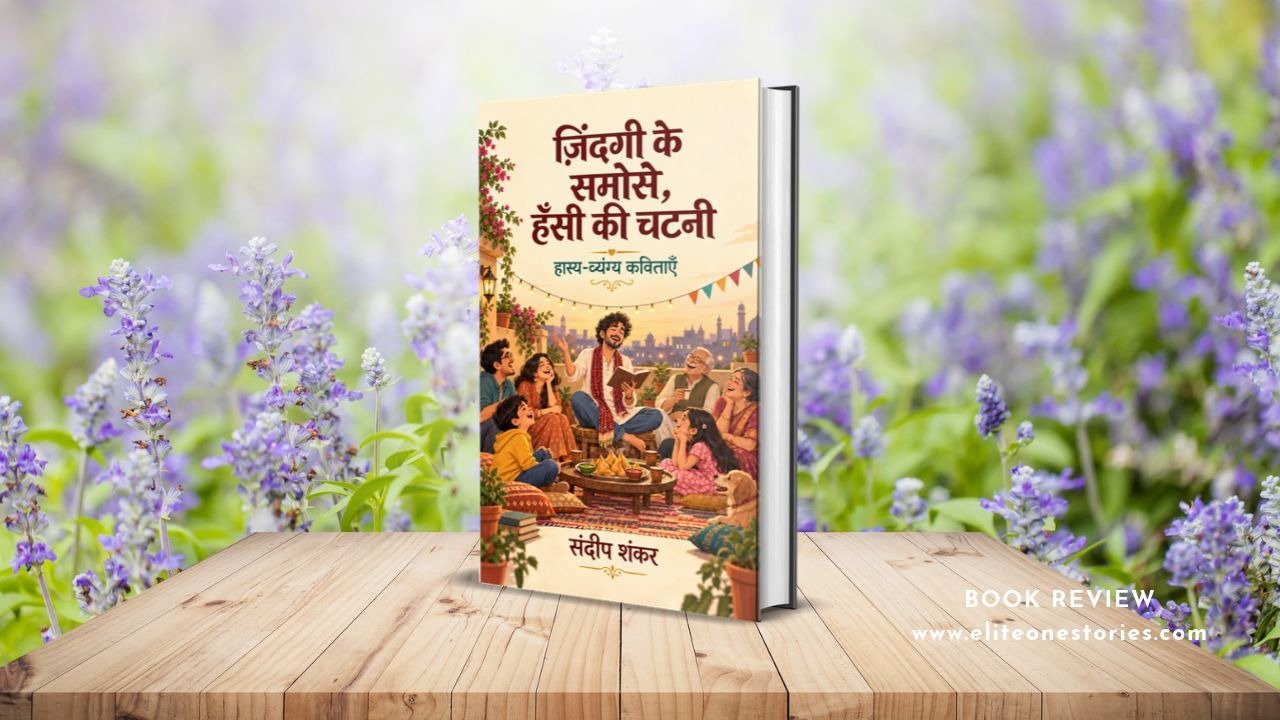
Some books attract attention because their material sounds close enough to enter a conversation already in progress. Zindagi Ke Samose, Hansi Ki Chatni has that kind of invitation. Sandeep Shanker draws his creative interests from childhood, school and college life, food, everyday observations and amusing incidents. His collection of humorous, satirical and story-like poems is presented as an occasion to remember, recognise and smile. For a reader approaching it through these interests, the attraction is personal. There is the possibility of meeting a feeling one has experienced but never thought to describe, and of wanting to tell someone else about it.
Shanker’s biography is useful because it explains the scale of his attention. He is an engineer by profession who came to poetry through his enjoyment of reading, writing and humour. The account offers no dramatic conversion story, and none is necessary. A serious interest in words can grow alongside another occupation. This makes his authorial introduction approachable: it locates the impulse to write in a person’s continuing curiosity about daily experience. Readers with interests outside their working lives may recognise that combination. It gives the book a human starting point before any claims are made for its literary achievement.
Childhood memory is a particularly suggestive source for this kind of writing. Remembering an earlier self involves seeing more than the child could see at the time. A conviction that once seemed absolute may acquire a comic proportion; an ordinary pleasure may gain significance through distance. Returning to those feelings offers a way to consider the younger self with patience. It helps explain why a humorous collection can also invite tenderness. Laughter may acknowledge how much a person has changed while preserving affection for the person they used to be. That balance is part of the book’s emotional promise.
School and college memories extend this possibility into a period often remembered through other people. A reader may carry private associations with those years that another person cannot fully share. Literature can still make contact through an attitude, an embarrassment or a recognisable way of responding to a situation. The appeal of Shanker’s chosen material lies in this space between an individual memory and a shared feeling. It does not require every reader to have lived the same incident. It asks whether the emotional outline is recognisable enough for someone to supply a memory of their own.
Food adds a different route into recollection. Shanker’s biography names an interest in the pleasures and stories of eating, and the book’s title makes that interest immediately visible. Food can remind a reader of company as readily as flavour. It may call up a person’s preferences or a familiar way of spending time together. The title therefore suggests a welcoming atmosphere without requiring an elaborate explanation. Its relevance to this collection is strongest when considered alongside the author’s wider interest in amusing incidents. The appetite being addressed includes a reader’s wish to remember how ordinary enjoyment felt in the presence of others.
The story-like quality of the poems also suits a reading experience built around recollection. When people exchange memories, they usually give an incident a shape: something happened, someone responded, and a detail became worth remembering. A poem can select and compress that movement. Shanker’s decision to bring storytelling into the collection gives prospective readers a useful point of orientation. Someone who feels comfortable with stories and is curious about poetry has a recognisable way to approach the book. An event can hold attention while the reader considers its telling, and a remembered response can matter as much as the occasion itself.
The author’s belief about sharing laughter with loved ones gives these subjects a clear emotional centre. He sees such moments as making the journey through a busy life more beautiful. The thought is modest enough to remain credible. It concerns time spent together and a change in the quality of that time. A humorous book can be relevant to that wish by giving readers something to discuss, recall or read aloud if they choose. There is no need to promise a particular reaction. The proposed value is the opportunity for a little shared attention, with humour making the approach easier.
That approach also leaves room for a more thoughtful understanding of nostalgia. Looking back can become overly flattering if every past experience is treated as uncomplicated. Humour offers another possibility because it allows affection to coexist with an awareness of awkwardness. The book’s stated mixture of amusement and satire makes that possibility especially relevant. Readers may welcome a view of memory that permits them to care about an earlier time while smiling at its confusions. The pleasure lies partly in allowing those responses to coexist. One can miss a period of life without wishing to become exactly the person one was then.
There is also something appealing about approaching a book without requiring every response to be useful. A reader might recognise a feeling, remember an old acquaintance or simply enjoy the possibility of a smile. Shanker’s emphasis on a few moments of shared laughter gives these modest responses their due. It allows pleasure to count as a reason for reading. For someone whose attention is regularly claimed by practical demands, that can be an inviting prospect. The collection’s stated purpose makes room for an encounter with familiar experience that need not end in advice, a judgement or a plan to improve oneself.
The strongest reason to consider Zindagi Ke Samose, Hansi Ki Chatni is the particular sort of company its premise offers. Its material points towards the people and occasions that give daily life its personal texture. Its invitation to smile can include one’s own younger self, and its author’s outlook gives that response a place within relationships. Readers interested in recollection, approachable poetry and everyday comedy have a clear reason to explore it. A memory does not have to be extraordinary to remain worth someone’s attention. Shanker’s project makes an appealing case for returning to familiar days with curiosity about what they still mean.