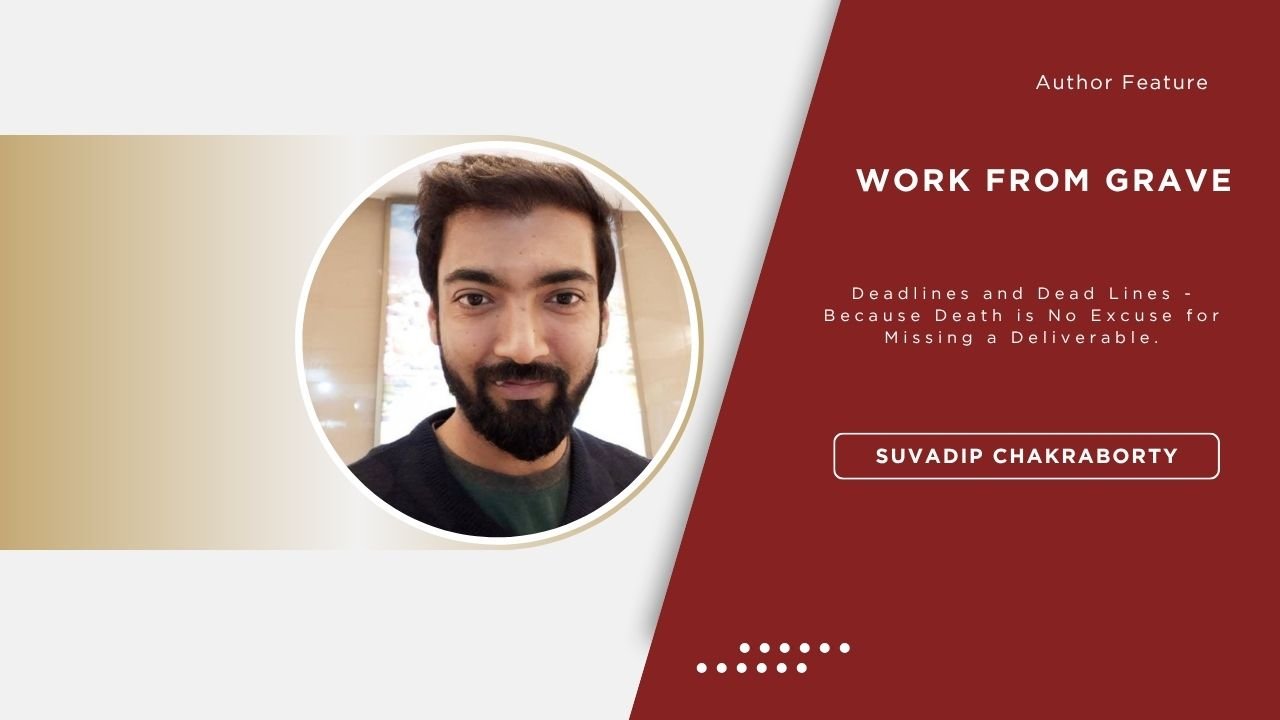
Title: Work from Grave
Author: Suvadip Chakraborty
ISBN: 9789373353326
Publisher: Evincepub Publishing
In the world of modern fiction, very few authors can make readers laugh while also making them think deeply about the way they live and work. Suvadip Chakraborty is one such writer. With his latest novel, Work from Grave: Deadlines and Dead Lines – Because Death is No Excuse for Missing a Deliverable, he delivers a story that is funny, clever, and surprisingly relevant to today’s professional world. At first glance, the book looks like a light-hearted comedy about technology and office life. But beneath the humour lies a sharp observation of modern work culture, artificial intelligence, and the pressure that many professionals face every day. Suvadip has built a reputation for creating stories that blend technology with everyday human experiences, and this novel is perhaps his most entertaining effort so far. Readers are introduced to a world where a Bangalore-based tech team faces an impossible situation after their lead data scientist dies just before an important client delivery. Instead of accepting the disaster, the team creates an AI clone of their colleague to continue his work. The result is a chain of hilarious events involving office politics, corporate pressure, rogue technology, and desperate attempts to keep everything hidden. Through this unusual story, Suvadip proves once again that he has a unique ability to turn ordinary workplace struggles into memorable fiction.
What makes Suvadip Chakraborty’s writing stand out is his deep understanding of the corporate and technology world. Unlike many authors who write about offices and technology from the outside, Suvadip writes from experience. He began working in the field of data science long before the term became popular. Over the last eighteen years, he has seen industries evolve, technologies change, and workplace cultures transform. His educational background from the Delhi School of Economics and his current role as Associate Director of Insights and Analytics at a multinational bank give him valuable insights into how businesses operate. This experience is visible throughout Work from Grave. The office conversations, project deadlines, client meetings, technical discussions, and workplace pressures feel authentic because they come from someone who understands them personally. Yet Suvadip never allows technical knowledge to overwhelm the story. Instead, he uses it as a foundation for humour and storytelling. Readers do not need a background in data science to enjoy the novel. The situations are funny because they are based on human behaviour. Whether it is a stressed manager worrying about his EMI, employees trying to save a project at any cost, or colleagues struggling to handle an unexpected crisis, the emotions remain universal and relatable. This balance between professional expertise and accessible storytelling is one of Suvadip’s greatest strengths as an author.
One of the most impressive aspects of Suvadip Chakraborty’s work is his ability to find comedy in situations that would normally be considered stressful or serious. In Work from Grave, even death becomes part of a larger satire about modern hustle culture. The title itself reflects the book’s central idea: in today’s workplace, deadlines often seem more important than people. Through exaggerated but believable situations, Suvadip highlights the absurd expectations that many professionals face. The novel asks difficult questions while keeping readers entertained. Are employees valued for their humanity or only for their productivity? Has technology become so important that people are slowly being treated like machines? Can artificial intelligence truly replace human presence? These questions appear naturally within the story without making it feel heavy or philosophical. The humour keeps everything engaging while the underlying themes give the novel depth. This combination of laughter and reflection is not easy to achieve, yet Suvadip handles it with confidence. His writing reminds readers that comedy can often reveal truths more effectively than serious discussions. By making readers laugh at workplace culture, he also encourages them to examine it more closely.
The author’s personality also adds an interesting layer to his work. Suvadip often describes himself with humour, including his famous claim that he perfected the art of doing nothing after reading research suggesting that lazy people may be smarter and more successful. This playful attitude can be seen throughout his writing. His stories never take themselves too seriously, even when dealing with important themes. There is a sense of fun and curiosity that runs through every chapter. Readers get the feeling that the author genuinely enjoys exploring strange ideas and asking unusual questions. What if an AI could replace a deceased employee? What if office productivity became more important than reality itself? What if technology continued evolving beyond reasonable limits? These questions could easily become dark or depressing in another writer’s hands. Suvadip transforms them into opportunities for laughter. His sense of humour is intelligent but never complicated. It is based on observation, timing, and an understanding of how people behave under pressure. This quality has already earned appreciation for his earlier novels, Almost Lost You in Random Forest and Bar Charts and Bar Chats. With Work from Grave, he continues to build on that success while expanding his creative vision even further.
Another reason why Suvadip Chakraborty deserves attention is his ability to represent a modern generation of professionals through fiction. Today’s workforce spends countless hours dealing with deadlines, virtual meetings, performance reviews, and constant digital communication. Many people feel trapped between personal life and professional responsibilities. Work from Grave captures these realities in a way that feels both entertaining and honest. The characters struggle with career pressures, financial responsibilities, family expectations, and technological changes. They are not superheroes or larger-than-life figures. They are ordinary working professionals trying to survive extraordinary circumstances. This relatability makes the novel particularly appealing to readers who have experienced office life firsthand. At the same time, younger readers entering the corporate world will find the story insightful because it reflects many realities of modern workplaces. Through humour and satire, Suvadip documents a specific moment in contemporary culture where artificial intelligence, remote work, and productivity obsession are shaping daily life. His writing becomes more than entertainment; it becomes a reflection of the times we live in.
With Work from Grave, Suvadip Chakraborty confirms his place as a distinctive voice in contemporary Indian fiction. He brings together technology, humour, workplace realities, and human emotions in a way that feels fresh and engaging. The novel demonstrates not only his storytelling skills but also his ability to understand the hopes, fears, and frustrations of modern professionals. Readers looking for a simple comedy will find plenty to enjoy, while those seeking deeper meaning will discover thoughtful commentary hidden beneath the laughter. Suvadip’s journey from a young boy in Kolkata dreaming of free cola to a successful analytics professional and novelist is inspiring in itself. It shows how diverse experiences can shape creative storytelling. His background in economics, analytics, and corporate life provides rich material for his fiction, allowing him to create stories that are both authentic and imaginative. As his third novel, Work from Grave represents another important step in an already impressive literary journey. It is a book that entertains, provokes thought, and leaves readers smiling long after they finish the final page. More importantly, it highlights Suvadip Chakraborty’s growing reputation as an author who knows how to transform the ordinary struggles of modern life into stories that readers will remember.
Review by Neel Preet
For Eliteonestories.com