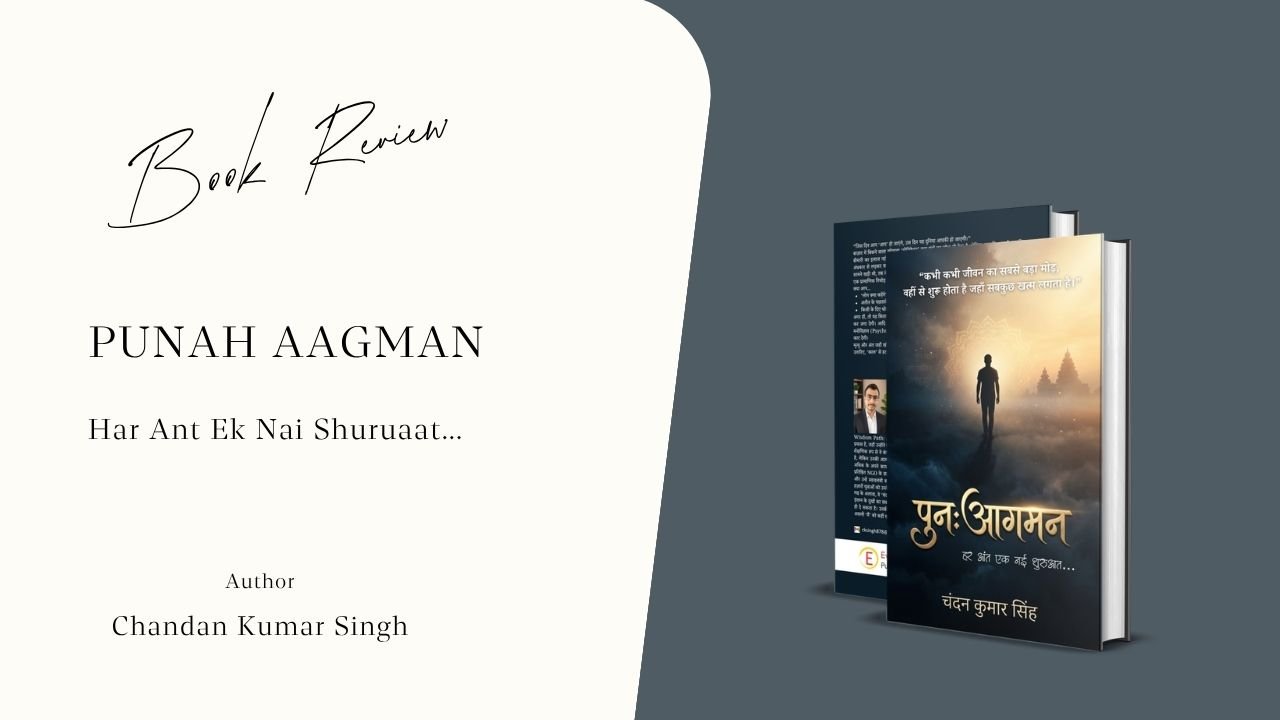
Title: Punah Aagman – Har Ant Ek Nai Shuruaat…
Author: Chandan Kumar Singh
ISBN: 9789373352145
Publisher: Evincepub Publishing
Punah Aagman: Har Ant Ek Nai Shuruaat… by Chandan Kumar Singh is a deeply inspiring and thought provoking book that speaks directly to people who are struggling with pain, fear, confusion, failure, or emotional stress in their lives. In today’s fast moving world, many people feel lost, disconnected, and burdened by their past experiences. This book arrives as a comforting companion for such readers. The title itself carries a powerful message that every ending has the possibility of becoming a new beginning. The author beautifully combines his personal life experiences with the timeless wisdom of Indian philosophy, especially teachings from the Bhagavad Gita, Upanishads, Vedanta, and the thoughts of great spiritual masters. What makes this book truly special is that it does not remain limited to theoretical discussions. Instead, it transforms ancient wisdom into practical guidance that can be applied in everyday life. The language is simple, conversational, and relatable, making even complex philosophical ideas easy to understand for common readers. From the very first chapter, the author succeeds in creating a strong emotional connection with readers. He speaks not as a distant philosopher, but as someone who has personally faced life’s darkest moments and emerged stronger. This authenticity gives the book tremendous emotional depth and credibility. Readers can easily feel that every lesson shared in the book comes from lived experience rather than borrowed knowledge.
One of the greatest strengths of Punah Aagman is its ability to address common emotional struggles that almost everyone faces at some point in life. The chapters dealing with fear, courage, self doubt, attachment, expectations, ego, and identity are particularly impactful. Chandan Kumar Singh explains these difficult subjects through practical examples, real life inspired case studies, and simple analogies that readers can instantly connect with. Whether it is the fear of failure, the pain of losing relationships, career uncertainty, or the burden of social expectations, the author provides meaningful insights that encourage readers to look at their problems from a fresh perspective. The discussion on fear and courage is especially noteworthy. The author explains that courage does not mean the absence of fear, but the willingness to move forward despite fear. This idea is presented through relatable examples and practical exercises that motivate readers to take action in their lives. Similarly, the chapters on ego and the “real self” encourage deep self reflection. The author challenges readers to move beyond labels, positions, and external achievements in order to discover their true identity. Such discussions have the potential to create lasting changes in the reader’s thinking process. The book constantly reminds readers that inner transformation is possible for everyone, regardless of their current circumstances.
Another remarkable aspect of this book is the seamless integration of ancient Indian wisdom with modern psychology. Many self help books either focus entirely on motivational techniques or rely heavily on spiritual teachings. However, Punah Aagman successfully creates a bridge between both worlds. The author frequently explains psychological concepts in simple language and then connects them with teachings from Indian scriptures. This approach makes the book unique and highly relevant for modern readers. Concepts such as the functioning of the mind, emotional conditioning, fear responses, and self awareness are explained in a practical and understandable manner. The references to the Bhagavad Gita, Chanakya Niti, Adi Shankaracharya’s teachings, and Vedantic philosophy are not presented as religious sermons. Instead, they are used as tools for personal growth and emotional healing. Readers from different backgrounds can appreciate these teachings because they are presented in a universal and practical context. The special section based on “Shivoham” and the exploration of one’s true nature stands out as one of the most profound parts of the book. The author simplifies highly philosophical ideas without losing their depth, allowing even readers unfamiliar with Indian philosophy to engage with these concepts comfortably. This balance between spirituality and practicality greatly enhances the overall reading experience.
The author’s personal journey adds immense emotional power to the narrative. Knowing that Chandan Kumar Singh wrote this book after facing a life threatening illness like cancer gives additional significance to every page. His experiences with suffering, uncertainty, and spiritual awakening form the emotional foundation of the book. Rather than presenting himself as a perfect teacher, the author openly shares his vulnerabilities, struggles, and realizations. This honesty creates a strong bond between the writer and the reader. Readers who are going through difficult phases in life may find great comfort in knowing that someone who has experienced severe challenges has managed to find hope, meaning, and peace. The author’s unwavering faith in Mahadev and his deep engagement with Indian philosophy shine throughout the book, but they never become overwhelming or preachy. Instead, they serve as sources of strength and inspiration. His experience of working with rural youth and helping people overcome depression and career confusion is also reflected in the practical nature of his guidance. The exercises, action plans, reflective questions, and therapeutic suggestions included in various chapters make the book interactive and useful. Readers are not merely asked to read and forget. They are encouraged to pause, reflect, write, and actively participate in their own healing journey.
In terms of writing style, Punah Aagman deserves appreciation for its accessibility and emotional appeal. The language is straightforward, engaging, and filled with examples from everyday life. The author uses stories, analogies, and conversational expressions to simplify complex ideas. This makes the book suitable for readers across different age groups and educational backgrounds. Young adults facing career confusion, professionals dealing with stress, individuals recovering from personal loss, and readers interested in spirituality can all benefit from this book. At times, some readers who prefer purely academic or analytical discussions may find the highly conversational style slightly repetitive. Certain ideas are revisited multiple times from different angles. However, this repetition also serves a purpose. It reinforces key messages and ensures that important lessons remain with the reader long after finishing the book. The emotional tone of the book remains consistently encouraging and compassionate. Rather than offering unrealistic promises of instant success, the author emphasizes gradual inner transformation, self awareness, and consistent effort. This realistic approach enhances the book’s credibility and effectiveness. The book never encourages escapism. Instead, it motivates readers to face their fears, accept their realities, and rebuild their lives with renewed strength and wisdom.
Overall, Punah Aagman: Har Ant Ek Nai Shuruaat… is a meaningful, heartfelt, and transformative work that successfully combines spirituality, psychology, and practical wisdom. Chandan Kumar Singh has created more than just a self help book. He has offered readers a sincere guide for emotional healing and personal rediscovery. The central message that every ending can become the beginning of something new resonates powerfully throughout the book. In an age where people are constantly searching for external solutions to inner problems, this book gently reminds readers that true strength lies within. It encourages individuals to reconnect with themselves, let go of limiting beliefs, and embrace life’s challenges as opportunities for growth. The author’s personal experiences, combined with ancient Indian wisdom and practical guidance, make this book both inspiring and deeply relevant. For anyone seeking hope, clarity, inner peace, or a fresh start in life, Punah Aagman is undoubtedly a valuable and worthwhile read. It is a book that not only informs the mind but also touches the heart and inspires meaningful change.
Buy on Amazon: https://www.amazon.in/dp/9373352148
Review by Neel Preet
For Eliteonestories.com