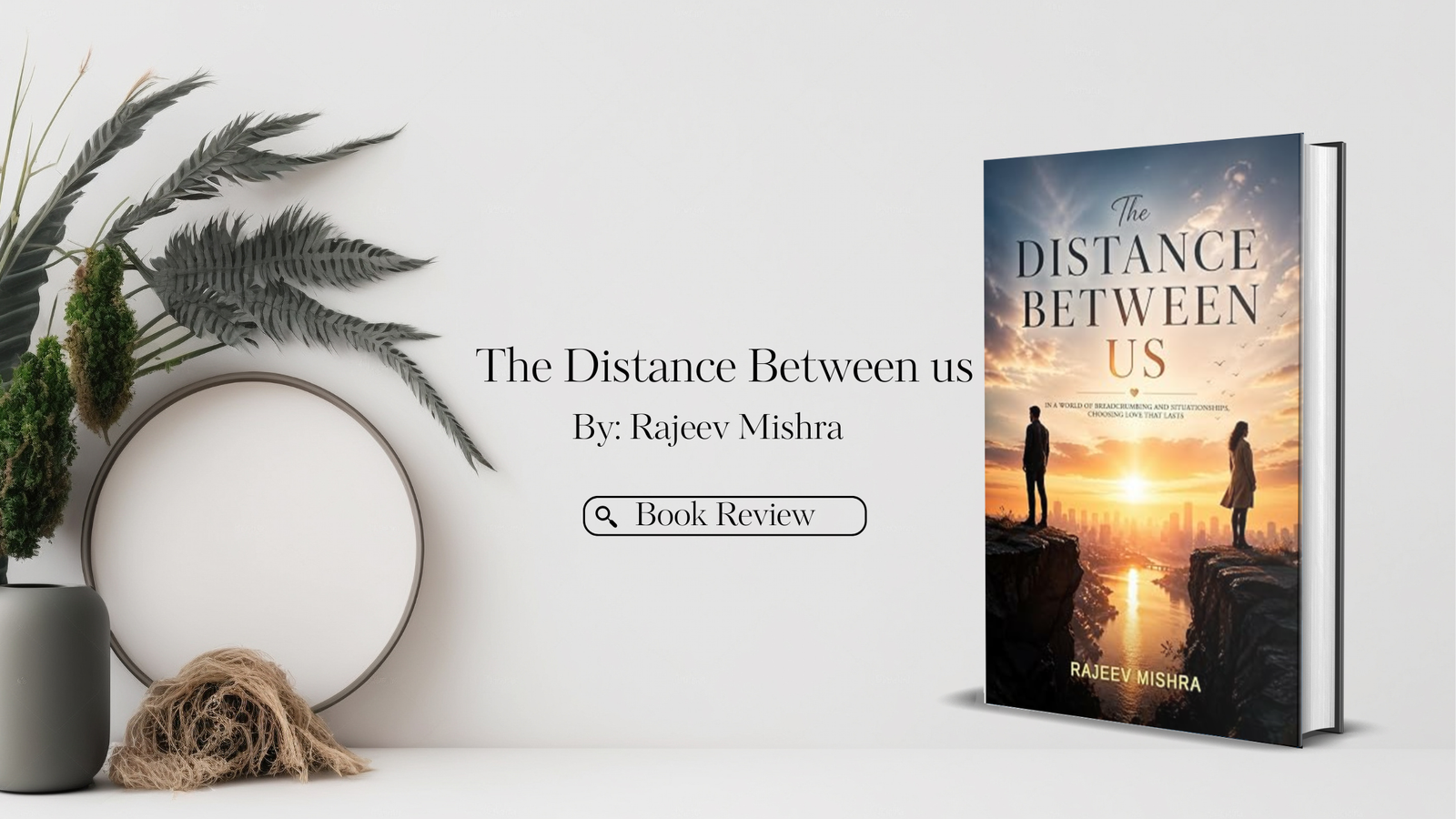
There are books that entertain, books that educate, and then there are books that quietly hold up a mirror to our lives. The Distance Between Us by Rajeev Mishra belongs to the third category. It is not merely a book about love or relationships. It is an emotional exploration of everything that happens between two people after the excitement fades, when conversations become shorter, silences become heavier, and distance slowly finds its way into places once filled with affection.
Rather than presenting romance through grand gestures or dramatic conflicts, Rajeev Mishra chooses to focus on the ordinary moments that define real relationships. The book recognizes a truth many people experience but rarely express: relationships seldom break overnight. They unravel gradually through words left unsaid, emotions left unshared, and moments that quietly pass without acknowledgment. This understanding gives the narrative remarkable emotional depth and authenticity.
One of the most compelling aspects of The Distance Between Us is its honesty. It refuses to romanticize love or reduce relationships to simple formulas. Instead, it presents love as a living experience that evolves alongside the people within it. The author acknowledges that while falling in love often feels effortless, sustaining that love requires awareness, communication, emotional maturity, and the willingness to continually understand both ourselves and our partners.
The book immediately establishes an emotional connection by reminding readers how love once felt effortless. Those early conversations that stretched endlessly into the night, the excitement of being understood without explanation, and the comfort of simply being chosen are memories almost everyone can relate to. Yet Rajeev gently asks an uncomfortable question. Did love really change, or did we? That question becomes the emotional foundation upon which the entire book is built.
What follows is a thoughtful examination of modern relationships shaped by busy careers, digital communication, social expectations, and the constant pressure to appear successful. While technology has made communication easier than ever, emotional connection often feels more fragile. Rajeev explores this contradiction with remarkable sensitivity. His observations never sound accusatory. Instead, they invite readers to pause and examine their own experiences.
One of the book’s greatest strengths lies in its understanding of emotional silence. Many relationship books focus on arguments, betrayal, or dramatic conflicts. The Distance Between Us focuses on something far more subtle and perhaps more painful. It explores the quiet spaces between people. The conversations rehearsed but never spoken. The truths softened to avoid conflict. The emotions quietly hidden in the hope that time will somehow resolve them. These are the moments that often define relationships, yet they rarely receive the attention they deserve.
Rajeev Mishra writes with remarkable emotional intelligence. His language is simple, reflective, and deeply relatable. Rather than relying on complicated psychological theories or dramatic storytelling, he trusts everyday experiences to communicate profound truths. Readers are likely to find themselves pausing frequently, recognizing pieces of their own relationships within the pages. The emotional resonance comes not from extraordinary events but from familiar realities that most people have quietly lived through.
The title itself, The Distance Between Us, carries multiple meanings. It refers not only to physical separation but also to the invisible emotional distance that gradually develops between people who once felt inseparable. The author beautifully illustrates how this distance often begins long before anyone notices it. A postponed conversation, an ignored emotion, an unmet expectation, or a growing habit of silence slowly creates a space that becomes increasingly difficult to bridge. By presenting distance as an emotional process rather than a single event, Rajeev offers readers a far more realistic understanding of how relationships evolve.
Another admirable quality of the book is its refusal to assign blame. Relationships are rarely the result of one person’s mistakes alone, and Rajeev understands this complexity. Rather than portraying one partner as right and the other as wrong, he explores how two people can gradually lose emotional alignment despite having the best intentions. This balanced perspective allows readers to reflect honestly without feeling judged or defensive.
Beyond relationships, the book also becomes an exploration of identity. One of its most powerful messages is that love should never require someone to lose themselves in order to keep another person close. Throughout the narrative, Rajeev repeatedly returns to the idea that healthy relationships are built when two emotionally aware individuals choose one another without sacrificing their own sense of self. This perspective feels especially meaningful in today’s world, where personal identity and emotional wellbeing have become increasingly important conversations.
The author’s own professional background adds credibility to these reflections. As a business leader and observer of human behavior, Rajeev Mishra has spent years interacting with individuals navigating both professional success and personal complexity. His earlier work exploring focus, distraction, and stress among teenagers already demonstrated his interest in understanding human psychology. With The Distance Between Us, he shifts that same thoughtful observation toward adult relationships, creating a work that feels both insightful and emotionally grounded.
Unlike many books in the relationship genre, The Distance Between Us does not attempt to solve every problem. It offers no guaranteed formula for lasting love, nor does it promise perfect relationships. Instead, it encourages readers to become more aware of their own emotional habits, communication patterns, expectations, and fears. That honesty makes the book feel authentic. Real relationships are rarely perfect, and Rajeev never pretends otherwise.
The pacing of the book complements its reflective nature. Every chapter encourages readers to slow down, absorb its ideas, and consider how they apply to their own lives. It is not a book designed to be rushed. Instead, it invites quiet contemplation, making it equally valuable for individuals, couples, and anyone interested in understanding the emotional landscape of modern relationships.
Perhaps the book’s most lasting contribution is its reminder that every relationship leaves something behind. Not every love story ends with forever, but every connection shapes who we become. Some relationships teach us resilience. Others teach forgiveness, boundaries, vulnerability, or acceptance. Rajeev presents these lessons with grace, helping readers appreciate that even endings can carry meaning when viewed with honesty rather than regret.
Emotionally, the book succeeds because it speaks to experiences that often remain private. Readers who have experienced emotional distance, unresolved conversations, quiet heartbreak, or personal transformation through love will likely find the narrative deeply comforting. It reassures them that they are not alone in navigating these complexities.
From a literary perspective, The Distance Between Us balances emotional storytelling with thoughtful reflection remarkably well. Its greatest achievement lies in making readers feel understood. Rather than providing answers, it asks meaningful questions, allowing each reader to discover their own truths within the narrative.
In an age where relationships are often discussed through social media quotes and simplified advice, Rajeev Mishra offers something far more valuable. He offers honesty. His writing acknowledges that love is beautiful, but also complicated. That intimacy requires courage. That communication demands vulnerability. And that emotional connection cannot survive without conscious effort.
Ultimately, The Distance Between Us is more than a book about love. It is a thoughtful meditation on connection, identity, communication, and emotional growth. It reminds readers that while finding the right person matters, becoming emotionally present for another human being matters even more.
Rating: 5/5
Profoundly reflective, emotionally intelligent, and beautifully written, The Distance Between Us is a book that lingers long after its final page. It does not simply tell a story about relationships. It helps readers better understand their own. Anyone who has ever loved, lost, waited, questioned, or hoped will find something deeply personal within its pages.
Book link:https://amzn.in/d/09tLVa5x