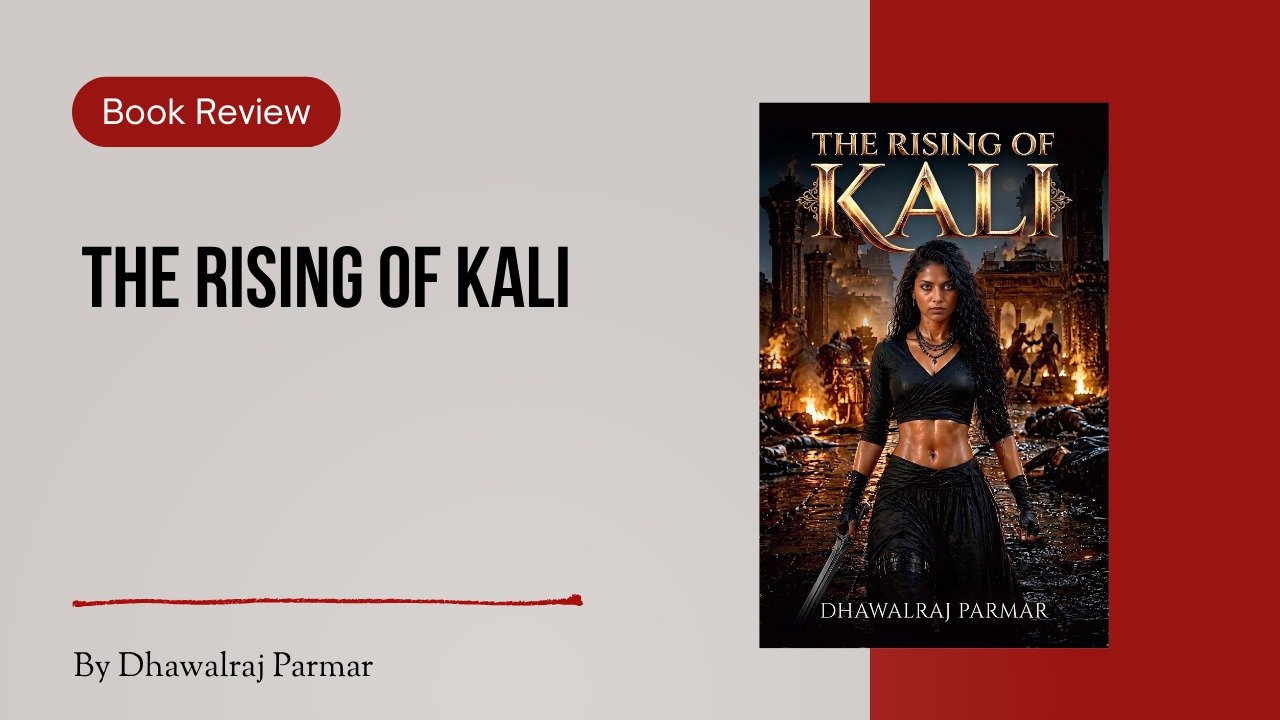
Title: The Mysteries of Earth and Beyond
Author Name: Bhaskar & Monami
ISBN: 9788166520068
Publisher: Evincepub Publishing
Some books give us information, some books tell us stories, and some books make us look at the world around us in a completely different way. The Mysteries of Earth and Beyond by Bhaskar and Monami belongs to the third kind. It is a book for curious minds, for readers who have looked at an ancient monument and wondered how it was built, looked at the night sky and asked what lies beyond it, or stood near the sea and thought about how much of our planet is still unknown. The book takes readers through fourteen different doors of mystery, where every chapter opens another question about Earth, science, history, nature, the universe, and the unknown. From the Great Pyramid and the Nazca Lines to water, sound, numbers, energy, ancient knowledge, and the stars, the journey keeps moving between the familiar and the unexplained. The authors do not present the book as a collection of facts that readers simply have to remember. Instead, they invite readers to pause, think, question, and explore. The opening of the book itself describes these fourteen stories as doors, with each door leading to questions that scientists, archaeologists, and explorers are still trying to understand. This makes the reading experience feel less like studying a subject and more like joining an adventure. The book also introduces the idea of the “Shimmer”, an invisible connection that seems to bring different parts of the world and universe together. Whether the reader accepts every theory in the book or simply enjoys thinking about the possibilities, the larger message remains clear: curiosity is where discovery begins.
One of the most interesting features of The Mysteries of Earth and Beyond is the way Bhaskar and Monami use characters to take readers into these questions. Leo, Maya, Kaelen, Elara, Arran, and others appear at different points in the journey. They are not presented simply as fixed characters with one age or one identity. Instead, they represent different sides of curiosity that can exist in all of us. Maya is shown as someone who wants to follow questions wherever they lead. Leo is connected with patterns and observation. Kaelen represents the person who wants proof before accepting an idea, while Elara represents the person who notices connections that others may miss. Through these characters, the authors make difficult or unusual ideas easier to approach. In the story of the Great Pyramid, for example, young Maya travels with her grandfather and begins asking questions about ancient structures, the Nazca Lines, Puma Punku, old texts, and the possibility of knowledge that may have been lost with time. The story does not simply ask readers to accept one explanation. It repeatedly brings them back to the importance of looking at evidence, asking questions, and exploring further. The book openly tells readers that some parts are connected to real areas of science such as quantum physics, archaeology, acoustic engineering, and astronomy, while other parts deal with mysteries and theories that remain unproven. This mix gives the book its distinctive character. It allows the imagination to travel far while keeping the spirit of questioning alive. The message is especially meaningful for young readers because it shows that science does not begin only in a laboratory or classroom. Sometimes it begins with a very simple question: “What if?”
The book also explores the hidden possibilities within things that appear ordinary. One of the early chapters, “The Secret Whisper of Water”, uses Leo’s journey to explore ideas about water, memory, vibration, emotions, and connection. Through his grandfather’s experiments, Leo begins to look at water not simply as something we drink or use every day, but as something that may hold stories and raise deeper questions about nature and consciousness. The story connects these ideas with ancient cultures and their respect for water, while also encouraging readers to think about how much water shapes human life. Another chapter, “The Secret of the Singing Stones”, takes the reader into the Great Pyramid and explores sound, vibration, resonance, energy, and the possibility that ancient structures may have served purposes beyond what we commonly imagine. The book uses these stories to connect science with wonder. It takes familiar subjects and asks readers to look at them from another angle. The result is a reading experience that can make even a young reader stop and think. What makes these chapters engaging is not only the mystery itself, but also the human response to mystery. The characters become curious, doubtful, excited, and sometimes unsure. They search for answers rather than receiving everything easily. This is an important quality of the book because real learning often begins when we realise that we do not know something. The authors encourage readers to be comfortable with questions. Instead of saying that every mystery has already been solved, the book creates space for imagination, discussion, research, and discovery. In this way, The Mysteries of Earth and Beyond can be read not only as a book of stories, but also as an invitation to develop a questioning mind.
As the journey continues, the scope of the book becomes wider. The fourteen chapters are arranged across five parts, moving from “Foundations of Wonder” to “The Language of the Universe”, “Earth’s Energy and Hidden Connections”, “Convergence of Mysteries”, and finally “The Grand Finale”. This structure gives the book a sense of movement. It begins with questions about ancient places and the natural world, then gradually moves towards numbers, the universe, hidden connections, unexplained events, and the stars. Titles such as “The Number Weavers”, “The Thirty-Two Gates of Wisdom”, “The Whisperer in the Dark”, “The Clock That Stole Time”, “The Whispering Earth”, and “The Secrets of the Shimmer” suggest the wide range of ideas explored in the book. Later chapters such as “The Whispering Needle”, “The Echo Chamber”, “The Broken Sound”, “The Blue Apple”, and “The Network of Stars” continue this movement towards larger and more unusual questions. The book therefore does not remain limited to one subject. It brings together Earth sciences, astronomy, ancient history, sound, energy, mathematics, human imagination, and questions about our place in the universe. This wide approach reflects the curiosity of the authors themselves. Bhaskar and Monami began their journey at the Department of Geological Sciences, Jadavpur University in Kolkata, where their interest in the Earth grew alongside their personal connection. Their professional journey has taken them from studying rocks through petrographic microscopes to working across field sites and exploring the many processes that shape our planet. Their scientific background gives a special meaning to a book that constantly asks readers to look beneath the surface. The book may move into imaginative territory, but at its heart it is driven by a scientific spirit: observe, question, investigate, and remain open to what may be discovered.
Behind this unusual book are two authors whose own lives are closely connected with the world of Earth science and exploration. Bhaskar is a faculty member in the Department of Earth and Atmospheric Sciences at NIT Rourkela and the founder of the Tectonic Geodesy research group. His scientific work includes more than 80 research articles, showing a long connection with academic research and the study of our planet. Monami shares the same spirit of curiosity and exploration, and together they have also worked on the poetry book Earth Sciences-Our Grounded Love. Their journey from university classrooms and laboratories to field locations has given them the opportunity to see Earth from many different sides. Rocks, landscapes, movements beneath the Earth’s surface, and the long history of our planet are not simply topics for them. They are part of a life of learning and discovery. This background can be felt in The Mysteries of Earth and Beyond, where the authors bring scientific ideas into stories that are easier for general readers to approach. What makes their approach especially interesting is that they do not present themselves as people who have solved every mystery. Instead, the book repeatedly returns to the value of asking better questions. The authors’ scientific experience and their love for imagination come together in a way that makes the book both informative and playful. Their characters become explorers, but so does the reader. Every mystery becomes an opportunity to stop and think about what we know, what we do not know, and what we may discover in the future. In a world where information is available everywhere, the ability to remain curious is becoming even more valuable. Bhaskar and Monami remind us that knowledge is not only about having answers. It is also about having the courage to ask meaningful questions. Ultimately, The Mysteries of Earth and Beyond is a celebration of the explorer inside every person. It is a book that asks readers to look at the Earth beneath their feet, the stars above their heads, and the countless questions that exist between the two. Its message is especially clear in the way it speaks to young explorers and curious souls. The book reminds us that discovery does not belong to one age, one country, or one profession. A child looking at the sky, a student studying science, a researcher working in a laboratory, or an adult wondering about an ancient monument can all begin with the same simple thought: “What if?” The stories of Maya, Leo, and the other characters make that thought feel personal and alive. Their journeys show that curiosity can lead us into history, science, nature, technology, and even the deepest questions about who we are. At the same time, the book leaves space for readers to make their own judgments about the theories and mysteries they encounter. It does not ask readers to stop questioning once they reach an interesting idea. Instead, it encourages them to keep looking, checking, thinking, and exploring. That may be the most valuable lesson of all. We live on a planet that still holds countless secrets, while the universe around us is larger than we can easily imagine. There are ancient structures we still study, natural systems we continue to understand, distant stars we can barely see, and questions that may take generations to answer. The Mysteries of Earth and Beyond invites readers to enjoy that uncertainty instead of fearing it. Bhaskar and Monami have created a journey where science meets wonder, history meets imagination, and questions become the beginning of adventure. The final message is simple and powerful: we do not have to know everything to begin exploring. We only need curiosity, an open mind, and the courage to ask the next question. The mystery is still waiting, and the journey has only just begun.