Title: Society Opinion And Parents
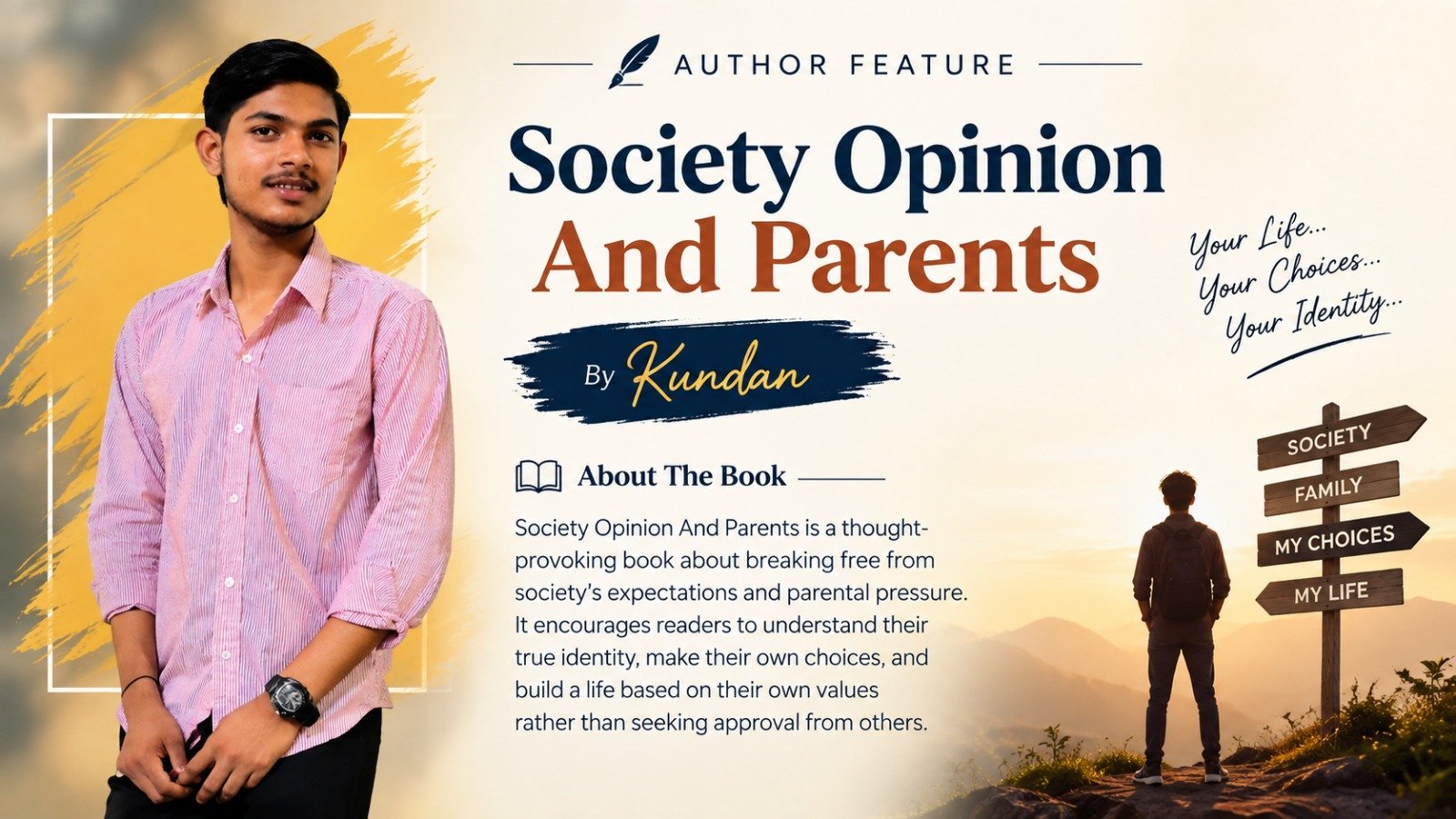
Author Name: Kundan
ISBN: 9789373357904
Publisher: Evincepub Publishing
There are some questions that quietly become a part of our everyday life. “Log kya kahenge?” “What will my parents think?” “What if I fail?” “What will people say if I choose something different?” For many people, these questions are not just simple thoughts. They can influence education, career choices, relationships, dreams, and even the way a person sees themselves. Kundan’s book Society Opinion And Parents brings this very common struggle into focus. It is a thought-provoking work that looks at the pressure created by society, expectations from parents, comparison with others, fear of failure, and the difficult journey of understanding one’s own identity. The book begins with a simple but powerful idea: society may not have a face, but its voice can be heard through the people around us. From childhood, many of us learn to think about what others will say before thinking about what we actually want. Kundan explores how this invisible pressure can slowly affect our confidence and decisions. The book speaks especially to young people who may be standing at a point where their dreams and the expectations of others do not always match. Instead of telling readers to fight with society or reject their parents, the book takes a more balanced approach. It asks readers to understand where the pressure comes from and, at the same time, learn to respect their own thoughts and choices. In this way, Society Opinion And Parents becomes more than a discussion about social pressure. It becomes a conversation about finding the courage to know yourself and create a life that feels meaningful to you.
One of the strongest parts of Kundan’s writing is the way he brings familiar situations into the discussion. The “Log kya kahenge” mindset is something many Indian families and young people can easily understand. A student may want to choose a different career, but relatives may question the decision. Someone may want to start a business, but the fear of failure may stop them. A young person may want to follow a passion, but the idea of choosing a “safe” career can become stronger than the dream itself. Kundan explains that society often creates its own definition of success through money, job, government service, status, and social respect. However, the book asks an important question: what about happiness, peace of mind, and personal satisfaction? A person may earn well and still feel empty, while another person may earn less but feel peaceful with their life. This thought connects with many people because success does not look the same for everyone. The book also discusses comparison culture, where children and young adults are constantly compared with someone else. “Sharma ji ka beta” becomes a familiar example of how marks, college, salary, jobs, and achievements can become measures of a person’s worth. Kundan reminds readers that everyone has a different journey, different strengths, and different struggles. When we compare our lives with others, we often forget to notice our own progress. This message is especially relevant today when social media makes it easy to see other people’s achievements while remaining unaware of their failures and struggles. The book points out that comparing our real life with someone else’s carefully selected highlights is never fair. Through these ideas, Kundan encourages readers to look at their own journey with greater understanding and patience.
The book also looks closely at the relationship between parents and children, which is one of its most important themes. Kundan does not simply present parents as the reason behind pressure. Instead, he tries to understand their side as well. Parents often make decisions from a place of love, care, fear, and experience. They may want their children to have a stable life because they have seen difficulties themselves. However, sometimes this protection can slowly become pressure. This happens when expectations become too heavy or when children feel that their decisions must always make their parents happy. The book explores the generational gap and explains that parents and children may have grown up in very different worlds. Parents may think more about survival and security, while the younger generation may think more about opportunities and personal choices. Neither side is necessarily completely wrong. The real challenge is understanding each other. Kundan also discusses emotional pressure that can come through sentences that sound loving but still create a burden. When a child constantly feels responsible for fulfilling every expectation, their own voice can become weak. They may stop asking, “What do I want?” and start asking, “What will make everyone else happy?” This is where a person can slowly lose their identity. At the same time, the book makes it clear that respecting parents does not mean giving up one’s own thoughts. Respect and obedience are not always the same thing. A person can love and respect their parents while still having personal dreams and opinions. This balanced message gives the book a human touch because it does not ask readers to choose between their family and themselves. Instead, it encourages better communication, patience, responsibility, and trust.
Another important quality of Society Opinion And Parents is that it does not stop at identifying problems. Kundan also talks about ways a person can move forward. Self-doubt, fear of failure, overthinking, and confusion can become serious barriers when someone is trying to create their own path. Many people do not fail because they lack ability. Sometimes they simply become too afraid to begin. The fear of judgement, disappointment, embarrassment, and criticism can stop a person before the first step. Kundan reminds readers that failure can teach something, while never trying leaves a person with regret. He also explains that clarity does not always come before action. Sometimes we understand our direction only after taking the first step. This is why the book gives importance to small actions, consistency, planning, and smart risk-taking. Taking a risk does not mean being careless. A person can prepare, learn new skills, start small, and keep a backup plan. For example, someone can work on their passion while continuing their studies or job. Such an approach can help build both confidence and safety. The book also highlights the importance of proving through action. Words may create doubt, but consistent effort can create belief. When parents see progress, discipline, planning, and responsibility, their fears may slowly reduce. In this way, freedom is connected with responsibility. Kundan’s message is practical because he does not suggest that readers suddenly change everything in their lives. Instead, he encourages them to take small but meaningful steps and allow their actions to speak for them.
At the centre of Kundan’s message is the idea of identity. When a person spends too much time trying to please everyone, they can slowly forget who they really are. They may become what their parents expect, what society approves of, or what others consider successful. But behind all these roles, an important question remains: “Who am I?” This question is simple, yet it can be difficult to answer when too many outside voices have become part of our thinking. Kundan encourages readers to build mental strength so they can stay calm during confusion, handle criticism, and continue even when fear is present. He also gives importance to communication with parents. Instead of simply saying, “Mujhe ye hi karna hai,” the book suggests explaining the decision with a proper plan. Parents may not easily trust words, but effort, planning, honesty, and consistency can gradually build that trust. This approach is useful because it turns a difficult family conversation into an opportunity for understanding. The same idea is carried into the chapters about creating one’s own path, redefining success, and becoming an example. A person does not always need to argue with everyone to prove a point. Sometimes personal growth is the strongest answer. When someone stays disciplined, focused, patient, and consistent, people slowly begin to notice the change. The book reminds us that success is not only about money, job, or status. Peace of mind, freedom, satisfaction, and a sense of purpose are also important parts of a successful life. These thoughts make the book relatable to anyone who has ever felt caught between what they want and what others expect from them.
Kundan, the author of Society Opinion And Parents, comes from Rajasthan and brings into his writing an interest in the everyday struggles that people face while trying to understand themselves and their place in society. He loves cricket, a game that carries its own lessons about patience, practice, discipline, teamwork, and handling both success and failure. His interest in the game also connects naturally with the central ideas of his book, where progress is shown as something that comes through regular effort rather than instant results. The journey of writing Society Opinion And Parents reflects a desire to speak about issues that many people experience but may not always discuss openly. Through thirty chapters, Kundan takes readers from the invisible pressure of society to comparison, parental expectations, career choices, emotional pressure, self-doubt, fear of failure, and finally towards confidence, communication, responsibility, and self-created success. The final message of the book is not about choosing parents over dreams or society over oneself. It is about finding balance. Life will bring pressure, confusion, and doubt, but it can also bring learning and growth. Readers are encouraged to stay respectful without losing themselves, to understand their parents without ignoring their own voice, and to move forward without constantly waiting for approval. Kundan’s closing thought captures the heart of the book: a person should respect their roots but should not allow those roots to limit their wings. In a world where people are often judged by what they achieve and how closely they follow expectations, Society Opinion And Parents gives readers a simple reminder. Your life is yours to understand, shape, and live. You can value the people who care for you while still becoming the person you truly want to be.