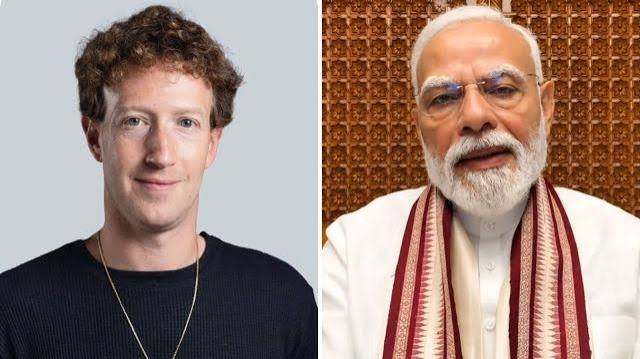
New Delhi, August 5: The Parliamentary Standing Committee on Communications and Information Technology has issued a three-day ultimatum to Meta CEO Mark Zuckerberg, demanding an unconditional apology over the removal of Prime Minister Narendra Modi’s video from Facebook and Instagram. The committee warned that failure to comply could lead to recommendations for action concerning the company’s safe harbour protections under the Information Technology Act.
According to a letter issued by the Lok Sabha Secretariat, the committee—headed by BJP MP Nishikant Dubey—expressed strong concern over Meta’s removal of the Prime Minister’s July 23 video message during a period of youth protests in parts of the country. The committee has urged the government to examine the withdrawal of Meta’s intermediary protections under Section 79 of the IT Act.
The issue has drawn criticism from senior government officials, who have sought a detailed explanation from Meta regarding the content moderation decision. The committee also asked the company to address reports concerning child sexual abuse material (CSAM) advertisements and content demeaning women that allegedly appeared on Instagram.
Committee Also Targets Google India
In the same communication, the parliamentary panel called for similar action against Google India. The committee cited cybercrime complaints from Hyderabad, where victims reportedly lost more than ₹48 lakh in fraud linked to applications downloaded through the Google Play Store. The letter noted that Google’s India country manager had been named as a co-accused in the case.
The communication was addressed to IT Secretary S. Krishnan, with a copy sent to Home Secretary Govind Mohan. While Meta and the Ministry of Electronics and Information Technology did not immediately respond to requests for comment, Google declined to comment on the matter.
Safe Harbour Under Scrutiny
The committee stated that if Mr. Zuckerberg fails to issue an unconditional apology within three days of receiving the letter, it has recommended that the immunity available under Section 79(3) of the Information Technology Act be reconsidered and that Meta could be treated as a publisher for legal purposes.
Section 79 of the Information Technology Act, 2000 provides intermediaries with protection from liability for third-party content hosted on their platforms, provided they comply with legal obligations. The Information Technology (Intermediary Guidelines and Digital Media Ethics Code) Rules, 2021 further define these obligations, including requirements to remove unlawful content when directed by competent authorities.
Legal Experts Raise Questions
Legal experts, however, have questioned whether the government has the authority to revoke safe harbour protection entirely. According to legal opinion cited by The Hindu, the current legal framework does not contain any explicit provision allowing the government to directly withdraw an intermediary’s safe harbour status.
Experts also note that the protection under Section 79 is assessed on a case-by-case basis. Courts determine whether an intermediary is entitled to immunity in relation to specific content or incidents, rather than granting or removing platform-wide protection.
Debate Over Content Moderation
The issue was also discussed during a parliamentary committee meeting on August 3, attended by representatives from Meta, Google, and X (formerly Twitter). During the hearing, Opposition MPs argued that content moderation decisions by social media platforms should remain free from political influence, highlighting broader concerns about balancing digital platform accountability with freedom of expression.
The controversy has once again brought India’s intermediary liability framework into focus, raising important questions about platform accountability, government oversight, and the legal scope of safe harbour protections in the country’s rapidly evolving digital landscape.