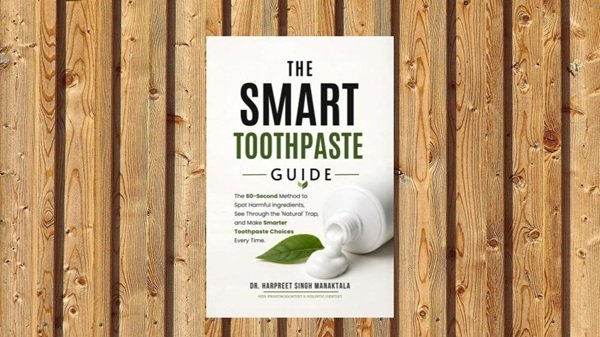
Selecting a tube of toothpaste is usually an afterthought, driven by a familiar brand name, a sale price, or a box promising a brighter smile. Most people assume that any product sitting on a pharmacy shelf and meant to go into your mouth twice a day has been thoroughly vetted for safety. In “The Smart Toothpaste Guide”, Dr. Harpreet Singh Manaktala, a practicing prosthodontist in Mumbai, challenges that passive trust with a simple observation: almost every major brand carries a back-label warning telling you to contact Poison Control if you swallow more than a tiny amount. That sharp divide between what the front of the box promises and what the fine print warns against sets off a clear-eyed look at what actually goes into modern oral care.
Dr. Manaktala writes from the perspective of a specialist who got tired of seeing patients brush religiously every day only to return to his clinic with the same recurring gum irritation and sensitivity. Looking closer at the fine print on commercial tubes, he found a massive gap between what shoppers think they are paying for and what manufacturers are actually shipping. A big chunk of the book tackles how companies exploit vague terms like “natural,” which carry almost no legal definition in the cosmetic industry. He also dismantles the common belief that a mouth full of thick foam or a sharp minty sting means your teeth are getting cleaner. In reality, that lather is usually just a cosmetic trick created by harsh foaming agents that can dry out and inflame delicate oral tissue without adding any real health benefits.
What makes the book worth reading is its relentless focus on real-world utility. Dr. Manaktala knows nobody wants to stand in a store aisle reading a heavy pharmacology text, so he condenses complex chemical lists into a simple sixty-second Traffic Light framework. By sorting ingredients into straightforward red, yellow, and green categories, he gives readers a fast, reliable way to scan a box on the fly. His breakdowns of key active compounds such as the remineralizing effects of hydroxyapatite, the bacterial benefits of xylitol, and the actual role of fluoride are balanced and mercifully free of internet paranoia, focusing strictly on what works and what just takes up space on the label.
The book stays exceptionally focused on its core premise, which works both for and against it depending on what you expect. Anyone hoping for a comprehensive manual covering flossing habits, diet, or complex dental procedures will find the scope deliberately narrow. Dr. Manaktala sets out to fix how people buy toothpaste, and he refuses to waste space on unrelated advice just to boost the page count.
“The Smart Toothpaste Guide” comes across as a calm, expert-backed assessment written by someone who genuinely cares about consumer literacy. The tone is steady, sensible, and completely free of sensationalism, offering a clear path through a cluttered and often misleading grocery aisle. It is a solid, practical read for parents, health-conscious shoppers, and anyone who wants to take a second look at the products they bring into their home every day.