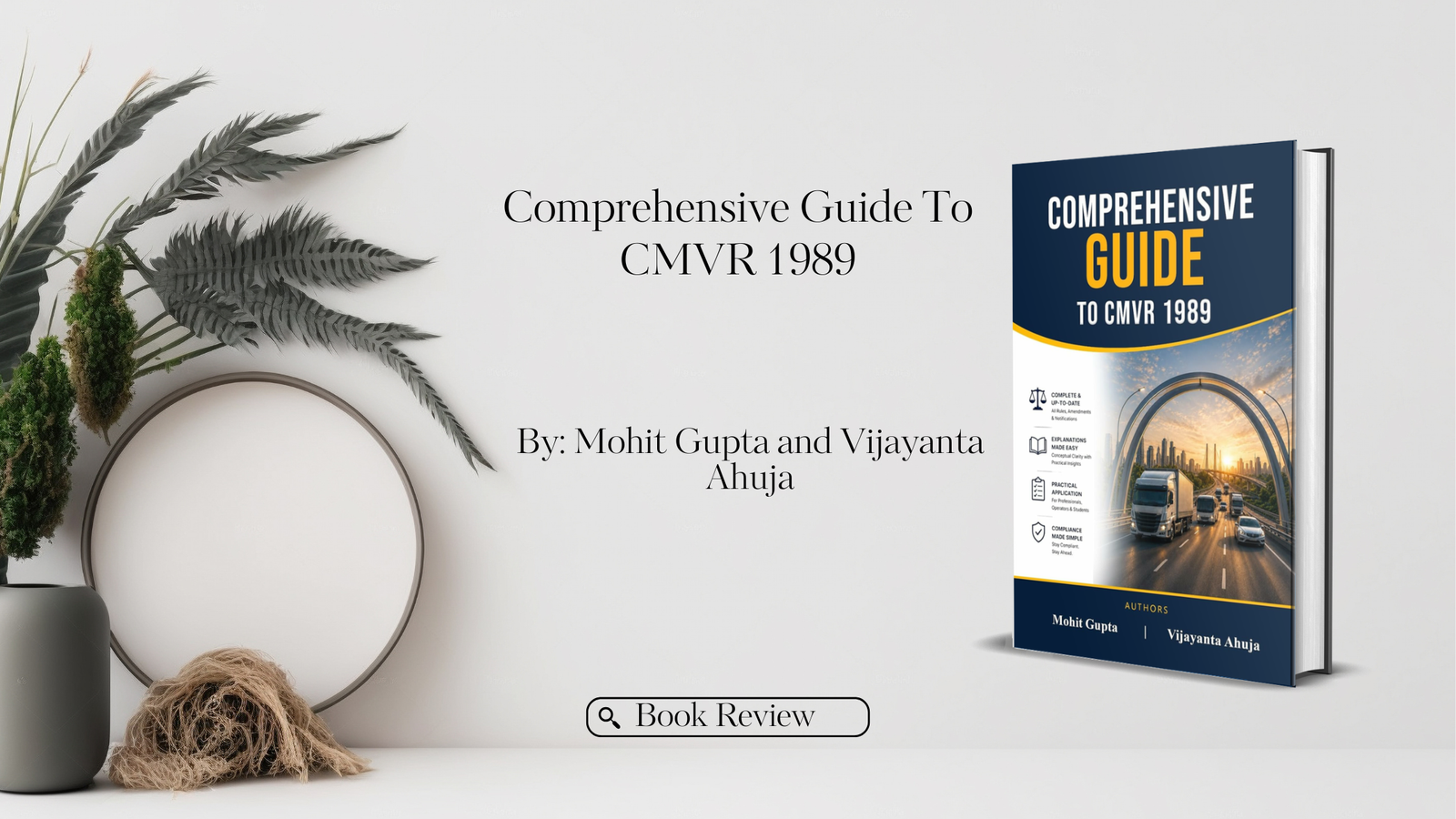
The Central Motor Vehicles Rules, 1989 is a timely and practical guide to one of the most important regulatory frameworks governing India’s automotive and transport ecosystem. With the automobile industry undergoing rapid changes through electric mobility, advanced vehicle technologies, evolving safety standards, environmental regulations, and increasingly complex transport operations, a clear understanding of motor vehicle regulations has become essential. This book attempts to make that complicated legal and technical landscape more accessible by bringing statutory provisions, practical interpretation, regulatory developments, and industry requirements together in a structured format.
One of the strongest aspects of the book is its recognition that understanding legislation often requires more than simply reading the bare statutory text. The Central Motor Vehicles Rules, 1989 contain extensive provisions that can be challenging for readers who are not familiar with legal terminology or regulatory procedures. The book addresses this difficulty by organizing the subject into logical areas and explaining important provisions in a manner intended to support practical understanding. Rather than presenting the rules as an isolated collection of legal provisions, it places them within the broader context of vehicle regulation, road safety, transport administration, and automotive compliance.
The scope of the book is particularly noteworthy. It addresses several fundamental areas of motor vehicle regulation, including licensing and registration, technical standards, transport operations, road safety, vehicle equipment, permits, and emission related requirements. These subjects affect a wide range of stakeholders, from individual vehicle owners and students to manufacturers, transport operators, legal professionals, fleet managers, regulators, and automotive certification specialists. By bringing these areas together, the book serves as a comprehensive reference for anyone who needs to understand how India’s motor vehicle regulatory framework operates.
The discussion of licensing and registration is especially relevant because these are among the most frequently encountered aspects of motor vehicle law. Requirements relating to driving licences, testing procedures, vehicle registration, and statutory compliance can often become complicated when viewed only through legal notifications and regulatory documents. A structured explanation can therefore be valuable for readers attempting to understand the practical implications of these requirements. The book’s approach of simplifying complex provisions makes the material more approachable for students and young professionals who may be encountering automotive regulations for the first time.
Another significant feature is its attention to vehicle construction, equipment, and maintenance standards. Modern vehicles are subject to increasingly detailed requirements concerning safety and technical specifications. Matters such as lighting, safety glass, reflective markings, equipment standards, and vehicle construction are not merely technical concerns. They form an important part of the legal framework governing whether vehicles can be manufactured, certified, registered, and operated. By addressing these subjects within the larger regulatory structure, the book demonstrates how engineering and legislation intersect in the automotive sector.
The section concerning transport operations also adds considerable practical value. Commercial and public transport vehicles operate within a regulatory environment involving permits, vehicle classifications, operational obligations, and compliance requirements. The inclusion of categories such as M, N, and L series vehicles, along with discussions concerning tourist permits and aggregator regulations, makes the book relevant to contemporary transport operations. As mobility services and technology driven transportation continue to expand, regulatory clarity is becoming increasingly important for businesses as well as government authorities.
Road safety is another central theme that strengthens the relevance of this work. Vehicle regulations ultimately have a direct connection with the protection of road users. Requirements concerning safety equipment, vehicle standards, accident related mechanisms, and other regulatory safeguards demonstrate how technical rules can contribute to broader public safety objectives. The inclusion of subjects such as the Motor Vehicles Accident Fund and authorized vehicle scrapping facilities also indicates the book’s effort to address newer and evolving dimensions of motor vehicle regulation rather than remaining limited to traditional provisions.
The book’s emphasis on amendments, notifications, and judicial precedents is also important. Regulatory frameworks are rarely static, particularly in a sector as dynamic as transportation. New technologies, environmental concerns, safety requirements, court decisions, and government policies continuously influence the interpretation and implementation of existing rules. A reference that brings together amendments and administrative developments can therefore help readers understand the rules in a contemporary context. For professionals, this aspect can make the book more useful as a working reference rather than simply an introductory text.
The professional background of the authors further contributes to the credibility and perspective of the book. Mohit Gupta brings more than two decades of experience in automotive regulatory affairs, vehicle validation, and certification, supported by academic qualifications spanning engineering, management, and law. This combination of technical and legal knowledge is particularly relevant to a subject where engineering standards and statutory requirements frequently overlap. Vijayanta Ahuja adds extensive experience in automotive policy and regulatory development, including the relationship between emerging technologies, safety, sustainability, and national regulatory frameworks. Their combined perspectives provide the book with an interdisciplinary character.
The book is also likely to be particularly useful for students of law and automotive engineering. For students, the complexity of motor vehicle regulations can initially appear overwhelming. A logically structured guide can provide an entry point into the subject and help connect theoretical provisions with practical applications. For working professionals, the value lies more in having a consolidated reference that can assist in understanding compliance requirements and navigating regulatory questions.
At the same time, the book is not limited to academic readers. Advocates, judges, transport operators, fleet managers, insurance professionals, manufacturers, certification specialists, and regulatory authorities can all find areas of practical relevance. Its broad target audience reflects the extensive reach of motor vehicle legislation across India’s transportation ecosystem.
Overall, The Central Motor Vehicles Rules, 1989 succeeds in presenting a complex regulatory subject as a structured and practically oriented reference. Its greatest strength lies in attempting to bridge the distance between legal language and real world application. By combining statutory requirements with explanations, amendments, technical standards, and practical insights, the book can serve as a valuable resource for readers seeking greater clarity about India’s automotive regulatory environment. In an era when mobility is changing rapidly and regulatory compliance is becoming increasingly sophisticated, such a guide is not only useful but highly relevant. It offers readers a clearer pathway through the complexities of motor vehicle legislation while highlighting the important relationship between regulation, technology, compliance, and road safety.