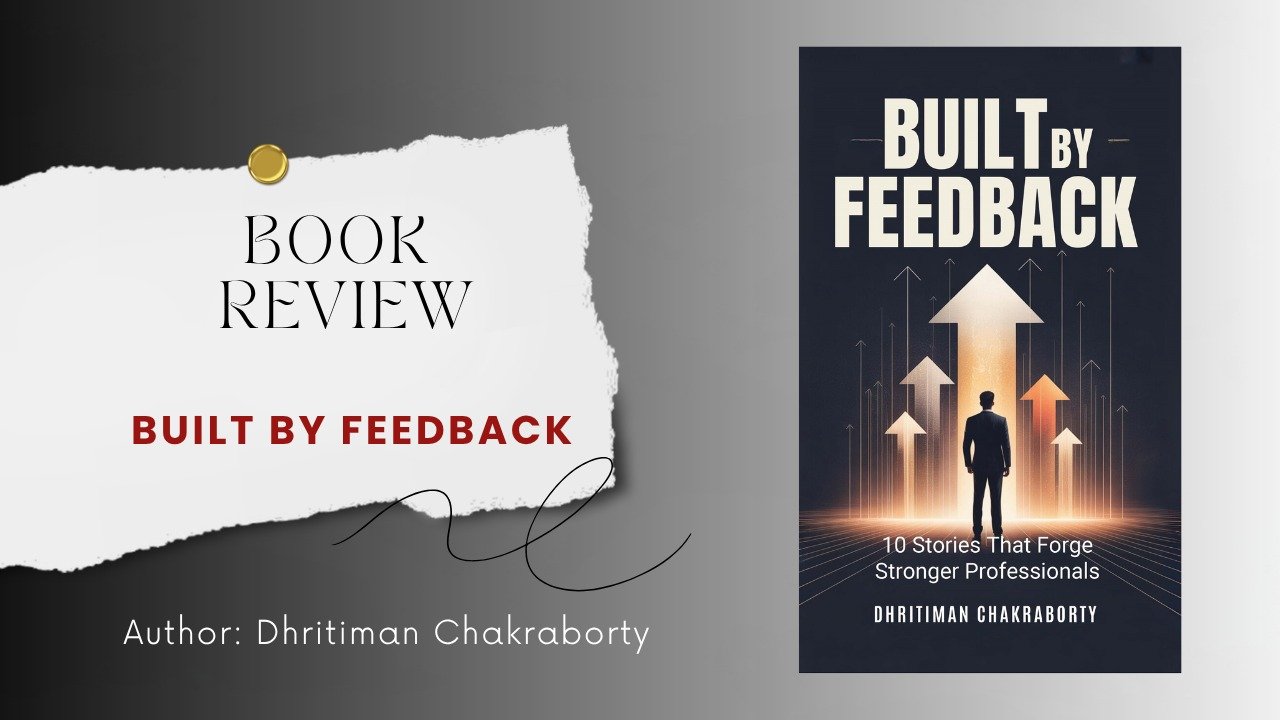
Title: Built By Feedback
Author: Dhritiman Chakraborty
ISBN: 9789373356020
Publisher: Evincepub Publishing
In a professional world overflowing with motivational jargon and formula-driven self-help books, Built By Feedback by Dhritiman Chakraborty arrives with refreshing honesty. Rather than presenting success as a glamorous, perfectly planned journey, the book explores something far more relatable – the uncomfortable, often painful role of feedback in shaping careers, personalities, and leadership styles.
Subtitled 10 Stories That Forge Stronger Professionals, the book is structured through a series of workplace experiences that reflect the emotional and psychological realities of modern professional life. Each chapter revolves around a defining moment: a harsh appraisal, a toxic team environment, a delayed promotion, burnout, self-doubt, or a difficult manager. What makes the book stand apart is its refusal to romanticize struggle. Instead, it carefully demonstrates how criticism, when processed with maturity, can become a powerful tool for transformation.
The opening chapters immediately establish the deeply personal tone of the narrative. “The English I Never Spoke and Had to Learn” introduces not merely a language barrier, but the insecurity and alienation many young professionals experience when stepping into competitive corporate environments. The author’s storytelling feels grounded because it avoids exaggeration. He writes not as an expert preaching from a distance, but as someone who has lived through the discomfort of feeling inadequate.
This authenticity continues throughout the book. In “Burnout, Banking, and the Comeback to Passion,” the discussion around exhaustion and emotional fatigue resonates strongly with today’s workforce. The narrative captures how professional ambition can slowly disconnect people from their original purpose, and how rediscovering meaning often begins with difficult introspection. The strength of the writing lies in its simplicity. The author does not attempt dramatic literary flourishes; instead, he relies on clarity, reflection, and emotional honesty.
One of the most compelling aspects of the book is its treatment of feedback itself. In many workplaces, feedback is either softened into meaningless positivity or delivered so aggressively that it damages confidence. Built By Feedback occupies the space in between. The author repeatedly emphasizes that growth does not emerge from praise alone. Some of the most valuable lessons come from rejection, discomfort, and moments when one is told, directly or indirectly, “you are not ready yet.”
This theme is particularly powerful in the chapter titled “ ‘Not Good Enough’ – The Feedback I Needed.” Instead of portraying criticism as unfair or destructive, the author reflects on how honest evaluation forced him to confront his limitations. This perspective gives the book emotional maturity. Many readers, especially professionals navigating leadership roles or career transitions, will recognize these moments from their own lives.
The book also succeeds because it goes beyond individual ambition and examines workplace culture itself. Chapters such as “When the Team Became Toxic” and “The Manager Who Didn’t Like Me Helped Me Most” explore interpersonal dynamics with remarkable realism. Corporate relationships are rarely simple, and the author acknowledges this complexity. Not every difficult manager is wrong, and not every conflict is evidence of injustice. Sometimes resistance from others reveals blind spots we refuse to see in ourselves.
This nuanced understanding prevents the book from becoming overly sentimental. There is no attempt to create heroes or villains. Managers, colleagues, and teams are portrayed as flawed human beings operating under pressure, expectations, and personal insecurities. As a result, the stories feel believable rather than manufactured for inspiration.
Another admirable quality of the book is its accessibility. While many professional development books rely heavily on business terminology, frameworks, and management theories, Built By Feedback remains conversational. Readers from different professional backgrounds – not just corporate executives – can engage with its ideas. Young graduates entering the workforce, mid – career professionals facing stagnation, entrepreneurs dealing with uncertainty, and even managers responsible for mentoring teams may all find something meaningful within these pages.
The narrative structure also deserves appreciation. Since the book is divided into individual stories, readers can approach it gradually rather than consuming it in a single sitting. Each chapter functions almost like a reflective case study, ending not with rigid conclusions but with insights that encourage introspection. This format makes the reading experience engaging and emotionally digestible.
What ultimately elevates the book is its emotional intelligence. The author understands that professional growth is rarely linear. Careers are shaped not only by skills and opportunities but also by resilience, humility, communication, and the willingness to evolve after failure. The recurring message throughout the book is simple yet profound: feedback is uncomfortable because it challenges identity, but without that discomfort, meaningful growth becomes impossible.
The final chapters reinforce this idea beautifully. “The Promotion That Was Delayed – For a Reason” and “Tough Feedback vs. Tough Love – A Manager’s Dilemma” shift the focus toward leadership and responsibility. Here, the author reflects not only as an employee receiving feedback but also as a leader learning how to guide others. These sections add depth to the book by demonstrating that feedback is not merely something to endure – it is also something to deliver with wisdom and empathy.
Stylistically, the prose is straightforward and sincere. Readers looking for elaborate literary experimentation may not find it here, but that simplicity becomes one of the book’s strengths. The language mirrors workplace conversations and lived experiences, making the emotional moments more relatable. The book reads less like a conventional management manual and more like a conversation with someone who has genuinely learned through trial and error.
In the end, Built By Feedback is not just a book about professional success; it is a book about self-awareness. It reminds readers that criticism, setbacks, and uncomfortable truths often become the very experiences that shape confidence and competence over time. In an era obsessed with instant achievement and curated perfection, this book offers a quieter but far more enduring message: growth begins when we stop resisting feedback and start listening to it.
Amazon: https://www.amazon.in/dp/937335602X
Review by Neel PreetFor Eliteonestories.com