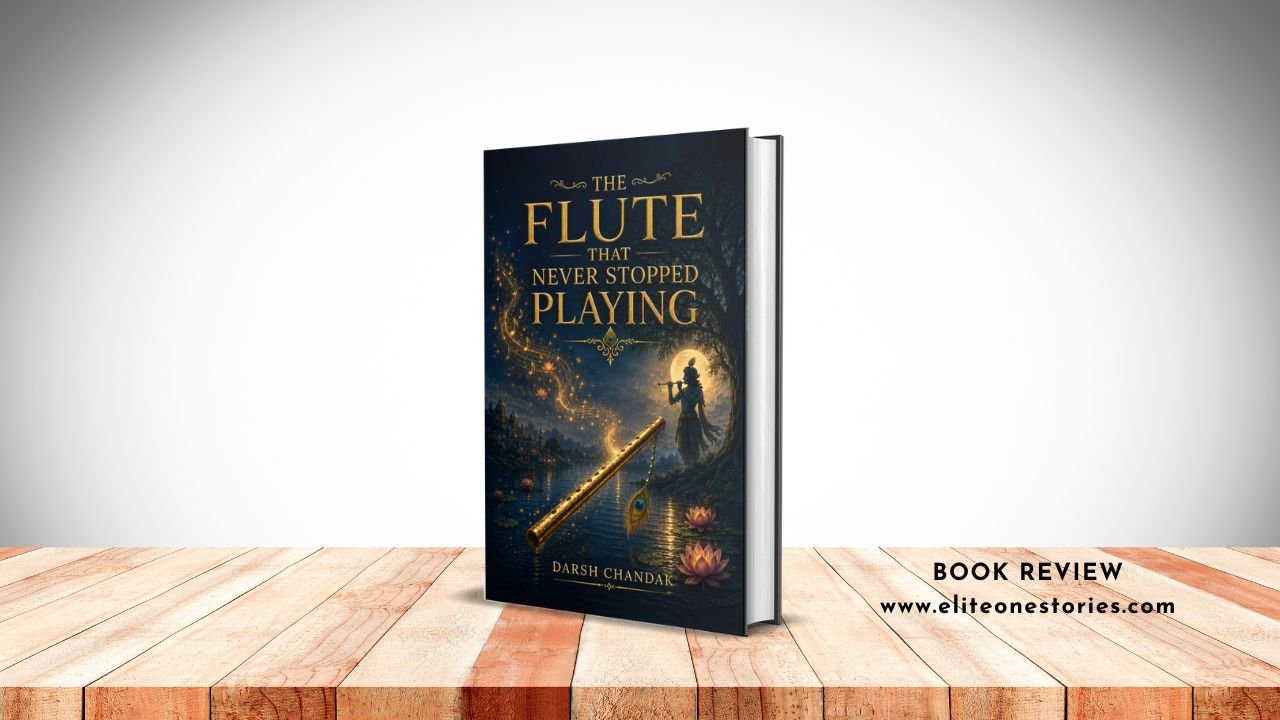
In a contemporary literary landscape often dominated by fast-paced narratives and transactional relationship dynamics, debut author Darsh Chandak brings a refreshing, deeply contemplative voice with The Flute That Never Stopped Playing. Drawing inspiration from the timeless, sacred stories of Lord Krishna, this work is far more than a simple retelling of ancient mythology. It stands as a soulful, heartfelt exploration of love in all its multifaceted expressions—love that patiently waits, unwavering in its trust, capable of deep inner transformation, and enduring through the passage of time. Chandak, a student whose creative perspective is enriched by his passion for poetry, music, photography, and sports, approaches these sacred narratives with extraordinary sensitivity. He uses the eternal melody of Krishna’s flute as a unifying metaphor, guiding readers through an emotional topography that bridges the gap between ancient spiritual lore and modern human experience.The narrative structure of the book moves gracefully through the distinct personal journeys of key figures surrounding Krishna, including Radha, Rukmini, Satyabhama, Kalindi, Jambavati, and others. Rather than treating these iconic figures as mere characters in a historical or mythological drama, Chandak delves beneath the surface of the traditional lore to uncover the raw, quiet emotions that governed their lives. Through these varied perspectives, the author demonstrates how love manifests differently across individual personalities and life circumstances. Radha embodies the unyielding, transcendental essence of selfless devotion; Rukmini reflects a quiet, resolute faith that transcends distance; Satyabhama represents passionate, self-reflective devotion learning humility; while Kalindi and Jambavati showcase patience and steadfast commitment. By highlighting these distinct emotional spectrums, Chandak shows that there is no singular way to love, but rather a rich tapestry of emotional paths that all lead toward spiritual and personal growth.
What elevates The Flute That Never Stopped Playing is its philosophical humility and non-prescriptive tone. Instead of offering easy answers, rigid moral lessons, or dogmatic formulas, Chandak’s pages function as a gentle invitation to pause, reflect, and look inward. The author subtly poses a thought-provoking premise: that the oldest stories preserved across centuries often act as direct mirrors to the most private, fragile parts of our own hearts. In an era where young people frequently navigate complex, uncertain, and superficial connections, Chandak offers a quiet reminder of the power of unconditional, selfless care. His background as a young writer listening to and reflecting on these tales allows him to articulate timeless principles in a voice that feels entirely relatable, empathetic, and free from preachy didacticism.
The artistic quality of Chandak’s prose reflects his artistic interests in videography, photography, and music. Every scene is crafted with visual sensitivity and poetic rhythm, allowing the reader to perceive the subtle emotional shifts within each narrative. The imagery of Krishna’s flute serves as an atmospheric backdrop throughout the collection—symbolizing the quiet, persistent voice of divine love that continues to play within every individual, even amidst the noise and confusion of life. Chandak’s writing creates a tranquil space where readers seeking wisdom, emotional comfort, or simply a clearer understanding of human affection can find solace. The book achieves its primary goal: ensuring that somewhere within its gentle pages, every reader discovers a narrative thread that feels intimately aligned with their own personal journey.
Ultimately, The Flute That Never Stopped Playing is an outstanding debut that marks Darsh Chandak as an insightful young voice in philosophical and reflective literature. By weaving together devotion, human connection, and eternal emotional truths, the author delivers a work that speaks directly to the soul of the reader. It is a work that encourages a return to selfless affection, patience, and mutual trust in human relationships. Beautifully written, thoughtfully structured, and deeply moving, this book is an essential read for anyone who wishes to rediscover the enduring beauty of love in its purest forms.