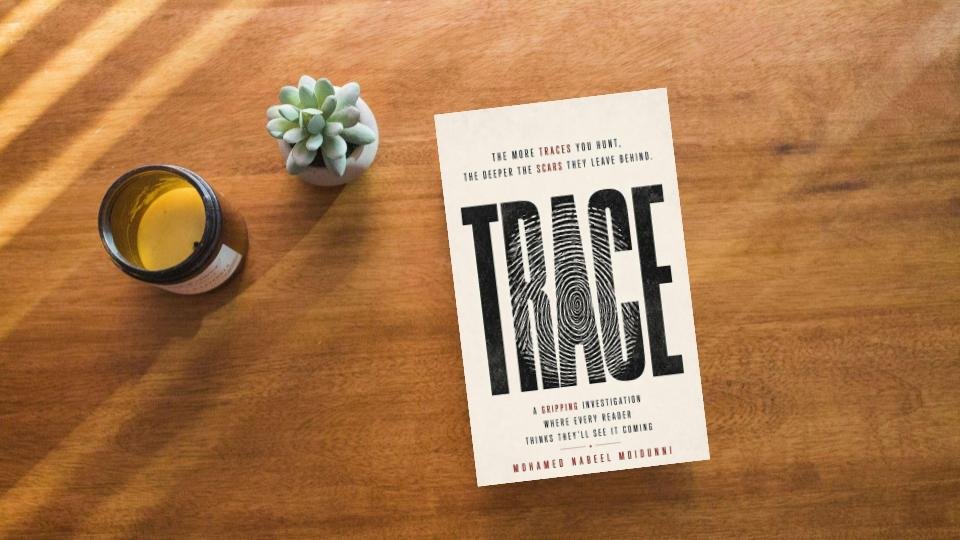
There is a specific kind of satisfaction in finding a story that knows exactly what it wants to be and doesn’t waste your time getting there. Mohamed Nabeel Moidunni’s “Trace” is a crime thriller built on momentum above all else. It isn’t trying to be a heavy, atmospheric 500-page epic with endless subplots; it’s designed to be a sharp, tightly wound puzzle that you start on an evening and finish before going to sleep.
The story opens on a deceptive note. We follow an investigation that feels, at first glance, completely routine. If you read a lot of crime fiction, you’ll recognize the starting points right away: the initial facts look straightforward, the early leads seem obvious, and there’s a brief moment where you think you know exactly where the narrative is heading.
That sense of security doesn’t last long. Moidunni’s real strength as a writer is how he handles information control. Instead of giving you a neat trail of breadcrumbs, every clue uncovered in Trace actually makes the picture more complicated. An answer to one basic question ends up poking holes in three other things you thought were already settled. The plot operates like an unraveling thread; pulling on one loose end doesn’t clean things up; it just exposes a bigger mess underneath.
Because of how fast the story moves, the atmosphere leans heavily into paranoia. When a plot relies on layers of deception, every supporting character gets dragged into the shade. You find yourself scrutinizing simple interactions and dialogue, trying to figure out who is genuinely trying to help the investigation and who is just managing their own cover. That constant second-guessing keeps you invested, even during quiet conversational scenes.
That fast pace does come with a tradeoff, which is worth keeping in mind. Because Moidunni keeps his foot on the accelerator, there isn’t a massive amount of room for slow, deep character development. You learn who these people are through how they react under pressure rather than through long pages of internal monologue or detailed backstories. For a short, plot-driven thriller, that trade works fine; it keeps the focus strictly on the mystery, but readers who prefer heavy character studies might notice the lighter touch there.
Where the book really succeeds is in its final stretch. A thriller of this style hinges completely on whether the ending feels earned or forced. Without spoiling anything, the resolution brings the scattered pieces together in a way that feels intentional. It doesn’t rely on a cheap gimmick out of nowhere; instead, it forces you to look back at the earlier clues and realize the signs were there all along if you were paying close enough attention.
Trace is a solid, focused piece of suspense writing. It’s ideal for a weekend read, a long flight, or any time you just want to get lost in a good, fast mystery without having to wade through a hundred pages of filler first.