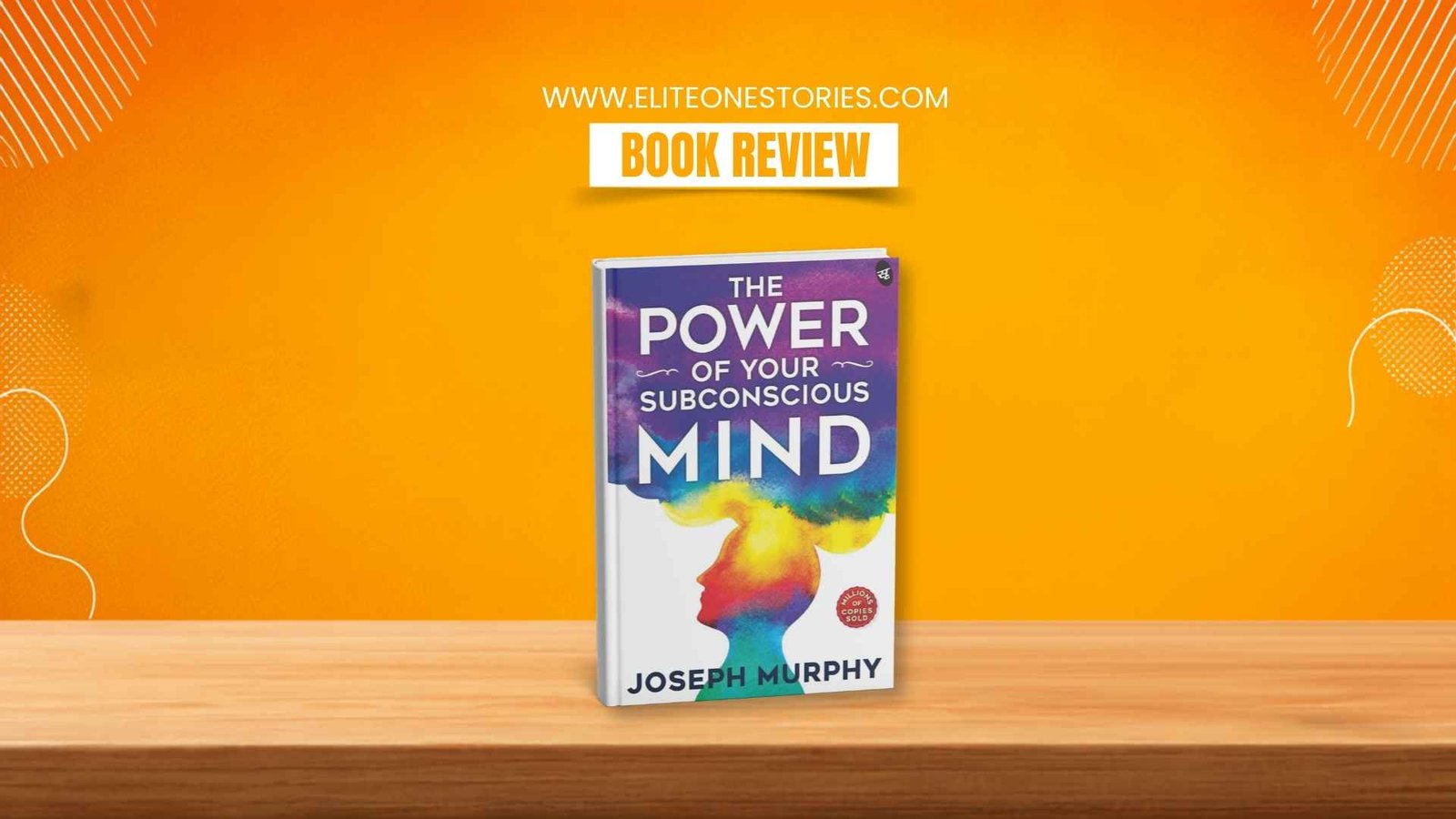
The Power of Your Subconscious Mind by Dr. Joseph Murphy is one of the most influential and enduring books in the field of personal development and self-improvement. First published in 1963, the book has remained a global bestseller for decades, inspiring millions of readers to explore the hidden potential of the human mind. Drawing upon principles of psychology, spirituality, positive thinking, and practical life experiences, Murphy presents the idea that the subconscious mind is a powerful force capable of shaping every aspect of an individual’s life. He argues that by understanding how the subconscious mind functions and by consciously directing one’s thoughts and beliefs, people can improve their health, relationships, finances, career, and overall happiness. Although the book was written more than half a century ago, its central message continues to resonate with readers seeking personal growth, inner peace, and lasting success.
The central premise of the book is that the subconscious mind faithfully accepts and acts upon the thoughts, beliefs, and emotions repeatedly impressed upon it by the conscious mind. Murphy explains that every thought we entertain, whether positive or negative, gradually becomes embedded in the subconscious, influencing our actions, habits, decisions, and experiences. According to the author, many of the difficulties people encounter in life are not caused by external circumstances alone but by deeply rooted negative beliefs and mental patterns that operate beneath conscious awareness. By replacing fear, doubt, resentment, and limiting beliefs with thoughts of confidence, abundance, health, and success, individuals can transform their lives from within. Murphy emphasizes that the subconscious mind does not distinguish between beneficial and harmful suggestions; instead, it accepts repeated ideas as truth and works tirelessly to bring them into reality. This concept forms the foundation upon which the entire book is built.
One of the book’s most significant contributions is its accessible explanation of the relationship between the conscious and subconscious mind. Murphy describes the conscious mind as the reasoning, analytical part responsible for making decisions, while the subconscious mind functions as a vast storehouse of memories, habits, emotions, and beliefs. He compares the conscious mind to a gardener planting seeds, while the subconscious mind represents fertile soil that nurtures whatever is planted within it. Positive thoughts produce positive outcomes, whereas negative thoughts yield undesirable results. This metaphor effectively illustrates the importance of mental discipline and encourages readers to become more aware of their daily thought patterns. By presenting these concepts in simple and relatable language, Murphy makes complex psychological ideas understandable for readers from diverse backgrounds.
Throughout the book, Murphy repeatedly emphasizes the transformative power of belief. He argues that genuine belief has the ability to influence both mental and physical well-being. According to the author, faith is not limited to religious devotion but represents complete confidence in the desired outcome. When individuals consistently visualize success, health, or prosperity while emotionally accepting these outcomes as possible, the subconscious mind begins working toward their realization. Murphy supports his ideas with numerous stories of people who reportedly overcame illness, financial hardship, broken relationships, and personal limitations by changing their thinking patterns. These case studies are intended to demonstrate how mental attitudes can significantly influence life experiences. While many of these examples are inspirational, they also encourage readers to recognize the powerful connection between belief, expectation, and behavior.
Another important theme explored throughout the book is the relationship between the mind and physical health. Murphy argues that emotional stress, fear, anxiety, resentment, and persistent negative thinking can contribute to physical illness, while optimism, peace, gratitude, and faith promote healing and overall well-being. He frequently discusses the body’s natural ability to heal itself when the subconscious mind is directed toward health rather than disease. Although contemporary medical science recognizes the influence of psychological factors on physical health, Murphy occasionally extends these ideas beyond what is supported by current scientific evidence. Nevertheless, his broader message about maintaining a positive mental outlook, reducing stress, and cultivating emotional balance remains valuable and aligns with many modern approaches to holistic well-being.
Prayer and visualization occupy a central place in Murphy’s philosophy. He presents prayer not merely as a religious ritual but as a practical method of communicating positive suggestions to the subconscious mind. According to Murphy, effective prayer involves calmly imagining the desired result while experiencing the emotions associated with already possessing it. This process, he believes, enables the subconscious mind to accept the desired condition as reality and work toward achieving it. Visualization exercises, affirmations, and repeated positive statements are recommended throughout the book as techniques for replacing limiting beliefs with empowering ones. Murphy emphasizes that these practices should be performed consistently, particularly before sleep, when the subconscious mind is believed to be especially receptive. While readers may interpret these practices differently depending on their personal beliefs, the underlying emphasis on focused attention and intentional thinking remains one of the book’s defining features.
The writing style of The Power of Your Subconscious Mind is clear, conversational, and highly motivational. Murphy combines psychological explanations with spiritual principles drawn from various religious traditions, particularly biblical teachings, creating a unique blend of science and faith. Rather than presenting technical theories or academic discussions, he communicates his ideas through relatable stories, practical examples, and encouraging language that appeals to a broad audience. His optimistic tone inspires readers to believe that meaningful change is possible regardless of their current circumstances. The straightforward nature of the writing makes the book accessible even to readers who are new to self-help literature, while the repetition of key ideas reinforces the author’s central message about the importance of mental conditioning.
One of the book’s greatest strengths lies in its ability to inspire hope and personal responsibility. Murphy encourages readers to recognize that they possess greater influence over their lives than they may have previously believed. Instead of viewing themselves as powerless victims of circumstance, individuals are invited to become active participants in shaping their future through conscious thought, constructive belief, and emotional discipline. The emphasis on optimism, forgiveness, gratitude, and self-confidence provides readers with practical attitudes that can improve both mental well-being and interpersonal relationships. The book’s timeless appeal stems from its empowering message that meaningful transformation begins within the mind before it becomes visible in external circumstances.
Despite its lasting popularity, the book is not without its limitations. Many of Murphy’s claims regarding the subconscious mind, healing, and the direct influence of thought on external events are presented with confidence but are not always supported by rigorous scientific evidence. Modern psychology acknowledges the importance of mindset, expectations, and cognitive processes in shaping behavior and well-being, but it does not generally support the notion that thoughts alone can directly produce all desired outcomes. Readers should therefore approach some of the book’s more extraordinary claims with critical thinking while appreciating its motivational value. Additionally, the book occasionally repeats similar ideas throughout different chapters, which may feel redundant to some readers. Its strong reliance on spiritual language and religious references may also resonate differently depending on the reader’s personal beliefs and cultural background.
Although certain concepts reflect the historical context in which the book was written, its fundamental message remains remarkably relevant. Contemporary research in psychology supports many of the broader principles emphasized by Murphy, including the influence of beliefs on behavior, the importance of positive expectations, the role of visualization in performance, and the impact of mindset on emotional resilience. While the scientific explanations available today are more nuanced than those presented in the book, its core encouragement to cultivate constructive thinking and intentional habits continues to inspire readers around the world.
In conclusion, The Power of Your Subconscious Mind remains a landmark work in the field of self-help and personal development. Dr. Joseph Murphy successfully combines psychological insight, spiritual philosophy, and motivational guidance to present an optimistic vision of human potential. His central argument that thoughts and beliefs significantly influence the quality of life encourages readers to examine their inner dialogue, overcome limiting beliefs, and intentionally create healthier mental habits. Although some of the book’s claims should be interpreted with thoughtful skepticism and balanced with contemporary scientific understanding, its enduring popularity reflects the universal appeal of its message. The book inspires readers to develop greater self-awareness, emotional resilience, and confidence while reminding them that meaningful change often begins with the beliefs they choose to nurture. For individuals interested in personal growth, positive thinking, spirituality, or the psychology of success, The Power of Your Subconscious Mind continues to be a valuable and thought-provoking read whose influence extends across generations.
Book Link: https://amzn.eu/d/0czEWcse