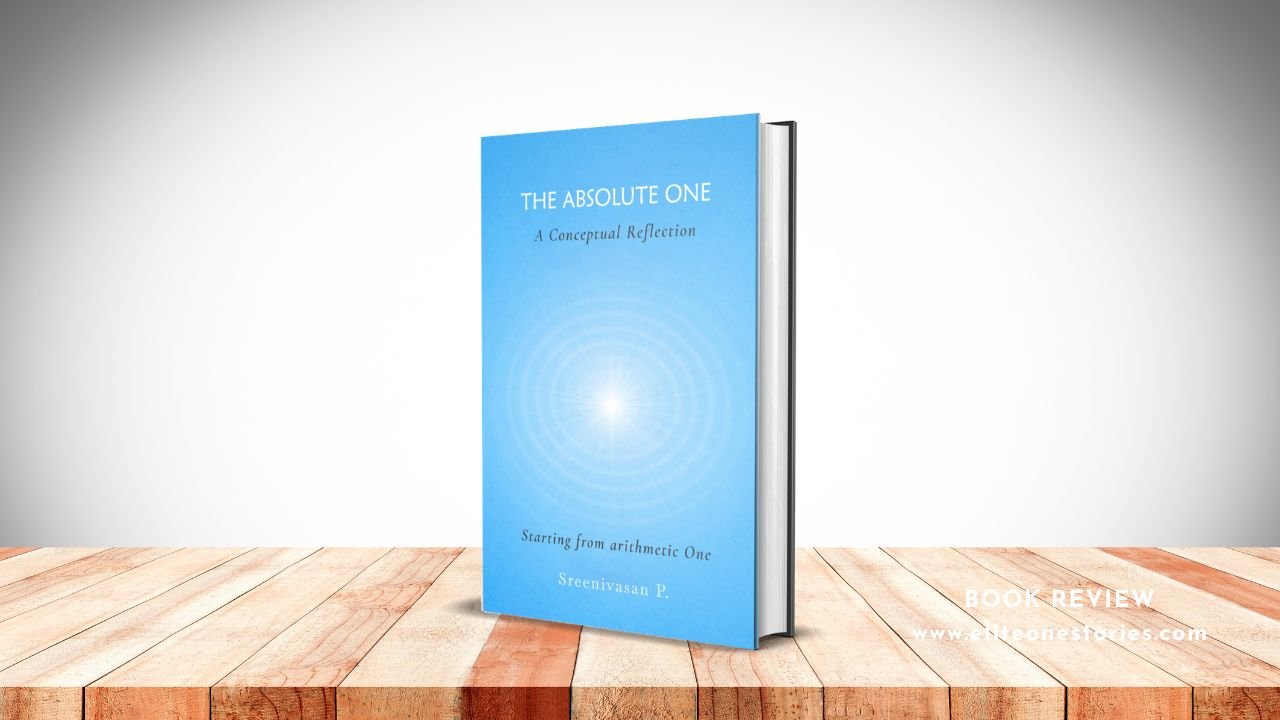
Starting from the deceptively simple concept of the number “1,” The Absolute One: A Conceptual Reflection by Sreenivasan P. embarks on an ambitious intellectual journey into some of humanity’s most enduring questions: What is the origin of existence? How does multiplicity arise from unity? Can the diversity of the universe be understood through a single foundational principle? Rather than approaching these questions through complex mathematical equations or advanced scientific theories, the author relies on clear reasoning, logical reflection, and philosophical inquiry to develop his ideas.
One of the most distinctive aspects of this book is its commitment to simplicity. Sreenivasan P. deliberately avoids technical jargon and specialized academic language, making profound philosophical discussions accessible to readers from a wide range of backgrounds. By beginning with the arithmetic primitive “1,” he creates a familiar starting point that gradually evolves into a broader exploration of existence, identity, and the relationship between the one and the many. This method allows readers to engage with complex concepts without feeling overwhelmed by technical formalism.
The book challenges conventional assumptions about creation, emergence, and the structure of reality. Instead of treating multiplicity as something separate from its source, the author investigates how diverse forms and expressions might arise naturally from an underlying unity. His reflections encourage readers to reconsider deeply held beliefs about distinction, separation, and origin. While the arguments are philosophical rather than scientific, they possess an internal consistency that stimulates thoughtful contemplation and invites further discussion.
A notable strength of the work lies in its emphasis on first-principles thinking. Rather than relying heavily on established philosophical schools or referencing extensive academic traditions, the author develops his ideas independently through observation, analogy, and logical progression. This gives the book a fresh and personal character. Readers may find themselves drawn into the author’s process of questioning fundamental assumptions and exploring alternative ways of understanding reality.
The writing style is reflective and contemplative, often resembling a philosophical conversation rather than a formal academic treatise. The author’s approach demonstrates a sincere desire to make abstract concepts understandable and relatable. His use of simple examples and logical reasoning helps bridge the gap between everyday understanding and profound metaphysical inquiry. As a result, the book remains approachable even when addressing subjects that have traditionally been the domain of philosophers and theoreticians.
At the same time, readers seeking rigorous scientific validation or detailed mathematical proofs may find that the book operates outside those frameworks. Its primary objective is not to establish empirical theories but to encourage conceptual exploration. The value of the work therefore lies less in definitive answers and more in the questions it raises and the perspectives it offers. It invites readers to participate actively in the process of reflection rather than passively accepting established conclusions.
The author’s background as an independent thinker is evident throughout the text. His freedom from disciplinary constraints allows him to approach foundational questions with originality and curiosity. The result is a work that reflects intellectual independence and a genuine passion for understanding the deeper principles underlying existence. His perspective demonstrates how meaningful philosophical inquiry can emerge from careful observation and sustained contemplation, regardless of formal academic credentials.
Ultimately, The Absolute One: A Conceptual Reflection is a thought-provoking exploration of unity, origin, and the nature of reality. It challenges readers to look beyond conventional categories and consider whether the complexity of the universe might be rooted in a simple and fundamental principle. Philosophically inclined readers, seekers of metaphysical insight, and anyone interested in the relationship between mathematics, logic, and existence will find much to ponder within its pages. The book succeeds as an invitation to reflection, offering a unique and accessible perspective on some of the most profound questions of human thought.