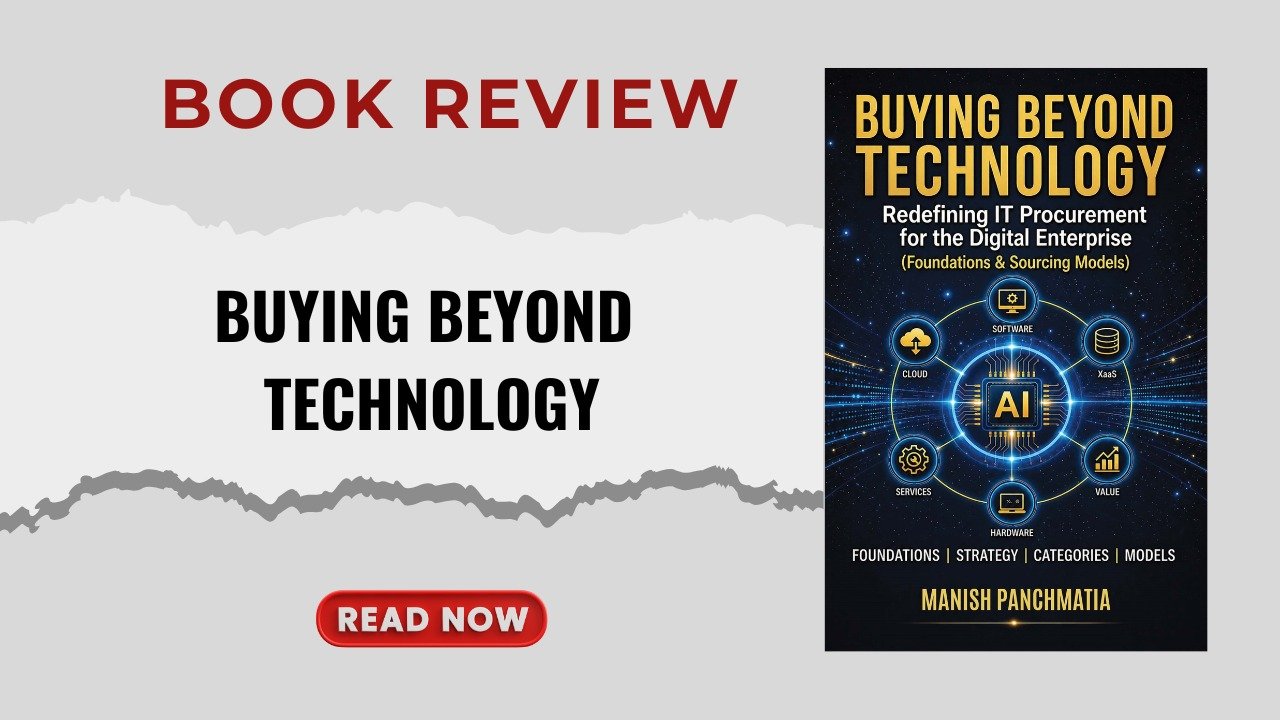
Book Title: Buying Beyond Technology
Author: Manish Panchmatia
ISBN: 9789373352671
Publisher: Evincepub Publishing
In today’s hyperconnected world, technology is no longer just a support function hidden behind organizational operations – it has become the very backbone of business growth, innovation, and resilience. Yet while organizations invest heavily in digital transformation, cloud ecosystems, software platforms, and data-driven operations, many still struggle to align procurement practices with the realities of modern technology sourcing. Buying Beyond Technology addresses this critical gap with remarkable clarity, structure, and practical insight.
This book is not merely about procurement processes; it is about understanding how technology sourcing has evolved into a strategic business capability. It presents IT procurement not as a transactional purchasing activity, but as a discipline deeply connected to organizational strategy, operational continuity, digital governance, and long-term competitiveness. From the very first chapters, the author establishes a compelling argument: traditional procurement models, designed for predictable industrial supply chains, are no longer sufficient for managing the complexity of today’s digital ecosystems.
One of the strongest aspects of the book is its ability to simplify a highly specialized subject without oversimplifying it. The author carefully traces the historical evolution of procurement – from early trade systems and industrial-era purchasing models to the emergence of strategic sourcing and modern digital procurement frameworks. This historical grounding gives readers a broader understanding of why procurement functions operate the way they do today and why organizations now need specialized IT procurement capabilities.
The book particularly excels in explaining how the digital economy has transformed technology spending. Earlier procurement models revolved around hardware purchases, perpetual licenses, and one-time implementation projects. In contrast, modern organizations now operate through subscription-based software, cloud infrastructure, consumption-driven pricing models, and interconnected vendor ecosystems. These shifts have fundamentally changed the nature of commercial relationships between organizations and technology providers. The author explains these transitions with impressive precision, making complex procurement concepts accessible to both procurement professionals and business leaders alike.
Another major strength of Buying Beyond Technology is its emphasis on strategic thinking rather than procedural instruction alone. The book repeatedly reminds readers that procurement decisions now influence far more than cost savings. Technology sourcing affects operational resilience, cybersecurity exposure, regulatory compliance, scalability, vendor dependency, and even customer experience. This broader perspective elevates procurement from an administrative function to a strategic governance capability within modern enterprises.
The discussion around digital transformation and the rise of the “digital enterprise” is particularly insightful. The author explains how cloud computing, AI-driven analytics, SaaS platforms, and connected ecosystems have made technology central to business operations across industries. Procurement professionals are therefore expected to collaborate closely with IT leaders, finance teams, legal advisors, and operational stakeholders. This cross-functional approach reflects the realities of modern organizations where technology sourcing decisions rarely happen in isolation.
What makes this book stand out from many management or procurement texts is its balanced tone. Rather than aggressively criticizing traditional procurement models, the author acknowledges their historical value and continuing relevance in stable sourcing environments. Competitive bidding, structured sourcing processes, and fixed-price contracts still have an important place in procurement. However, the book carefully demonstrates where these approaches begin to fail in dynamic technology-driven environments where requirements evolve continuously and vendor relationships extend over many years.
The sections discussing “Shadow IT” and decentralized technology purchasing are especially relevant in today’s corporate environment. Many organizations now face situations where business units independently adopt digital tools without centralized procurement or IT oversight. The author examines how this creates fragmented vendor ecosystems, inconsistent contracts, cybersecurity risks, and governance challenges. These observations feel highly practical and grounded in real organizational experiences rather than purely academic theory.
Structurally, the book is exceptionally well organized. Each chapter follows a logical progression, beginning with foundational context, moving into strategic frameworks, and concluding with practical reflections, leadership questions, and actionable insights. This format makes the book highly useful not only for individual readers but also for procurement teams, corporate training environments, and executive learning programs. The inclusion of reflective questions encourages readers to critically examine their own procurement maturity and organizational practices.
Another noteworthy quality is the book’s language and presentation style. The writing is professional, measured, and analytical without becoming overly technical or inaccessible. Even readers without deep procurement backgrounds can follow the central arguments because the author consistently explains terminology, context, and implications in a structured manner. At the same time, experienced procurement professionals will appreciate the depth of discussion surrounding governance models, vendor ecosystems, commercial structures, and sourcing maturity.
Importantly, Buying Beyond Technology arrives at a time when organizations globally are struggling to balance innovation, operational efficiency, and digital risk management. As businesses increasingly depend on external technology vendors for mission-critical operations, procurement functions must evolve from transactional purchasing units into strategic facilitators of digital capability. This book captures that transformation exceptionally well.
The book’s greatest achievement lies in its ability to reposition procurement thinking for the digital age. It encourages readers to move beyond narrow cost-focused approaches and instead adopt a broader perspective centered on long-term value creation, resilience, adaptability, and ecosystem management. In doing so, it contributes meaningfully to the growing conversation around the future of procurement and digital governance.
Overall, Buying Beyond Technology is a thoughtful, timely, and highly relevant work that successfully bridges the worlds of procurement, technology, and business strategy. It offers valuable insights for procurement professionals, CIOs, sourcing managers, digital transformation leaders, consultants, and business executives seeking to understand the evolving realities of technology sourcing in modern enterprises. More than just a procurement handbook, this book serves as a strategic guide for organizations navigating the increasingly complex landscape of digital business transformation.
Buy on Amazon: https://www.amazon.in/dp/9373352679
Review by Neel Preet
For Eliteonestories.com