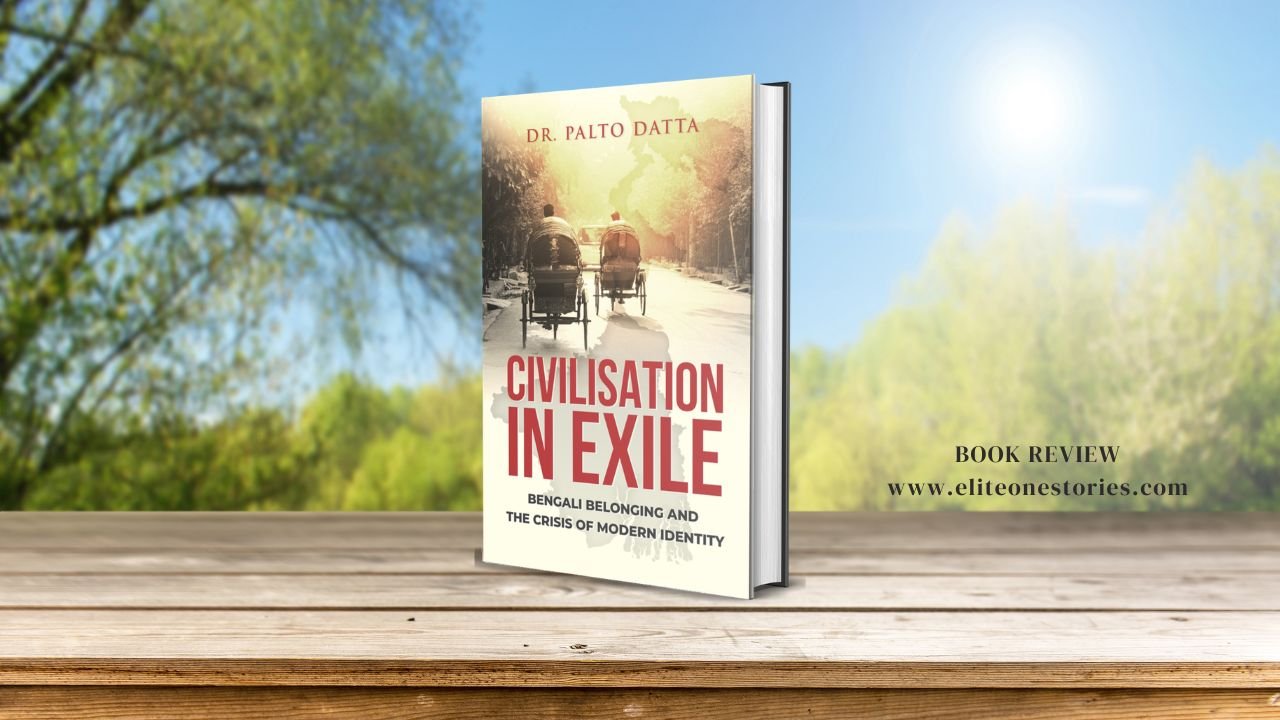
In an age marked by constant movement, cultural blending, and rapid technological change, the question of identity has become increasingly complex. Dr Palto Datta’s Civilisation In Exile: Bengali Belonging And The Crisis of Modern Identity enters this space as a thoughtful and layered exploration of what it truly means to belong in a globalised world. More than just a study of the Bengali diaspora, the book unfolds as a philosophical inquiry into the nature of identity, memory, and cultural continuity. It is both intellectually engaging and emotionally resonant, offering readers a nuanced perspective on the lived realities of migration.
At its core, the book examines the experience of Bengalis living outside their homeland, particularly in Britain, where material success and opportunity often coexist with an underlying sense of displacement. Dr Datta does not present this condition in simplistic terms. Instead, he carefully dissects the layers of diaspora life, highlighting how external achievements can sometimes mask internal dislocation. Through a blend of personal reflections, historical insights, and philosophical discourse, he captures the subtle tensions that arise when individuals attempt to reconcile their cultural heritage with the demands of a new environment.
One of the most compelling aspects of the book is its ability to move seamlessly between the personal and the universal. While the narrative is rooted in the Bengali experience, its themes extend far beyond a single community. The exploration of belonging, for instance, is framed not merely as a geographical concern but as a deeply psychological and civilisational one. Dr Datta argues that exile in the modern world is no longer confined to physical displacement; it is increasingly internal, manifesting as a sense of cultural fragmentation and identity conflict. This perspective elevates the book from a cultural study to a broader reflection on the human condition.
The author’s use of historical and literary references adds significant depth to the narrative. By drawing upon the intellectual legacy of figures such as Rabindranath Tagore and Michael Madhusudan Dutt, Dr Datta situates contemporary experiences within a rich cultural continuum. These references are not merely ornamental; they serve as anchors that connect the present to the past, reminding readers of the enduring influence of cultural memory. The evocation of East London as a setting further reinforces this interplay between history and modernity, presenting a vivid portrait of a space where identities are constantly negotiated and redefined.
Stylistically, the book strikes a balance between academic rigor and narrative accessibility. Dr Datta’s background as an academic is evident in the clarity of his arguments and the structured progression of ideas. However, he avoids the pitfalls of overly dense or inaccessible prose. Instead, his writing remains reflective and engaging, allowing complex concepts to unfold in a manner that is both comprehensible and thought-provoking. The inclusion of personal accounts adds a human dimension to the analysis, making the themes more relatable and grounded in lived experience.
Another strength of the book lies in its critical examination of globalisation and its impact on cultural identity. Dr Datta does not dismiss the benefits of global interconnectedness; rather, he acknowledges the opportunities it provides while also interrogating its consequences. The commodification of culture, the erosion of traditional practices, and the pressure to conform to dominant narratives are all explored with a keen analytical eye. This balanced approach lends credibility to his arguments and encourages readers to engage critically with the subject matter.
The book also raises important questions about the future of cultural identity in an increasingly homogenised world. As new generations grow up in diasporic contexts, the challenge of preserving heritage while embracing change becomes more pronounced. Dr Datta does not offer definitive answers, but he provides a framework for understanding these challenges. His emphasis on introspection and awareness suggests that the process of negotiating identity is ongoing, requiring both individual reflection and collective engagement.
While the book is rich in insight, it occasionally leans toward abstraction, particularly in its philosophical passages. Readers unfamiliar with theoretical discourse may find certain sections demanding. However, this complexity is also part of the book’s strength, as it reflects the intricacy of the subject it seeks to address. For those willing to engage deeply, the rewards are substantial, offering a more profound understanding of the interplay between culture, identity, and modernity.
Dr Palto Datta’s extensive academic and professional background further enhances the credibility of his work. His experience in teaching, research, and global engagement is evident in the breadth of perspectives he brings to the table. Having traveled extensively and interacted with diverse cultures, he approaches the topic with both authority and sensitivity. This global outlook enriches the narrative, allowing him to draw connections between the Bengali diaspora and broader patterns of migration and cultural transformation.
Ultimately, Civilisation In Exile is a book that invites reflection rather than providing easy answers. It challenges readers to reconsider their assumptions about identity and belonging, urging them to look beyond surface-level definitions. By framing exile as a psychological and civilisational condition, Dr Datta opens up new avenues for understanding the complexities of modern life. His work resonates not only with those who identify with the Bengali diaspora but with anyone grappling with questions of culture, memory, and selfhood in a rapidly changing world.
In conclusion, this book stands as a significant contribution to contemporary discourse on identity and globalisation. It combines intellectual depth with emotional insight, creating a narrative that is both informative and evocative. Dr Datta’s ability to weave together philosophy, history, and personal experience results in a work that is as engaging as it is enlightening. For readers seeking a deeper understanding of what it means to belong in today’s world, Civilisation In Exile offers a compelling and thought-provoking journey.