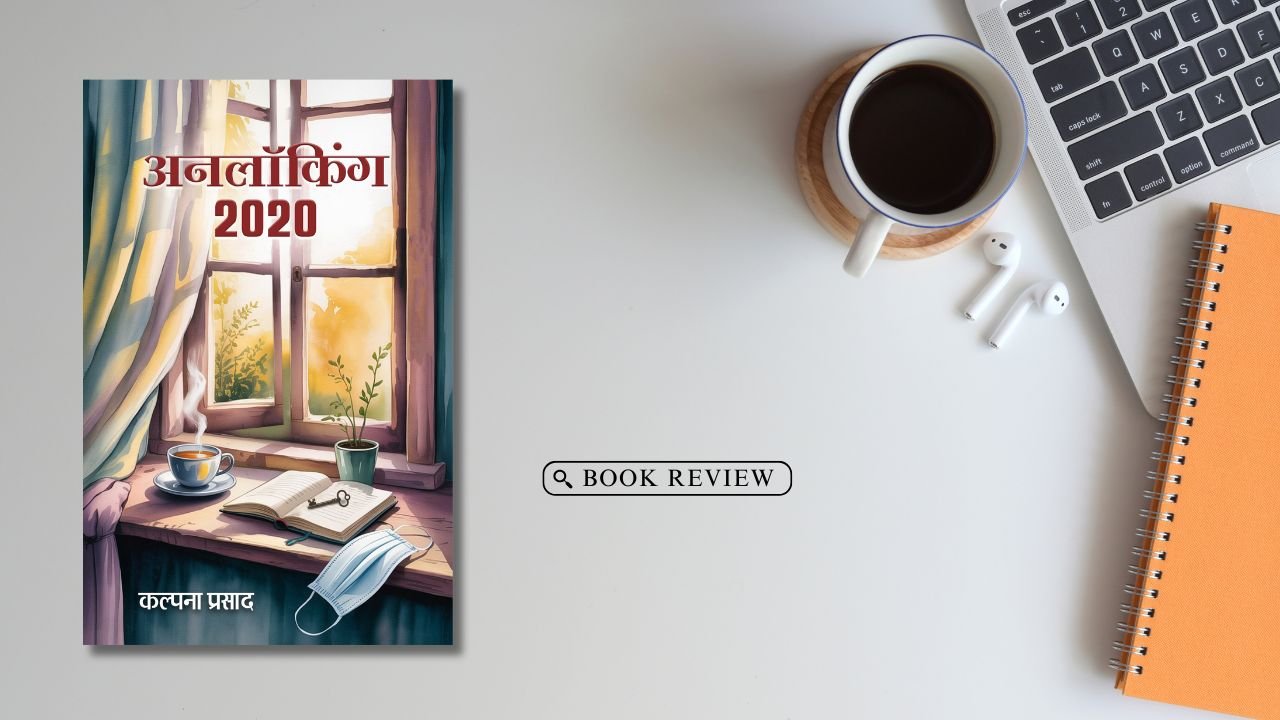
Unlocking 2020 by Kalpana Prasad enters the literary landscape as a collection of short stories shaped by one of the most transformative periods of recent history—the global pandemic lockdown. While pandemic-based literature has flooded shelves in recent years, this book takes a refreshing departure from clinical accounts and sociopolitical examinations. Instead, it leans into the delicate, lived, emotional realities of ordinary people. As a critic, one instantly recognizes that the strength of this work lies not in grandeur, but in the subtle art of capturing what often goes unsaid.
The first thing that stands out is the author’s intent. Kalpana Prasad does not attempt to reconstruct the crisis as a chronicle of events. She is not documenting the pandemic; she is illuminating the internal shifts it sparked within individuals. This choice is both brave and effective. By focusing on emotional micro-moments rather than external drama, she offers a perspective that resonates more intimately with readers who experienced the lockdown firsthand. Her stories are less about the pandemic itself and more about the human condition revealed through it.
Stylistically, the book leans toward minimalism. Kalpana’s writing is simple, sometimes stark, but always sincere. She is not a writer who hides behind metaphors or complex narrative structures. Instead, she chooses clarity. This can initially feel almost too gentle for readers accustomed to literary embellishment. But as the stories unfold, the intention becomes clear: the simplicity is deliberate. It invites the reader to experience emotional truth without distraction. Her restraint becomes her power.
The short stories themselves vary widely in tone—some melancholic, some quietly uplifting, and others introspective. While none of them rely on shocking twists or dramatic climaxes, each one carries the weight of a lived moment. Readers may find that certain stories linger more than others, depending on their personal experiences during 2020. This is one of the book’s greatest strengths: its universality. Whether one felt grief, loneliness, gratitude, frustration, or a renewed sense of purpose during the lockdown, there is a story here that mirrors that emotional reality.
One of the noteworthy elements is Kalpana’s ability to write characters who feel familiar. They are not extraordinary individuals; they are people we have encountered in our own homes, offices, and neighborhoods. A banker missing her aging parents, a student stuck between ambition and uncertainty, a homemaker rediscovering forgotten passions—Kalpana excels at capturing the kind of emotional nuance that makes these characters feel real. She understands the art of observation, and that awareness reflects in her storytelling.
However, no debut work is without its areas for improvement. Some stories, while emotionally compelling, might feel too brief for readers who prefer deeper exploration. The minimalistic style may also leave certain moments underdeveloped. There are instances where the emotional arc feels truncated, as though the author was hesitant to push the narrative further. This restraint, while intentional, sometimes borders on withholding. A few stories end just as the reader begins to feel fully immersed. Critics may argue that Kalpana’s talent is evident, but the full force of her potential remains partially untapped.
Additionally, because all stories share a common emotional palette rooted in the lockdown experience, there is a certain sameness in tone that might limit the book’s impact for readers seeking greater thematic diversity. Though each story is unique in its characters and circumstances, the backdrop of the pandemic creates an inevitable emotional echo across narratives. While this cohesiveness enhances the book’s purpose, it also risks creating a sense of predictability for some readers.
Despite these minor limitations, Unlocking 2020 succeeds beautifully in what it sets out to do. It is not meant to be a chronicle of events, a commentary on policy, or an analysis of crisis. It is an emotional archive. A soft, mindful preservation of the human heart when the world outside went silent. Kalpana brings warmth into cold moments and gives voice to emotions that many were unable to express during that time.
Her background as a working professional also adds authenticity to the writing. She approaches her characters with an understanding born from real-life interactions rather than literary abstraction. Her stories come from a place of empathy, not theatricality. This grounding gives the book a refreshing sincerity.
One of the book’s most important contributions is the way it encourages readers to confront their own emotional memories of 2020. Instead of viewing the pandemic strictly through the lens of fear or inconvenience, Kalpana’s narratives make space for gentler reflections: rediscovered hobbies, strengthened relationships, moments of introspection, and the subtle shifts in perception that only silence can bring. Readers may find themselves reconnecting with emotions they had long tucked away.
In conclusion, Unlocking 2020 is a quietly powerful debut. It may not dazzle with literary flamboyance, but it shines in its emotional honesty. Kalpana Prasad demonstrates a promising grasp of storytelling, a deep sensitivity to human emotions, and a genuine desire to connect with her readers. While there is room for further refinement, the foundation she lays here is strong, sincere, and full of potential. This book serves as both a reminder of a global pause and a celebration of the inner worlds that emerged from it. It is a heartfelt contribution to contemporary Indian short fiction, and a compelling introduction to an author who undoubtedly has more stories waiting to be told.