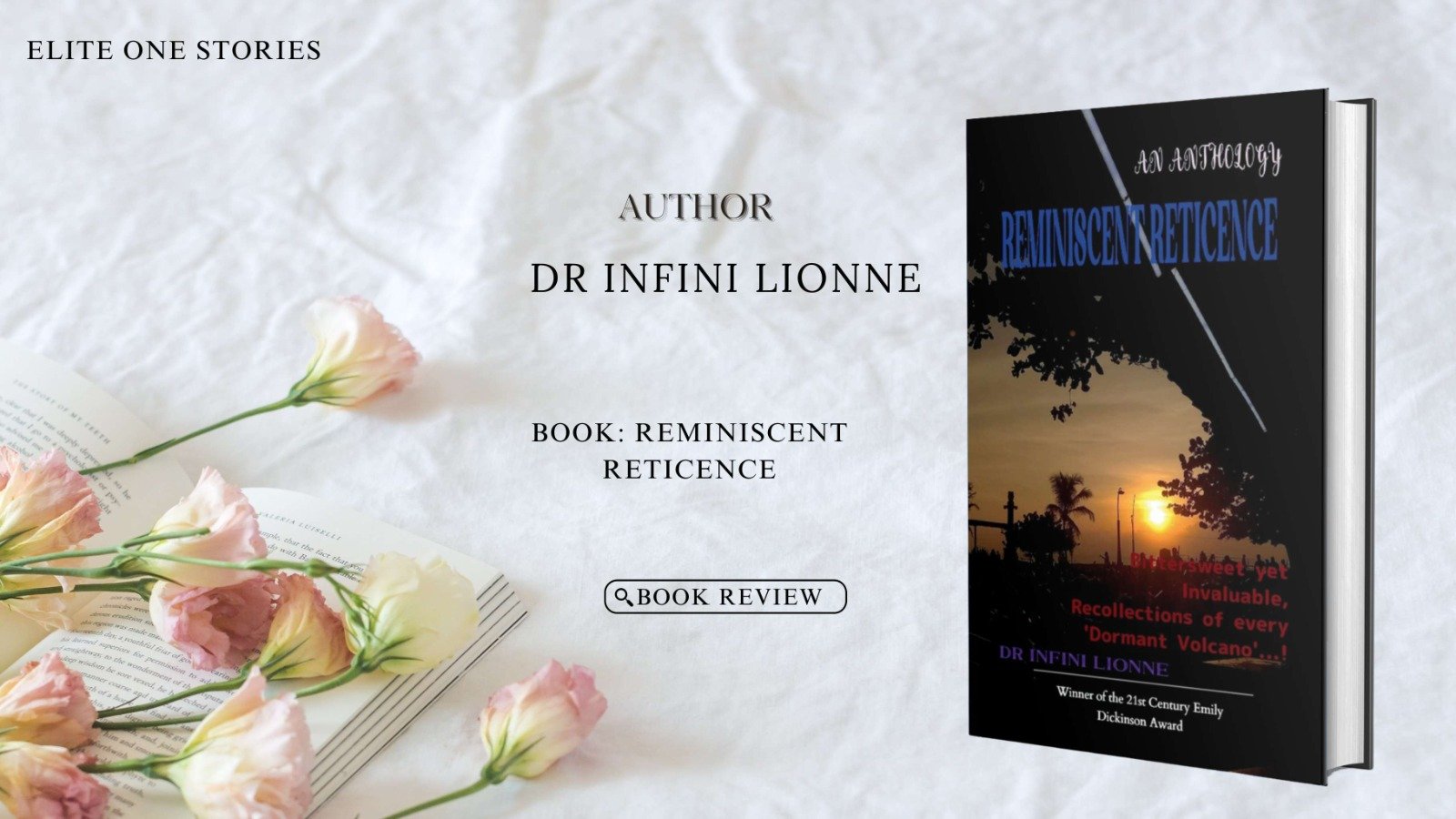
Reminiscent Reticence by Dr Infini Lionne is a deeply personal and contemplative poetry collection that reads like a private journal gently opened to the world. From the very premise of the book, it is clear that writing, for the author, is not merely an art form but a sanctuary. She presents the act of typing thoughts—however imperfect, however scattered—as a quieter, less intimidating alternative to speaking them aloud. In doing so, she frames this collection as both confession and offering: a gift extended from one introspective soul to countless others who may be silently wrestling with their own insecurities, doubts, and complexities.
The emotional core of the book lies in its honesty. There is no elaborate façade, no attempt to overwhelm the reader with ornamental language. Instead, the poems flow in a distinctive freestyle that mirrors natural thought patterns—sometimes fragmented, sometimes fluid, always sincere. This stylistic choice strengthens the authenticity of the collection. The reader does not feel as though they are encountering carefully constructed literary performances; rather, they are being invited into the author’s internal monologue. The effect is intimate and, at times, disarmingly vulnerable.
A recurring theme throughout the book is solitude. Dr Infini Lionne writes from the vantage point of someone who has known isolation—not necessarily as punishment, but as preference and protection. She acknowledges her shyness and tendency toward withdrawal, yet the tone is not self-pitying. Instead, solitude is portrayed as a space of reflection and growth. The poems suggest that silence can be fertile ground for self-realization. For readers who identify as introverts or who have felt misunderstood in louder, more performative environments, this perspective will resonate deeply.
Memory is another strong current running through the collection. The title itself hints at a backward glance—an intentional revisiting of “old and new days.” The poems often dwell on recollection, exploring how past experiences shape present identity. There is a subtle encouragement embedded within these reflections: to remember not only the wounds and embarrassments, but also the resilience that followed. This balance between vulnerability and strength gives the book its motivational undertone. It does not deny struggle; it reframes it.
One of the most compelling aspects of the collection is its insistence on authenticity. The refrain-like message of “Be you” may appear simple at first glance, but within the emotional landscape of the poems, it gains weight. The author writes as someone who has grappled with self-doubt and societal expectations, especially as a multifaceted individual—a medico, a perpetual student, a reader, a poet. Her words suggest that identity is not singular or static. It is layered, evolving, sometimes contradictory. In acknowledging her own contradictions—solitary yet expressive, reserved yet bold on paper—she normalizes the complexity within all of us.
Stylistically, the freestyle approach may not conform to traditional poetic structures. Some readers who prefer strict meter or rhyme schemes may find the looseness unconventional. However, this very looseness is part of the book’s charm. The absence of rigid structure mirrors the mind’s wandering pathways. Thoughts appear as they might in moments of quiet introspection—raw, occasionally abrupt, yet emotionally coherent. This format also reinforces the sense that the reader is engaging directly with the author’s unfiltered voice.
There is also an undercurrent of quiet empowerment that grows stronger as the collection progresses. The author describes herself as a “warrior” and a “survivor,” and this self-characterization is reflected in the emotional trajectory of the poems. While earlier pieces may dwell more heavily on introspection and internal conflict, later sentiments feel more assured. The evolution is subtle but perceptible, suggesting a journey from reticence toward self-acceptance. The reader senses that writing itself has been part of this transformation.
The fact that this is a solo debut adds another layer of significance. Debut collections often carry the weight of self-introduction, and here, that introduction feels genuine rather than performative. The author does not claim mysticism or grandeur; instead, she offers relatability. She positions the book as a companion for those navigating their own internal labyrinths. This intention enhances the reading experience, as one feels less like a passive consumer and more like a confidant.
Ultimately, Reminiscent Reticence succeeds not because it dazzles with complexity, but because it dares to be sincere. It speaks to the quiet corners of the human experience—the moments when we hesitate to voice our thoughts, when we question our worth, when we retreat inward to regroup. Through simple yet heartfelt verses, Dr Infini Lionne transforms those private hesitations into shared understanding. The book stands as a testament to the power of writing as self-therapy and as solidarity.
For readers who appreciate introspective poetry and who find comfort in knowing that others share their silent battles, this collection offers reassurance. It gently reminds us that even the most reserved voices carry profound stories. In opening her inner world to the public, the author not only confronts her own reticence but also extends a hand to anyone learning to embrace their authentic self.