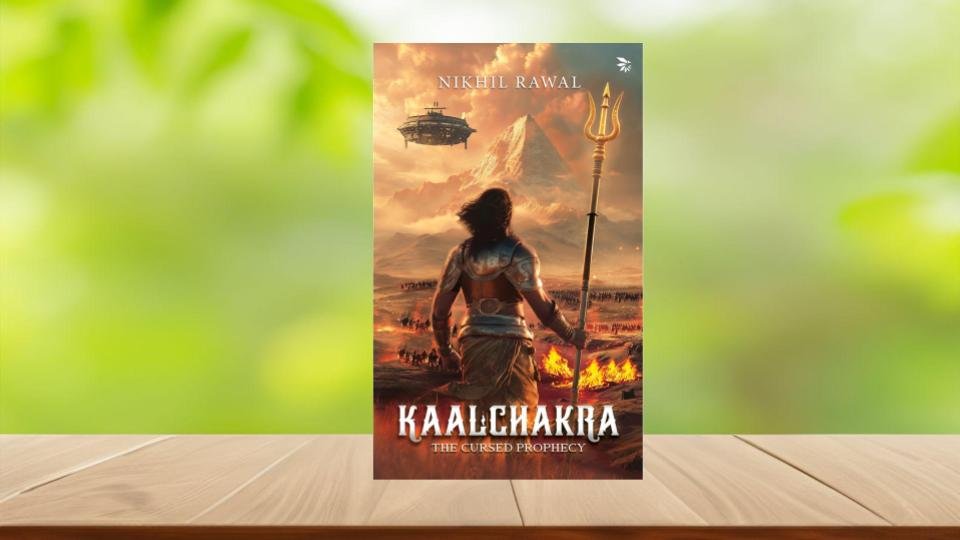
There are times in life when we have planned things in a certain way, and the direction things head is completely different. Nikhil Rawal’s “Kaalchakara” is a testimony to this fact. How things unravel when a person has other things planned forms the core of the novel. The novel also concentrates on highlighting the power that pain holds over a person. By blending mythology with the present-day world, Nikhil Rawal presents an incredible debut that is gripping, entertaining and engrossing. As an ambitious blend of mythology, fantasy, and existential drama that explores destiny, loss, and the cosmic balance between good and evil, the novel stands for its innovative and interesting plotline and action that sets the chain of events in order. At its heart, the novel poses a powerful question about fate and free will, what happens when a man gains control over his own end but loses everything that once gave his life meaning? This philosophical tension forms the backbone of a story that is as introspective as it is expansive. It also ensures that the readers remain involved throughout the storyline and think of the novel in light of the different themes it explores.
The narrative follows Vishwa, who begins as an ordinary businessman but is transformed by personal tragedy into a reluctant bearer of an extraordinary legacy. His journey is deeply emotional, shaped by grief, love, and a sense of betrayal by fate itself. Rather than presenting a conventional hero, the author crafts a layered protagonist who struggles internally even as he is pushed toward a greater cosmic responsibility. This emotional depth makes Vishwa’s transformation both believable and compelling.
One of the novel’s most striking features is its integration of mythological elements into a modern narrative. Drawing from the concept of the Kaalchakra, or the eternal cycle of time, the story unfolds in the age of Kaliyuga, giving it both cultural richness and philosophical weight. The presence of the demon Vritra as the embodiment of darkness elevates the conflict beyond a simple battle, turning it into a symbolic struggle for the very soul of creation. The themes of dharma, balance, and cosmic order are woven seamlessly into the storyline, adding depth and resonance. The scope of the novel is undeniably grand, spanning multiple realms and timelines, contributing to its epic tone. The author’s writing often feels cinematic, filled with vivid imagery and high-stakes moments. However, this ambition occasionally comes at the cost of pacing, as the narrative can feel dense or overwhelming in parts. Transitions between different layers of the story could have been smoother, and readers unfamiliar with mythological references may find certain sections challenging to fully grasp.
It would not be wrong to recommend Kaalchakara to different age-groups not just for the depth of content it has but also for various thematic aspects that collaborate and correlate with the present-day world. It also successfully shares the message that when in a particular moment, life seems to not make sense at all, one should try to focus on the bigger picture, just to see how much more there can be beyond what we see.
Kaalchakara: The Cursed Prophecy is a bold and thought-provoking work that stands out for its vision and thematic depth. It is not a light read, but for those willing to engage with its complexity, it offers a rewarding exploration of destiny, sacrifice, and the fragile balance that holds the universe together.