Title: A Lament of Dawn
Author: Ankit Choudhury
ISBN: 9789373357645
Publisher: Evincepub Publishing
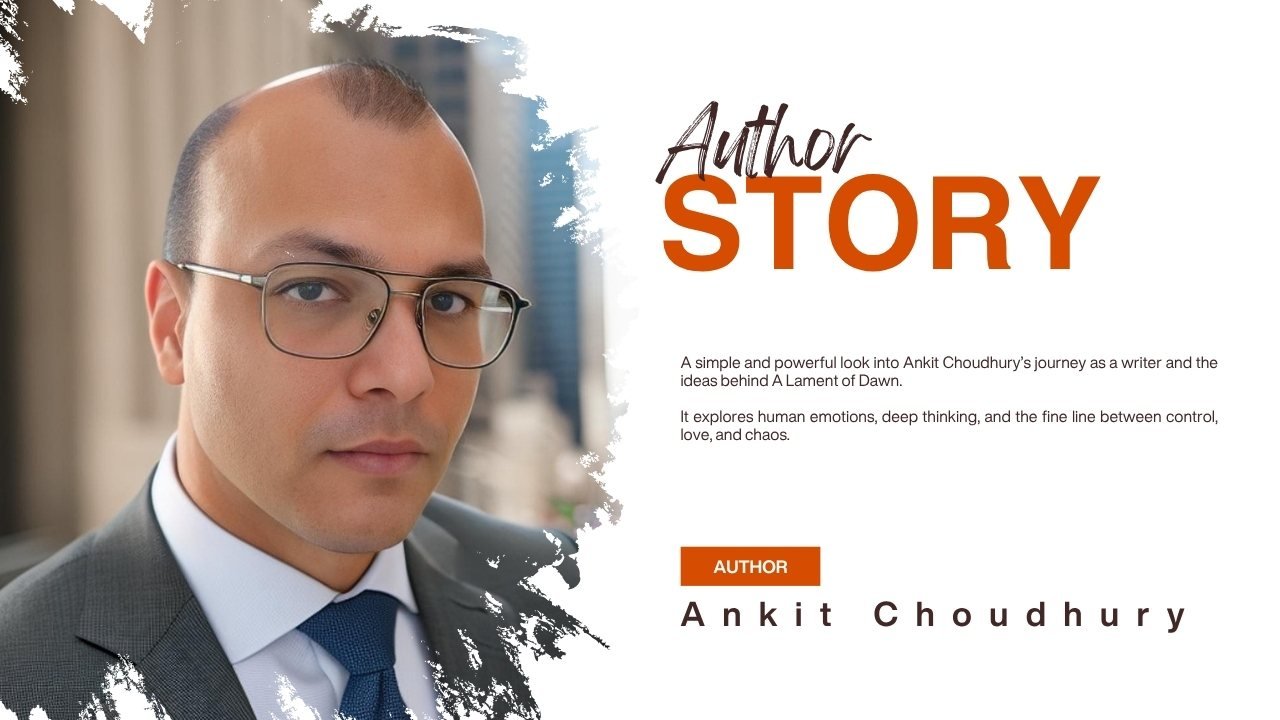
Ankit Choudhury is not just a writer, he is someone who thinks deeply about life, people, and the hidden struggles inside the human mind. His journey as an author did not begin with a plan to become famous or to simply tell stories for entertainment. It began with questions. Questions about who we are, why we feel broken even when everything looks perfect, why love can heal and hurt at the same time, and why the world always stands between order and chaos. These questions slowly shaped his writing and gave birth to his powerful work A Lament of Dawn. Ankit comes from a background in technology, working as a software architect. This means he is trained to understand systems, how they work, how they fail, and how they can be fixed. But over time, he realized that human beings are also like systems. We have patterns, emotions, memories, and breaking points. This idea became the base of his storytelling. Instead of just creating characters, he started building minds. Minds that feel real, minds that struggle, and minds that carry pain silently. In A Lament of Dawn, this approach becomes very clear. The story is not just about events happening in the world, but about what happens inside a person who understands too much. The main character represents a kind of intelligence that is both powerful and dangerous. He sees the world clearly, but that clarity becomes a burden. Through this, Ankit shows that sometimes knowledge is not freedom, it is weight. Writing this book was not just a creative process for him, it was also emotional. He has often shared that his stories come from a place where memory and imagination meet. Some parts feel like truth, even if they are fiction. Some emotions feel personal, even if they belong to characters. This is why his writing feels intense and real. He does not try to impress with complicated words or big ideas. Instead, he writes in a way that slowly pulls the reader into the mind of the character. You don’t just read the story, you feel it. One of the most important parts of Ankit’s journey is his belief that power is not always external. In his writing, power is something personal. It exists in decisions, in emotions, in silence, and in the choices people make when no one is watching. In A Lament of Dawn, this idea becomes very strong. The story shows a world that looks stable and controlled, but inside, it is fragile. This reflects real life, where everything may look perfect from the outside, but inside people are struggling, questioning, and sometimes breaking. Ankit also explores love in a very honest way. He does not present love as something perfect or magical. Instead, he shows how love can support a person but also challenge them. Love can give strength, but it can also expose weakness. In his story, the relationship between characters is not just about romance, it is about understanding, acceptance, and sometimes letting go. This makes his writing relatable, especially for readers who have experienced deep emotions in their own lives. Another important part of his writing is the idea of consequence. He believes that every action, every decision, has an impact. In many stories, people look for heroes and villains, but Ankit moves away from that idea. In A Lament of Dawn, there are no clear heroes or villains. There are only people making choices, and those choices shape the future. This makes the story more realistic and more powerful. It makes readers think about their own decisions and how they affect others. Ankit’s life in Pune also plays a role in his writing. Living in a city that is modern yet deeply connected to culture gives him a balanced perspective. He is also a reader, a gamer, and someone who enjoys exploring ideas. These interests help him build complex worlds and characters. But one of the most important roles in his life is being a father. He has said that this role keeps him connected to the human side of life. It reminds him of emotions like care, responsibility, and love, which are very important in his stories. His writing is not just about big ideas, it is also about small human moments. The way a person thinks, the way they feel alone, the way they handle pain, these details make his work special. A Lament of Dawn is not just a book, it is an experience. It is a story that makes readers slow down and think. It does not rush to give answers. Instead, it stays with questions. It shows a world where everything looks controlled, but inside, something is always waiting to break. This reflects real life in many ways. Today’s world is fast, connected, and advanced, but people still feel lost, confused, and searching for meaning. Ankit captures this feeling perfectly. His writing style is simple but deep. He avoids complicated language so that more people can connect with his story. At the same time, the ideas are strong and meaningful. This balance makes his work accessible and impactful. Readers from different backgrounds can understand his story, but each reader may take something different from it. Some may see it as a political story, some as a psychological journey, and some as an emotional experience. This flexibility is one of his strengths as a writer. Ankit does not try to tell readers what to think. Instead, he creates a space where readers can think for themselves. This makes his work more engaging and long-lasting. His story does not end when the book ends. It stays in the mind of the reader, making them reflect on their own life, their choices, and their understanding of the world. In the end, Ankit Choudhury is an author who writes with honesty and depth. His journey shows that writing is not just about telling stories, it is about exploring truth. Through A Lament of Dawn, he has created a powerful conclusion to his larger narrative, but more importantly, he has created a story that connects with human emotions. His work reminds us that understanding the world is not always easy, and sometimes, that understanding comes with a cost. But even in that struggle, there is meaning. And sometimes, peace does not come from winning, but from accepting and letting go.
Review by Neel PreetFor Eliteonestories.com