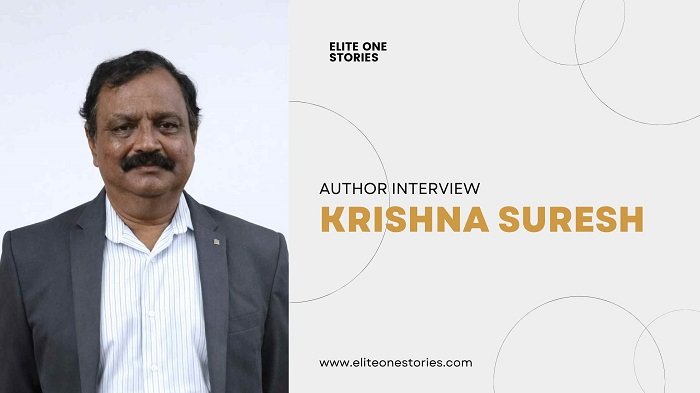
Krishna Suresh is an accomplished author, behavioural trainer, and thought leader specializing in soft skills, emotional intelligence, and human behaviour. With over a decade of experience training professionals across healthcare, banking, education, and corporate sectors, he is known for transforming complex psychological and behavioural concepts into simple, actionable tools. Certified in Neuro-Linguistic Programming (NLP) and Emotional Intelligence, Krishna has conducted impactful workshops in India and internationally, including Singapore and Sri Lanka. Through his books, articles, and training programs, he continues to inspire individuals and organizations to thrive with confidence, empathy, and purpose in an ever-evolving world.
EliteOne Stories: In an era dominated by AI and automation, why do you believe soft skills are more critical than ever?
Krishna Suresh: Technology will continue to grow smarter, and silicon will keep creating more powerful algorithms. But no machine can ever replace human empathy, emotional intelligence, or the warmth of genuine connection. As we move into the future, what we call “soft skills” will actually become the strongest and most essential abilities people look for—because being human will always be our greatest advantage.
EliteOne Stories: What inspired you to write Soft Skills Unleashed, and how is it different from your previous book All About Soft Skills?
Krishna Suresh: “All About Soft Skills emerged from my collection of over 100 published articles and offered readers insight into the world of interpersonal abilities. Soft Skills Unleashed is a more focused evolution of that journey. It emphasizes why soft skills are the real foundation—skills that enable every other skill to shine, build trust, and create meaningful success.”
EliteOne Stories: You work with diverse professionals—from doctors to corporate leaders. What common soft skill gaps do you observe across industries?
Krishna Suresh: Across Doctors, IT professionals, Health Care Professional, bankers, and corporate leaders, I notice similar soft skill gaps. The first is communication—not just speaking, but truly listening and conveying clarity with compassion. The second is emotional intelligence and empathy. Though not always consciously practiced, empathy is the hallmark of meaningful work—it brings job satisfaction to the giver and genuine comfort to the receiver. I also see gaps in adaptability, as many struggle to unlearn, relearn, and embrace change. Finally, self-awareness and people skills are often neglected despite being foundational to leadership, teamwork, and trust. These human skills are no longer optional—they define professional excellence.
EliteOne Stories: How can emotional intelligence help professionals navigate uncertainty and high-pressure environments?
Krishna Suresh: Emotional Intelligence acts as a stabilizer in uncertain and high-pressure environments. It starts with Self-Awareness, helping professionals recognize their emotions before reacting. Self-Management then enables them to stay Cool, calm, non-Impulsive, composed, and focused under stress.
The most critical pillar today is Social Awareness, which brings together two powerful elements—Empathy, the ability to truly understand what others are experiencing, and Motivation, the inner drive to support, uplift, and positively influence people even in difficult situations. Together, they build trust and psychological safety, which are vital in challenging times.
Finally, Relationship Management sustains collaboration and meaningful human connections. Collectively, these four pillars don’t just help professionals cope with uncertainty—they enable them to lead confidently through it.
EliteOne Stories: The book blends behavioural psychology, NLP, and real-life stories. How do these elements enhance learning and transformation?
Krishna Suresh: The reason I blend behavioural psychology, NLP, and real-life stories is simple—people don’t change just by learning concepts; they change when something truly connects with them. Behavioural psychology helps readers understand why they think and behave the way they do. NLP then gives them practical ways to shift their mindset, overcome limiting patterns, and build confidence.
But the real magic happens through stories. When people read real-life experiences, they relate, they feel, and they see what’s possible. It turns learning into something personal and meaningful.
For example, if someone struggles with self-doubt, the chapter in the book doesn’t just tell them ‘be confident.’ It helps them recognise the thought pattern behind the doubt (behavioural psychology), teaches a simple NLP technique like reframing negative self-talk into empowering language, and then shares a real story of someone who applied it and transformed. Suddenly, learning becomes practical, human, and doable.Together, these elements don’t just teach—they touch, transform, and help people see a better version of themselves.”
EliteOne Stories: What role does communication play in building trust, especially in virtual or hybrid workplaces?
Krishna Suresh: In today’s virtual and hybrid workplaces, communication is not just about exchanging information—it’s really about building trust and emotional connection. When we aren’t physically together, people can easily feel distant, misunderstood, or disconnected. So communication has to be clear, honest, and genuinely caring.
Trust grows when people know what’s happening, when expectations are communicated openly, and when leaders and colleagues respond with warmth rather than just formality. Just as important is the emotional side of communication—listening fully, acknowledging how people feel, and letting them know they matter. In virtual settings, we don’t have eye contact, body language, or casual interactions, so empathy has to be expressed more intentionally.
When communication becomes two-way—where people feel heard, respected, and included—it creates connection, belonging, and confidence. In simple terms, good communication in a hybrid world doesn’t just help work get done; it helps people feel safe, trusted, and supported
EliteOne Stories: According to you, what truly defines an influential leader today?
Krishna Suresh: An influential leader today is not defined merely by position or authority, but by the ability to inspire trust, purpose, and emotional connection. A true leader has clarity of vision, emotional intelligence, empathy, and the courage to remain calm and decisive in uncertain times.
Influential leadership today is about communication that builds confidence, decision-making that creates direction, and compassion that builds trust. I often refer to our Hon. Prime Minister of India, Shri Narendra Modi, in my conversations on leadership, as he is widely acknowledged as a global leader who exemplifies vision, emotional connect, and impactful governance.
Ultimately, an influential leader is someone who listens, empowers others, uplifts hope, and leaves a positive imprint on people and society.
EliteOne Stories: Can soft skills be learned at any stage of life, or do they require early development?
Krishna Suresh: Soft skills can definitely be learned at any stage of life. Earlier, subjects like moral science in schools quietly helped us build values and empathy. But today, with the pace of life and constant pressure, soft skills have become essential, not optional.
I personally feel soft skills should be part of learning at every age. Whether it’s students, working professionals, or even senior leaders, everyone benefits from developing communication, emotional intelligence, empathy, adaptability, and people skills. And unlike many other subjects, soft skills don’t stop with learning—they only become powerful when we practice them every day.
Soft skills are not age-bound; they are life skills. When we consciously learn them and consistently be aware of them, they can transform the way we think, connect, and succeed at any stage of life. I truly believe soft skills can be seen as a form of human evolution. As technology keeps advancing, what truly sets us apart is our ability to connect, communicate, empathise, adapt, and lead with emotional intelligence. Earlier, success meant having strong technical skills.
EliteOne Stories: What advice would you give to students and young professionals preparing for a rapidly changing job market?
Krishna Suresh: My advice to students and young professionals is this: the job market will keep changing, but if you keep growing, you will always stay relevant. Don’t just chase technical skills—parallelly focus on building strong soft skills like communication, emotional intelligence, adaptability, empathy, and resilience. And very importantly, work on developing your personality so you come out as confident, grounded, and genuine indivudual.
Be open to learning, unlearning, and relearning. Don’t be afraid of change—be curious about it. Keep updating yourself, explore new opportunities, and be willing to step out of your comfort zone. Build relationships, connect with people, and learn to collaborate, because success is rarely a solo journey.
Above all, stay true to your values, take care of your emotional well-being, and believe in yourself. When you combine competence with character, personality, and confidence, you don’t just adapt to a changing job market—you grow, succeed, and truly thrive in it.
EliteOne Stories: If readers take away just one lesson from Soft Skills Unleashed, what do you hope it will be?
Krishna Suresh: If there’s one lesson, I hope readers take from Soft Skills Unleashed, it is that everything in life truly begins with communication. Even though the book covers 50 important topics, communication is the core that holds everything together. When we learn to speak clearly, listen with heart, and communicate with empathy, our relationships grow stronger, our confidence improves, and our leadership naturally evolves.
Today, communication works through what I call the 3 V’s—the Visual, Vocal, and Verbal. The visual is how we present ourselves—our expressions, gestures, and body language. The vocal is our tone(Which makes a huge impact), warmth, and energy. Together, these two actually make up most of communication, while the verbal—the actual words—forms only a small part. When these three V’s are in harmony, we naturally create the right vibe, and people feel connected, respected, and understood.
If this book helps readers become more mindful, compassionate, and real in the way they communicate, I will feel it has truly fulfilled its purpose.