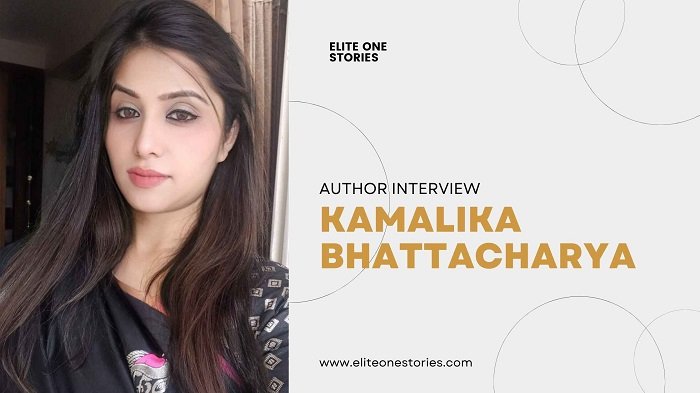
Kamalika Bhattacharya is a writer whose words linger long after the last page is turned. Through poems, short stories, and editorials published across various platforms, she explores the tender, turbulent, and timeless dimensions of human emotion. Known for blending passion, drama, and love, Kamalika crafts deeply resonant narratives that draw readers into intimate emotional landscapes. Her book Fading Embers – All Love Stories Are Not Perfect continues her exploration of love in its most fragile and unforgettable form—unfinished, imperfect, and achingly beautiful.
The Literature Times: What inspired the story of Fading Embers, and how did Sid and Tessa come to life for you?
Kamalika Bhattacharya: The characters are not purely fictional. Infact, I heard about them and a certain part of the story is inspired from their life and real incidents. However, it has been transcribed to detailing with a lot of imaginations towards the later part.
The Literature Times: The subtitle says “all love stories are not perfect.” What does imperfect love mean to you as a writer?
Kamalika Bhattacharya: Nothing is perfect and so is Love. However, grief that love brings to the table doesn’t live in tears only. It’s in the shiver that crawls down the ribs when a memory returns uninvited. It comes from a lot of untold expectations, where the pain lives in silence where your whole body falls into that helpless trembling stillness. There are words in your throat and they collapse halfway because, everyone doesnot have the skill to redefine love.
The Literature Times: Sid and Tessa’s story is filled with “what-ifs.” Why do unfinished love stories resonate so deeply with readers?
Kamalika Bhattacharya: If we look around we would agree on this that people say they are committed and promise to stay and what not when they fall in love. But when the storm strikes, they fade away. Sometimes they lack courage, strength and sometimes they lack softness, kindness and the connect to feel with their partners.
The Literature Times: How do you balance heartbreak and hope in a narrative centered on incomplete love?
Kamalika Bhattacharya: Heartbreak comes from an incomplete affair, wherein people unknowingly hurt their partners and eventually distance themselves failing to reconstruct a beautiful story that could become timeless with efforts. Lack of actions to display love causes the disaster, but life goes on. Self love is a great therapy when we experience heartbreak. Once, we understand that hope is the only key. We learn to crawl forward with wounds and learn to fall in love with ourselves.
The Literature Times: Were any moments in the book inspired by real-life experiences or observations?
Kamalika Bhattacharya: yes, very much.
The Literature Times: Love remains a recurring theme across your works—what draws you back to it time and again?
Kamalika Bhattacharya: What is that immaterial thing that everyone longs for. Everything that is happening across the globe is for the sake of love. That helps us to thrive, that brings undefined contentment. So much so that if you love someone truly, your heartbeat would pause, even when their name will appear in your memory. Such a powerful element which is unseen, yet is the most soughtafter thing for human race.
The Literature Times: How does Fading Embers differ emotionally or thematically from your previous books like Smitten by Love or Threads of Fate?
Kamalika Bhattacharya: Fading Embers elaborated purely the journey of two people in love, while Smitten by love and threads of fate were short story collections. Smitten by love had short stories revolving around the theme of love and threads of fate had fictional stories meant for small children.
The Literature Times: What role does memory play in shaping the emotional core of this story?
Kamalika Bhattacharya: Memory leads to longing. Our heart tries to recognize a home before our mind could follow. A heartfelt love brings a lot of emotional turbulence when things fall out of hands. But to find self love and to heal is also much needed. And strengthens our emotional core. This narrative is just an instance.
The Literature Times: What do you hope readers take away after finishing Sid and Tessa’s journey?
Kamalika Bhattacharya: The colour of love is not red, its not the deep blue of patience and the quiet green of forgiveness. The person you love has to reciprocate and value you back. Love can’t be begged. It has to be understood. Silence shouldn’t be the obstacle. Delving deeper to understand the language of love is much needed for both the partners. Else, the most beautiful story may remain incomplete. So, Value and respect your partner. Learn the language of silence, when you fall in love, instead of ignoring it.Sid could have got back Tessa but failed to reach out on time, thinking she would stay whatsoever and then he lost her.She was alone when she fought her own battles. And that made her walkaway.
The Literature Times: What’s next for you as a writer—can readers expect more stories of love, loss, and resilience?
Kamalika Bhattacharya: Much more and they are safely brewing.