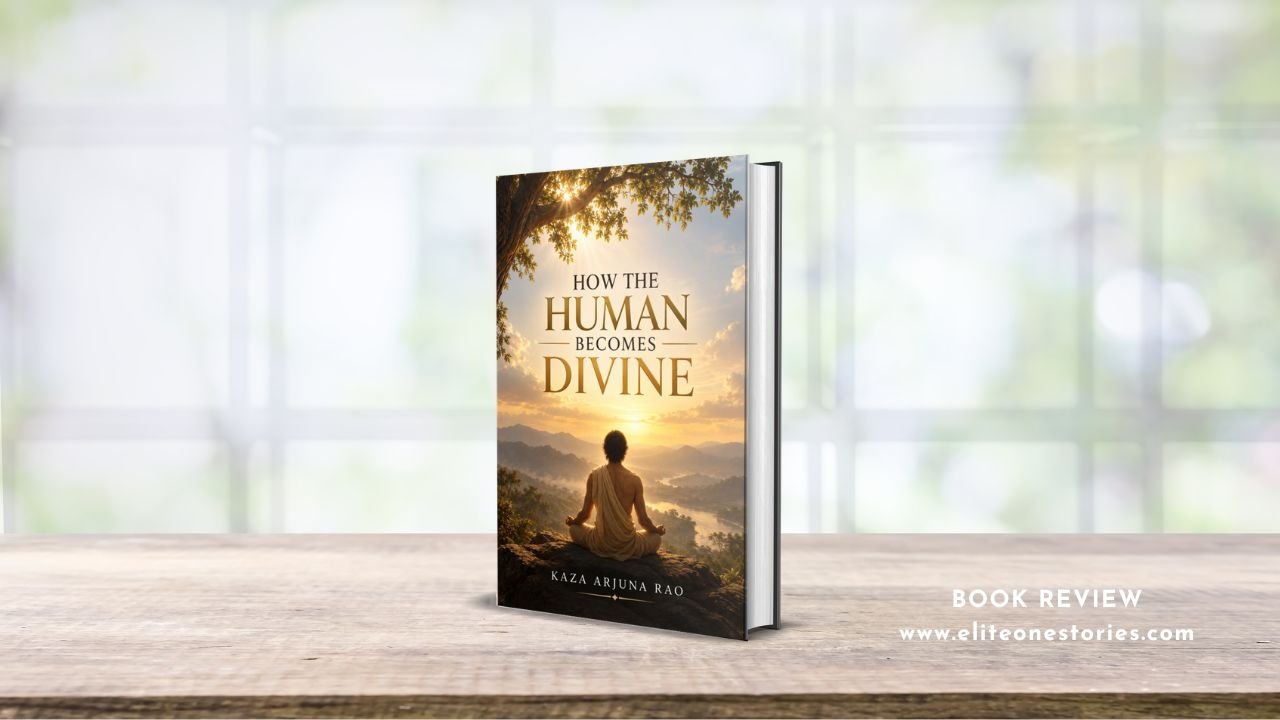
There are times when the usual descriptions of a life begin to feel incomplete. A profession explains what someone does, an achievement records what has been accomplished, and a biography gathers the events that can be named. The harder question concerns the person taking shape through those experiences. How the Human Becomes Divine, by Kaza Arjuna Rao, addresses that inward dimension of becoming. Its interest in consciousness and spiritual possibility gives readers a reason to pause over the assumptions behind their ambitions. What sort of growth are we seeking, and how would we recognise it in ourselves?
For a reader approaching the book through personal experience, its idea of an existing divine spark may offer a generous starting point. Human worth is considered in relation to a possibility already present within living beings. Read this way, the premise allows room between a person’s current limitations and the whole of what that person might become. That room matters. A mistake, disappointment or unfinished ambition need not supply the final description of a life. This is an interpretation of the book’s central idea, and its attraction lies in the patience it can bring to the difficult work of self-understanding.
Patience, however, is different from complacency. Rao connects the unfolding of consciousness with education, experience, suffering and reflection, all of which imply engagement with life. The potential he describes has to be considered alongside the way a person actually learns and responds. For the reader, this raises an intimate question about attention. We can accumulate experiences without making much sense of them, or revisit an experience and recognise something previously overlooked. The book’s focus on reflection makes that second possibility worth considering. Growth becomes connected to how closely we examine our responses, including the explanations we habitually give ourselves.
Imagine, for example, returning in thought to a disagreement and asking why being right felt so urgent. This is an everyday illustration of the kind of reflection the book’s themes can prompt. An abstract discussion of consciousness can have a personal point of entry. A reader may begin with a familiar reaction and discover a larger question about identity or judgement. Such an approach gives the book relevance for people who want to explore spiritual ideas through their own lives, without needing to pretend that every ordinary event conceals a profound revelation. Sometimes noticing a familiar pattern is a sufficient beginning.
The treatment of suffering as a possible influence on consciousness is likely to be especially personal for many readers. It deserves a patient interpretation. Nobody should feel required to produce an uplifting explanation for pain, or to regard an unresolved experience as a failure of insight. The useful question is whether reflection can eventually change our relationship with what has happened. Sometimes that may involve recognising a limit, accepting help or reconsidering what matters. These are possibilities a reader can bring to the subject, not outcomes the book’s premise can guarantee. The value of the inquiry depends on leaving space for individual experience.
Education is another theme that invites a personal response. Learning continues to shape how we understand ourselves even when formal study is behind us. A new idea can expose a certainty we have never examined; another person’s perspective can show us how narrow our own account has become. Through its emphasis on education and experience, Rao’s book opens a discussion about remaining teachable. This is an appealing quality in a work concerned with higher awareness, because the willingness to learn requires some admission of incompleteness. For readers, that may be a more approachable beginning than any expectation of arriving at spiritual certainty.
There is also a relational test for the growth under consideration. The movement towards compassion and harmony asks what changes in the presence of other people. If a sense of personal development makes us less willing to listen, its meaning deserves examination. A reader might therefore take the book’s concerns into an ordinary conversation, asking whether attention has become more generous or judgement less automatic. These modest questions give emotional substance to a large spiritual vocabulary. They connect the hope of becoming more fully aware with the experience of being a colleague, friend or family member whose responses affect another person’s day.
Rao’s biography offers a relevant background to this conversation. A retired engineer, he has spent decades reflecting on consciousness, morality and existence while maintaining an appreciation for disciplined inquiry. His writing draws on lived experience, and his previous books include an autobiography and a volume of reflections. That combination makes his interest in self-understanding accessible from more than one direction. A reader can recognise the desire for clarity that belongs to professional life, alongside questions about purpose that have no simple practical resolution. The personal interest comes from allowing those concerns to inhabit the same life and inform a continuing search for understanding.
The book’s hopeful premise will resonate most readily with readers comfortable considering a spiritual dimension to life. Others may prefer to hold the language of divinity at a distance while engaging with the questions about learning and character. Both responses can support thoughtful reading. What deserves caution is any expectation that a single account of growth will fit every life in the same way. The idea of immense inner potential is encouraging, but its personal meaning will vary. A useful encounter with this book allows that variation and gives readers permission to consider its possibilities without forcing an experience of immediate transformation.
The lasting appeal of How the Human Becomes Divine lies in the attention it gives to a life still being formed. It offers a way to think about the self that includes unrealised capacity, continuing education and the possibility of a more compassionate response. For EliteOne Stories, that makes it an inviting subject for readers interested in the quieter changes through which a person matures. The question one can carry away is close to daily life: what am I learning from the way I live? Rao’s inquiry gives that question dignity, and leaves room for an answer that develops over time.