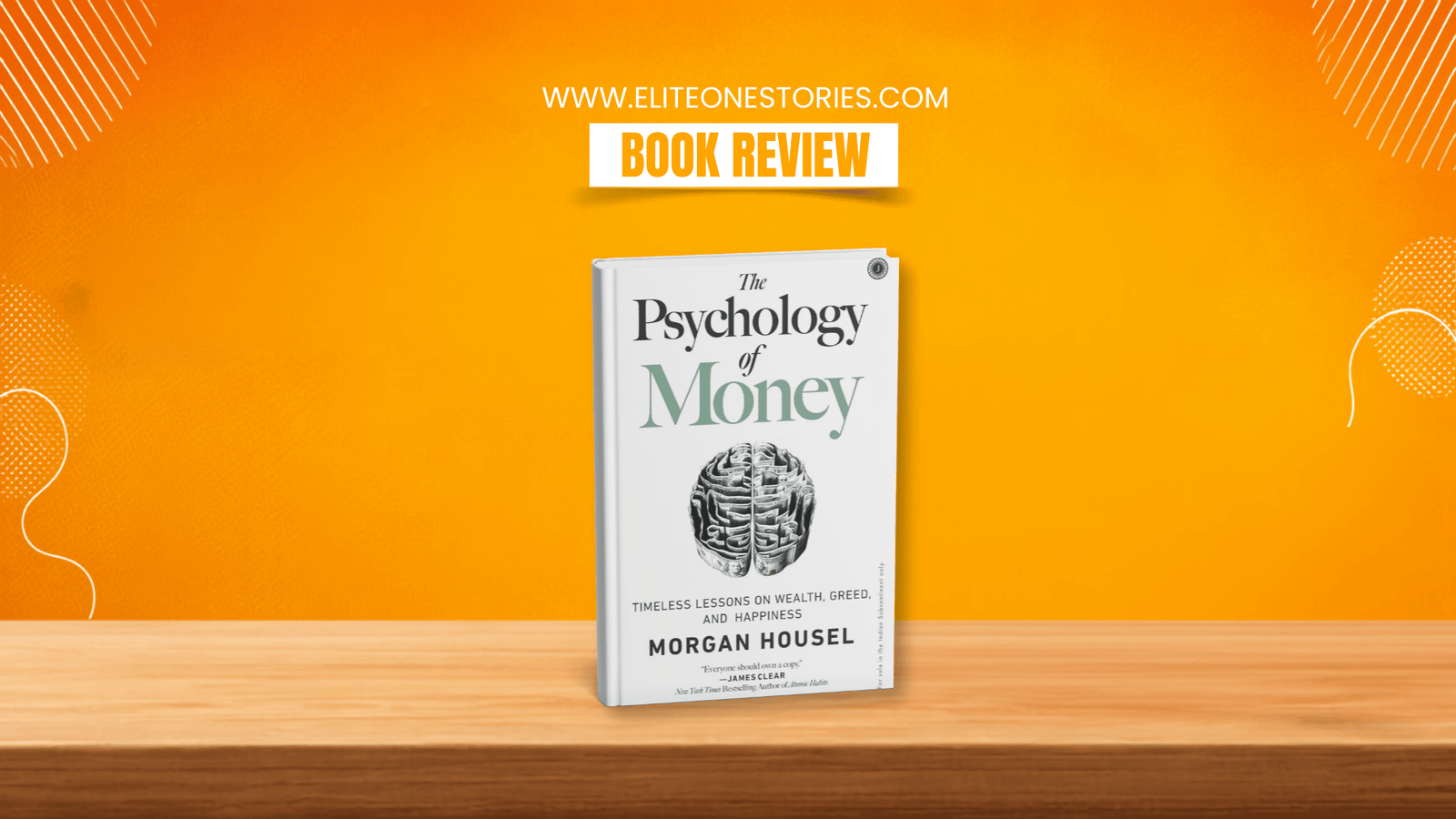
Money is often viewed as a numbers game, where success depends on mastering complex formulas, understanding market trends, or predicting economic cycles. However, Morgan Housel’s The Psychology of Money challenges this conventional wisdom by arguing that financial success is far less about intelligence or technical knowledge and far more about human behavior. Since its release, the book has sold over 10 million copies worldwide, becoming one of the most influential personal finance books of the modern era. Instead of presenting readers with investment strategies or budgeting techniques, Housel explores the emotional, psychological, and behavioral aspects of money through nineteen engaging and thought-provoking stories. The result is a book that is both insightful and accessible, offering timeless lessons that apply to people regardless of their income, profession, or stage of life.
One of the book’s greatest strengths is its central message: doing well with money is less about what you know and more about how you behave. Housel explains that financial decisions are rarely made in perfect, logical environments. They are shaped by personal experiences, upbringing, emotions, fear, greed, ego, and societal expectations. This perspective immediately sets the book apart from traditional finance literature, which often assumes people make rational decisions based solely on facts and calculations. By focusing on human psychology instead of financial theory, Housel makes the subject relatable and practical for everyday readers.
The writing style is another reason the book has earned widespread acclaim. Rather than overwhelming readers with technical jargon or complicated financial concepts, Housel writes in a conversational, engaging, and easy-to-understand manner. Each chapter functions as a standalone story, allowing readers to absorb one lesson at a time without feeling burdened by excessive detail. Real-life examples from history, business, and investing are woven throughout the book to demonstrate how emotions influence financial outcomes more than knowledge alone. This storytelling approach keeps readers engaged while making complex ideas memorable and applicable to real life.
Among the many valuable lessons in the book, the importance of compounding stands out as one of the most powerful. Housel explains that extraordinary wealth is often the result of patience and consistency rather than exceptional talent or high-risk decisions. He illustrates how even modest investments, when allowed to grow over long periods, can produce remarkable results. This lesson extends beyond investing, emphasizing that success in many areas of life comes from small, consistent actions repeated over time. The discussion encourages readers to think long-term instead of chasing quick financial gains.
Another significant theme is the distinction between being rich and being wealthy. Housel explains that many people focus on displaying wealth through expensive cars, luxury homes, and designer products, while true wealth often remains invisible. Wealth consists of financial security, savings, investments, and the freedom to make life choices without constant financial stress. This insight challenges modern consumer culture, where outward appearances are often mistaken for financial success. By redefining wealth as freedom rather than status, the book encourages readers to prioritize long-term financial independence over short-term social recognition.
Housel also provides an insightful discussion about risk, luck, and uncertainty. He argues that financial success cannot be explained solely by skill because luck often plays a significant role, just as failure can result from unfortunate circumstances rather than poor decision-making alone. Recognizing this reality encourages humility during periods of success and resilience during setbacks. This balanced perspective helps readers avoid overconfidence while developing empathy for others whose financial journeys may have been influenced by circumstances beyond their control.
One of the book’s most memorable ideas is that the highest form of wealth is control over your time. According to Housel, money should not simply be viewed as a means of buying material possessions but as a tool for creating flexibility, reducing stress, and allowing individuals to spend more time doing what truly matters. Financial independence provides the ability to choose meaningful work, spend time with family, pursue personal interests, and avoid being trapped by financial obligations. This philosophy shifts the focus from accumulating money for its own sake to using money as a means of achieving a fulfilling and balanced life.
The book also addresses the dangers of comparing ourselves with others. In today’s world, where social media constantly showcases lifestyles of apparent luxury and success, it is easy to fall into the trap of endless comparison. Housel reminds readers that every person’s financial journey is unique, influenced by different goals, experiences, and circumstances. Chasing someone else’s version of success often leads to dissatisfaction and poor financial decisions. Instead, readers are encouraged to define their own financial goals based on personal values rather than societal expectations.
Despite its many strengths, The Psychology of Money is not a traditional investment guide. Readers seeking detailed advice on stock selection, portfolio construction, tax planning, or retirement strategies may find the book lacking in technical content. Some of the lessons also overlap, with similar themes appearing across multiple chapters. However, this repetition reinforces the book’s core message and makes its insights easier to remember. The absence of technical complexity is intentional, allowing the book to remain relevant regardless of changing financial markets or economic conditions.
Another notable strength is the book’s timelessness. While many finance books become outdated as markets evolve, Housel focuses on principles of human behavior that remain consistent across generations. Emotions such as fear, greed, patience, confidence, and uncertainty have influenced financial decisions throughout history and will continue to do so in the future. This gives the book lasting value, making it one that readers can revisit repeatedly throughout different stages of life.
Morgan Housel’s background as a financial journalist and investor lends significant credibility to his work. His years of experience writing for respected publications such as The Wall Street Journal and The Motley Fool are evident in his ability to simplify complicated ideas without oversimplifying them. Rather than presenting himself as someone with all the answers, Housel approaches financial behavior with humility, encouraging readers to think critically about their own habits and assumptions.
Overall, The Psychology of Money is much more than a personal finance book; it is a thoughtful exploration of human nature and decision-making. It teaches readers that financial success depends less on mastering complex investment strategies and more on developing patience, discipline, self-awareness, and emotional control. Its engaging storytelling, practical wisdom, and timeless lessons make it valuable for beginners and experienced investors alike. Whether you are just beginning your financial journey or looking to improve your long-term relationship with money, this book offers meaningful insights that can influence not only your finances but also your overall approach to life.
Rating: ⭐⭐⭐⭐⭐ (5/5)
Final Verdict: The Psychology of Money is a modern classic that deserves its global popularity. Morgan Housel successfully demonstrates that understanding human behavior is often more valuable than understanding financial formulas. Filled with memorable stories, practical lessons, and timeless wisdom, this book is an essential read for anyone who wants to make smarter financial decisions, build lasting wealth, and develop a healthier relationship with money.
Book link: https://www.amazon.com/Psychology-Money-Timeless-lessons-happiness/dp/0857197681