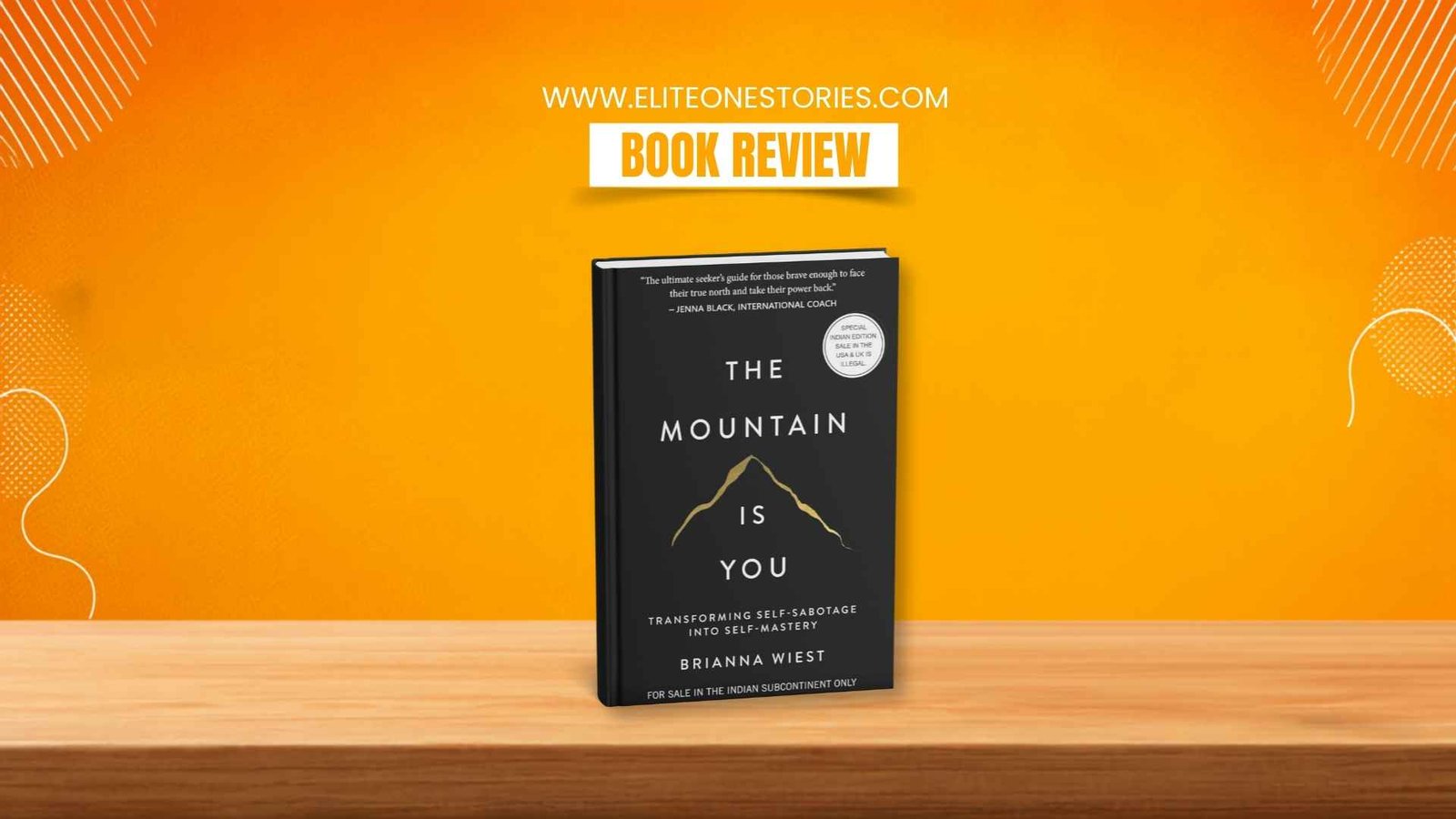
The Mountain Is You: Transforming Self-Sabotage Into Self-Mastery by Brianna Wiest is an inspiring and deeply reflective self-help book that examines one of the greatest obstacles to personal growth: self-sabotage. Rather than treating self-sabotage as a sign of laziness, weakness, or lack of willpower, Wiest presents it as a complex psychological response rooted in unresolved emotions, conflicting desires, and subconscious patterns developed over time. Through a thoughtful blend of psychological insights, emotional intelligence, personal reflection, and practical wisdom, the book encourages readers to understand the hidden reasons behind their self-defeating behaviors and replace them with habits that support long-term growth and self-mastery. The title itself serves as a powerful metaphor, suggesting that the greatest mountain individuals must climb is not an external challenge but the internal struggles that prevent them from becoming their best selves. By overcoming these inner obstacles, readers are invited to discover greater confidence, resilience, and emotional freedom.
The central argument of the book is that self-sabotage is rarely irrational or accidental. According to Wiest, every behavior, even those that seem harmful, serves an emotional purpose. People often sabotage their own progress because different parts of themselves have conflicting needs. One part desires change, achievement, happiness, or success, while another seeks familiarity, comfort, or protection from emotional pain. As a result, individuals may procrastinate, avoid opportunities, remain in unhealthy relationships, or repeatedly make decisions that prevent them from achieving their goals. Instead of criticizing these behaviors, Wiest encourages readers to view them with curiosity and compassion, recognizing that they often originate from an attempt to maintain emotional safety rather than from a lack of motivation or determination. This perspective offers a refreshing alternative to traditional self-help advice that focuses primarily on discipline and positive thinking.
One of the book’s greatest strengths is its emphasis on emotional intelligence as the foundation of lasting personal transformation. Wiest argues that genuine change begins with understanding rather than suppressing emotions. She explains that emotions contain valuable information about our beliefs, fears, and unmet needs. When people learn to identify and understand their emotional responses, they become better equipped to make conscious decisions instead of reacting automatically to stress, fear, or uncertainty. Throughout the book, the author encourages readers to develop self-awareness, practice emotional regulation, and replace self-criticism with self-compassion. She repeatedly emphasizes that emotional maturity is not achieved by avoiding discomfort but by learning how to experience difficult emotions without allowing them to control one’s actions. This approach makes the book particularly meaningful for readers seeking long-term emotional growth rather than temporary motivation.
Another significant theme explored throughout the book is the impact of unresolved trauma and past experiences on present behavior. Wiest explains that many self-sabotaging patterns originate from childhood experiences, painful relationships, disappointments, or deeply ingrained beliefs formed during difficult moments in life. These experiences continue influencing decisions long after the original events have passed, often operating beneath conscious awareness. The author argues that genuine healing requires acknowledging these emotional wounds instead of ignoring or suppressing them. While the book occasionally refers to releasing past experiences at a deeper emotional level, its broader message is that personal transformation begins with recognizing how past experiences shape present choices. Through acceptance, forgiveness, emotional processing, and intentional self-reflection, readers can gradually free themselves from destructive patterns and build healthier responses to life’s challenges.
A particularly powerful concept presented in the book is the idea of identity transformation. Wiest suggests that sustainable change does not occur simply by setting ambitious goals or adopting new habits. Instead, meaningful transformation requires becoming the kind of person whose daily actions naturally align with those goals. She encourages readers to think beyond what they want to achieve and instead consider who they need to become. This shift in perspective moves the focus away from external accomplishments and toward internal growth. According to the author, every small decision contributes to shaping one’s identity, and consistent positive actions gradually reinforce healthier beliefs and behaviors. By viewing personal development as a process of becoming rather than merely achieving, the book provides readers with a more realistic and lasting approach to self-improvement.
The writing style is one of the book’s most distinctive features. Brianna Wiest writes with clarity, warmth, and emotional depth, combining philosophical reflections with practical observations about human behavior. Her background in English literature is evident in her thoughtful use of language and symbolism. The recurring metaphor of the mountain effectively illustrates the challenges individuals face throughout their personal development journeys. Rather than relying on technical psychological terminology, Wiest communicates complex emotional concepts through accessible language that invites reflection. Many passages encourage readers to pause and examine their own lives, making the reading experience feel personal and engaging. The book is filled with memorable insights that resonate emotionally and inspire thoughtful consideration long after the final chapter.
One of the reasons The Mountain Is You has become so widely appreciated is its balanced combination of compassion and accountability. Wiest acknowledges that people are shaped by their experiences and emotional wounds, but she also emphasizes that healing ultimately requires personal responsibility. She avoids portraying readers as victims of their circumstances while simultaneously recognizing the genuine challenges associated with emotional healing. This balance makes the book both encouraging and empowering. Instead of promising quick fixes or dramatic overnight transformation, the author presents growth as a gradual process that requires patience, consistency, and self-awareness. Her realistic approach distinguishes the book from many popular self-help titles that rely primarily on motivational language without addressing the deeper psychological causes of recurring problems.
Despite its many strengths, the book has a few limitations. Some of its core ideas, particularly those related to emotional healing, identity change, and subconscious beliefs, are repeated throughout multiple chapters. While this repetition reinforces the central message, some readers may feel that certain sections become unnecessarily repetitive. Additionally, portions of the book adopt a highly philosophical tone that may appeal more to reflective readers than to those seeking structured exercises or practical step-by-step guidance. Although Wiest draws inspiration from psychological concepts, some of the broader claims are presented in an inspirational rather than rigorously evidence-based manner. Readers interested in scientific psychology may therefore benefit from reading the book alongside more research-focused works on behavior change and emotional health.
Overall, The Mountain Is You is a compelling and thought-provoking exploration of the hidden patterns that prevent individuals from realizing their full potential. Rather than offering superficial advice about productivity or success, Brianna Wiest encourages readers to undertake the deeper work of understanding themselves, healing unresolved emotional conflicts, and intentionally creating a new identity based on conscious choices rather than unconscious fears. Her emphasis on emotional intelligence, resilience, self-awareness, and personal responsibility provides a meaningful framework for lasting transformation. The book reminds readers that the greatest challenges in life are often internal and that true success comes not from conquering external obstacles but from mastering the thoughts, emotions, and behaviors that shape daily life. For anyone seeking a deeper understanding of personal growth, emotional healing, and self-improvement, The Mountain Is You offers valuable insights that are both inspiring and practical. It is a book that encourages readers to view their struggles not as signs of failure but as opportunities for profound personal transformation, making it a highly recommended read for those committed to becoming the best version of themselves.