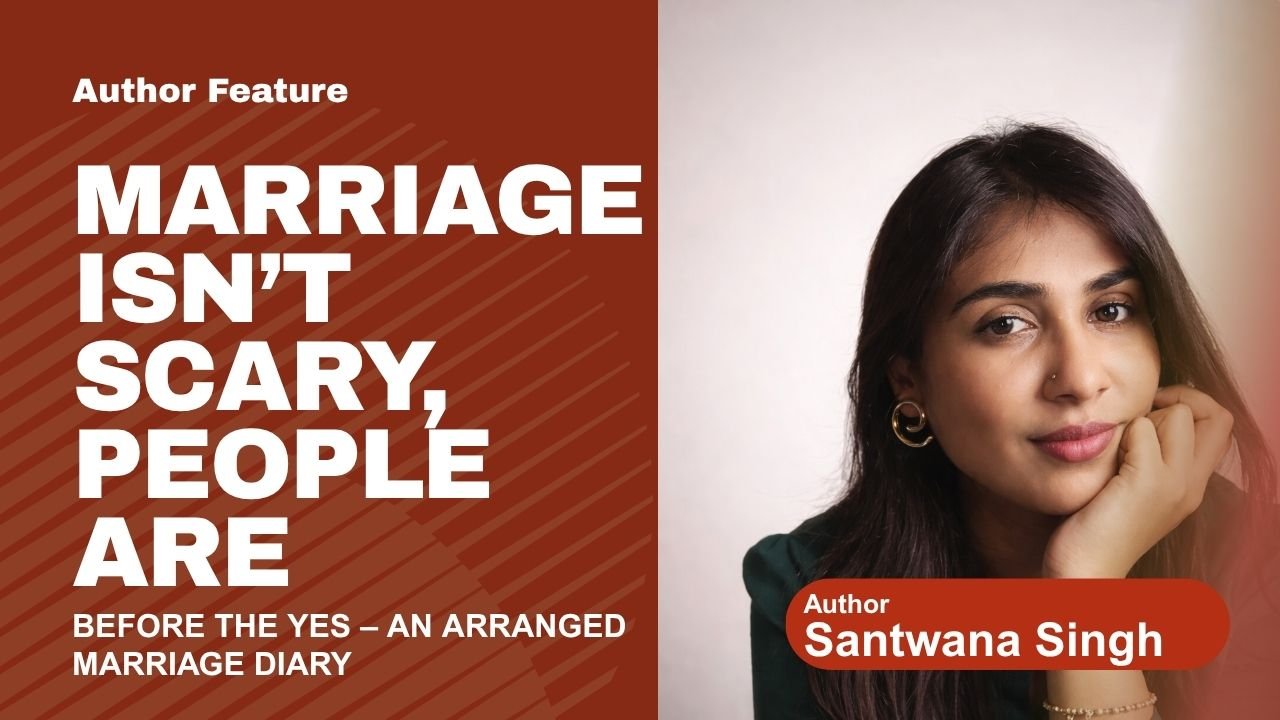
Title: Marriage Isn’t Scary, People Are
Author: Santwana Singh
ISBN: 9789373358567
Publisher: Evincepub Publishing
Marriage Isn’t Scary, People Are: Before the YES – An Arranged Marriage Diary by Santwana Singh is not just a book, it feels like a quiet conversation that many people have with themselves but rarely say out loud. In today’s time, where arranged marriage is still a big part of Indian culture, this book brings a very honest and simple look at what really happens before that one big word, “yes.” Santwana Singh, through her debut work, shares a deeply personal yet widely relatable journey that goes beyond just meeting people for marriage. She talks about emotions, confusion, pressure, hope, and most importantly, self-understanding. What makes this book special is its Hinglish style, which feels natural and close to real life. It does not try to sound too heavy or complicated. Instead, it speaks in a voice that feels like your own thoughts or maybe a friend sitting beside you and sharing her story.
The title itself, Marriage Isn’t Scary, People Are, immediately catches attention because it challenges a common fear. Many people think marriage is the scary part, but Santwana Singh shows that it is actually the people, their expectations, their confusion, and sometimes their lack of clarity that make the journey difficult. Through simple words and real situations, she explains how every meeting in an arranged marriage setup is not just about two people liking each other. It is about families, timing, past experiences, and sometimes things that are never even said openly. The subtitle Before the YES – An Arranged Marriage Diary perfectly fits because this book is truly a diary of moments that happen before any final decision is made.
Santwana Singh writes with a lot of honesty. She does not try to make her journey look perfect or dramatic. Instead, she shares small details that many readers will instantly connect with. From the nervousness before the first meeting to the confusion after saying yes, from the silence that follows to the unexpected endings, every part feels real. She talks about how sometimes everything looks right on paper, the job, the family, the future plans, but still something feels missing. That “something” is what she explores throughout the book. It is not always easy to explain feelings, especially when there is no clear reason to say no, but still the heart does not agree. Santwana Singh gives words to these silent emotions.
One of the strongest parts of the book is how it shows that arranged marriage is not just a process, it is an emotional journey. Every meeting leaves behind something. Sometimes it is hope, sometimes confusion, and sometimes just tiredness. Santwana Singh describes how people keep asking the same questions again and again, how every meeting feels like an interview, and how slowly it starts affecting your confidence. These are things many people experience but do not talk about openly. By writing about them, she creates a space where readers feel understood. It feels like someone finally said what they were feeling.
The book also highlights how expectations play a big role in this journey. There are expectations from family, from society, and sometimes from ourselves. Santwana Singh shows how these expectations can become a burden without us even realizing it. She talks about how people often look for the “best” instead of trying to understand what is “right.” This simple thought makes a big impact. It reminds readers that perfection is not always real and that sometimes we lose good connections while searching for something perfect.
Another important theme in the book is clarity. Many situations in the story show how lack of clarity can hurt more than rejection. When someone is unsure, when they are not ready, or when they are stuck in their past, it affects the other person deeply. Santwana Singh explains this in a very simple way without blaming anyone. She understands that not everyone is wrong, sometimes they are just not ready. This mature thinking makes the book feel balanced and thoughtful.
Santwana Singh’s writing also focuses a lot on self-respect and self-choice. As the journey moves forward, readers can see her growth. In the beginning, there is confusion and self-doubt, but slowly there is clarity and confidence. She starts understanding what she wants and what she cannot accept. This change is very inspiring because it shows that it is okay to take time, it is okay to say no, and it is okay to choose yourself. In a society where people often rush into decisions because of pressure, this message is very important.
The Hinglish language used in the book adds to its charm. It makes the story feel real and close to everyday life. The mix of Hindi and English words reflects how people actually think and speak. It also makes the emotions stronger because sometimes feelings are better expressed in a language that comes naturally. Readers do not feel like they are reading a formal book. Instead, it feels like reading someone’s personal diary.
The structure of the book, with different chapters showing different meetings and experiences, keeps the reader engaged. Each chapter brings a new situation, a new person, and a new lesson. Some meetings end quickly, some leave a deeper impact, but all of them contribute to the overall journey. It shows that every experience, even the ones that do not work out, teaches something important.
Santwana Singh also talks about the emotional tiredness that comes with this process. This is something rarely discussed. Meeting new people again and again, answering the same questions, trying to present your best self every time can become exhausting. She explains how this tiredness is not always visible but is deeply felt. This part of the book is very powerful because it gives a voice to something many people silently go through.
One of the most meaningful parts of the book is when Santwana Singh starts choosing herself. She realizes that she cannot keep adjusting just to make things work. She understands the difference between adjustment and compatibility. This is a very important lesson because many people confuse the two. Adjustment means changing yourself again and again, while compatibility means being yourself and still fitting together. This simple idea can change how people look at relationships.
As the story moves towards the end, there is no forced conclusion. There is no pressure to show that everything is perfect or that marriage has happened. Instead, the book ends with a sense of peace and self-awareness. Santwana Singh accepts that the journey is still going on, and that is okay. This ending feels real because life does not always give clear endings. Sometimes, understanding yourself is the biggest achievement.
As an author, Santwana Singh shows great sensitivity and honesty. Her writing reflects deep observation and real emotions. She does not try to impress with heavy words or complicated ideas. Instead, she keeps everything simple and meaningful. This makes her writing accessible to a wide range of readers, especially young people who are going through or will go through similar experiences.
Marriage Isn’t Scary, People Are is a book that many readers will see themselves in. It is for anyone who has ever felt confused before making a big decision, anyone who has ever chosen silence over explaining their feelings, and anyone who is trying to understand themselves better. It is not just about arranged marriage. It is about emotions, choices, and the courage to listen to your own heart.
In the end, this book leaves readers with an important thought. Marriage is not something to fear, but it should not be rushed or forced either. The right decision comes when you truly understand yourself. Santwana Singh reminds us that saying yes to someone is important, but saying yes to yourself is even more important. Through her simple words and honest storytelling, she creates a strong connection with readers and encourages them to trust their own journey. This makes her debut not just a book, but an experience that stays with you even after you finish reading.
Review by Neel Preet
For Eliteonestories.com